

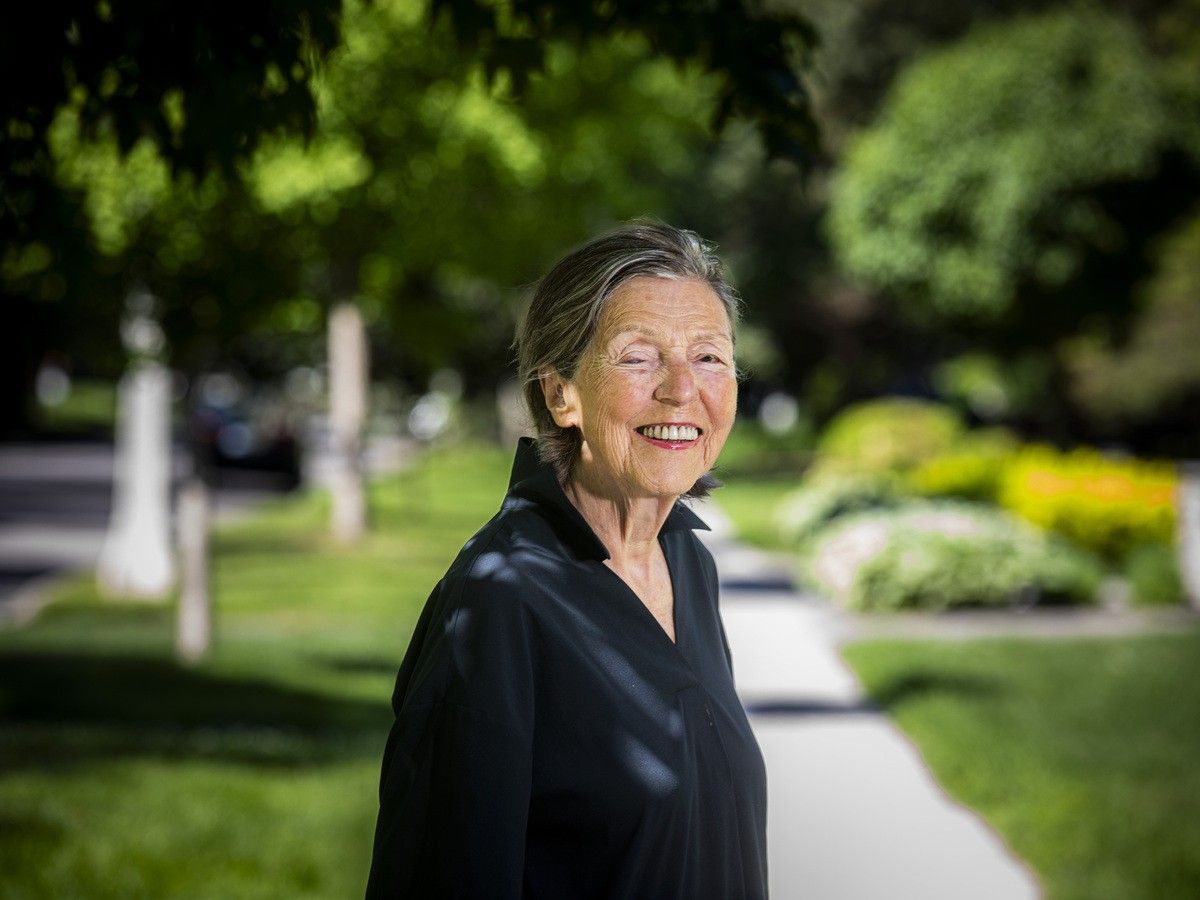
Ann Laubstein had skipped four of her own graduation ceremonies, including one for her PhD.
“I just wasn’t interested,” she explained, adding she always thought she’d be bored with sitting in rows while waiting to be called on stage and handed a piece of paper.
But the 85-year-old retired Carleton University linguistics professor couldn’t bear to miss her fifth graduation ceremony.
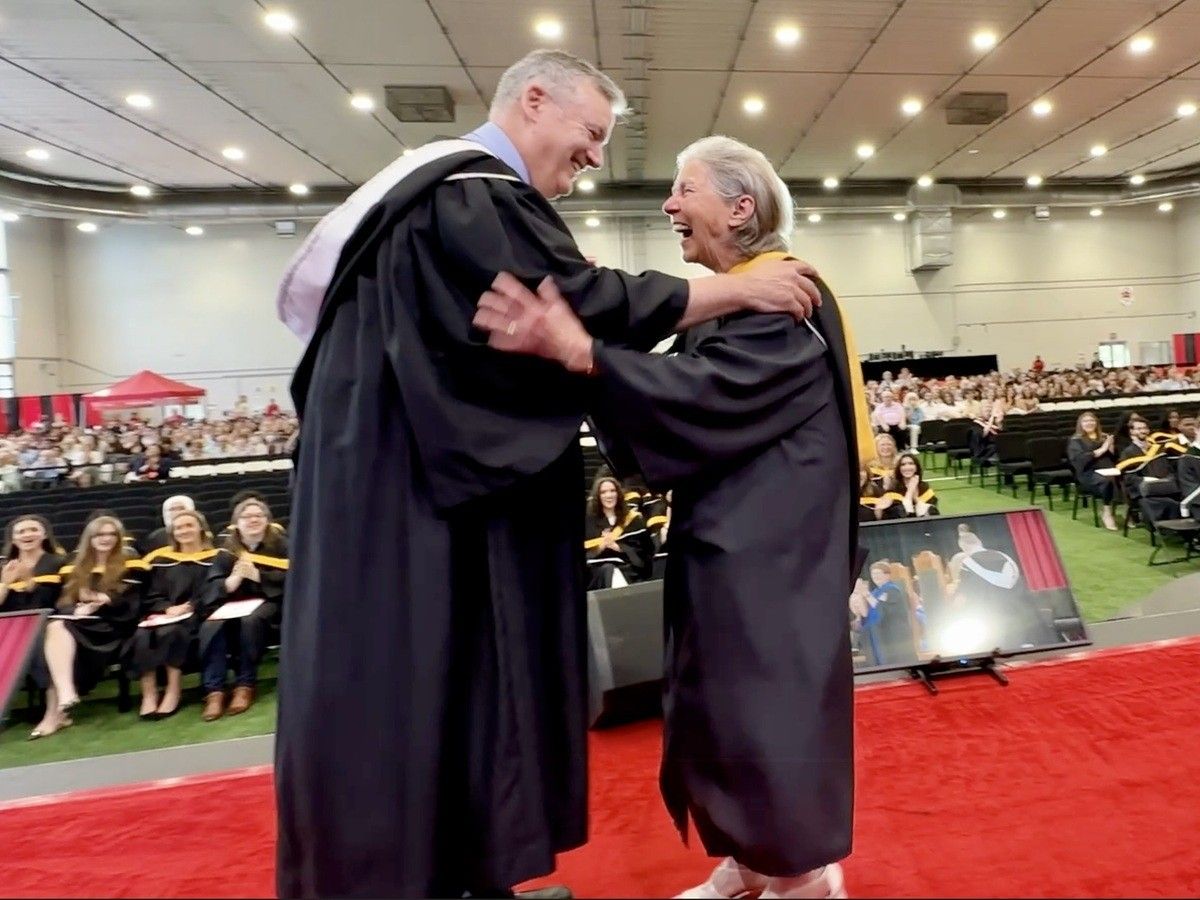
Laubstein, who crossed the stage to receive her Bachelor of Science in Neuroscience and Mental Health degree from Carleton on June 11, said she had worked too hard to skip this one.
“Writing my thesis for my (linguistics) PhD was not as hard as passing a physics course,” she quipped, adding it was the last course she had to take to complete the requirements for her latest degree.
When her name was called, the crowd’s collective roar was so loud that it muffled the part of the announcement that she had graduated with High Distinction, Laubstein said.
“It was amazing,” she recalled.
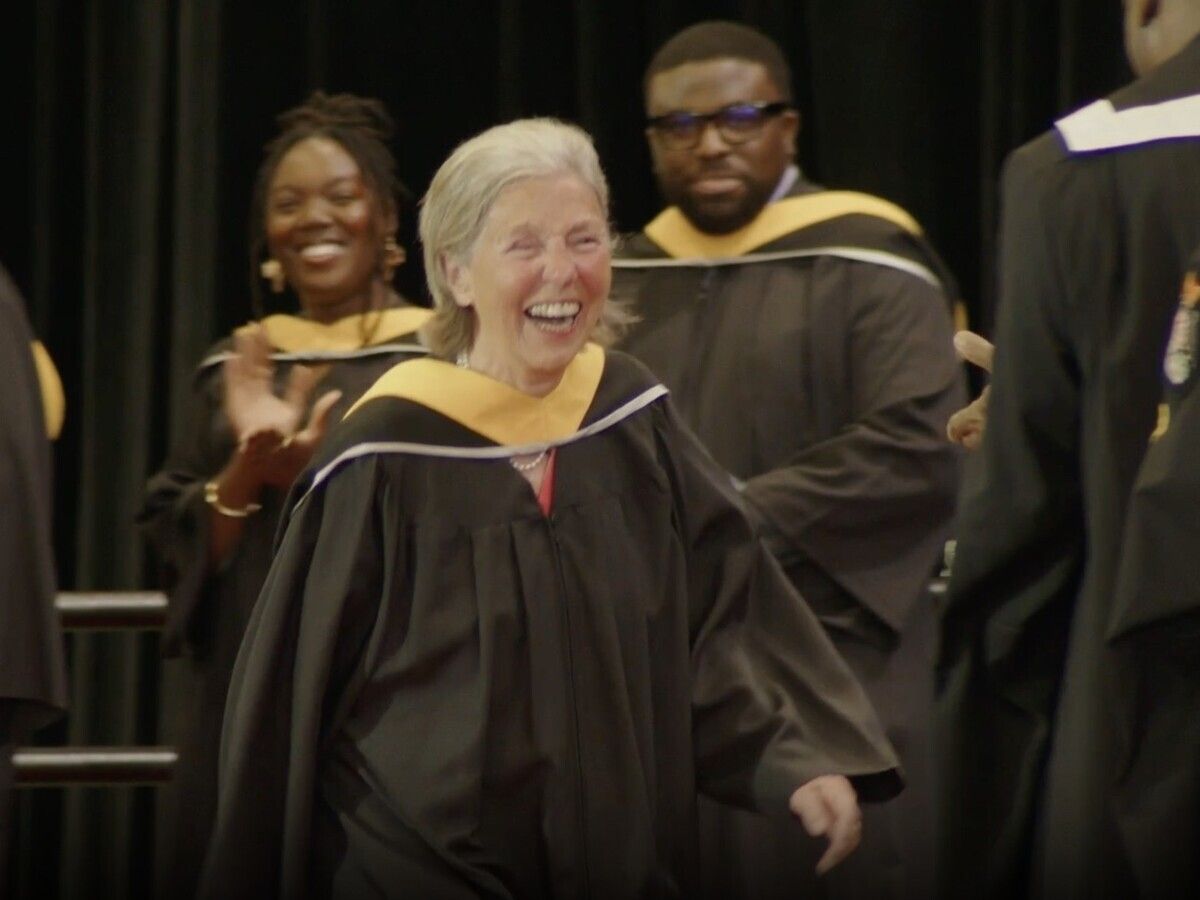
Laubstein’s son, Stuart, said everyone was cheering for his mom, including professors. “It was funny because, afterwards, a whole bunch of grandmothers and grandmothers were coming up to talk to her and saying they were amazed.”
Her hard work in completing a degree in her golden years had been noticed within the Carleton community, and the standing ovation Laubstein received at convocation provided only a glimpse of that, according to Kim Hellemans, a Carleton neuroscience professor.
Hellemans first taught Laubstein over a decade ago, when Laubstein was just starting her BSc in neuroscience, and was among the crowd at her graduation.
Being registered as a special student, Laubstein was able to take one course per semester and to continue enjoying life, which has included kayaking, tennis and skiing.
Hellemans described Laubstein as someone with a “joie de vivre.”
Not much could get in the way of her ability to “live life out loud” — except for physics.
“I told friends of mine: ‘I can’t see you, I can’t go out, I can’t go to this place with you because I’m too busy,” Laubstein said, adding that going to the graduation ceremony and later celebrating at home was her way of making it up to them.
Laubstein said she didn’t do a neuroscience degree to “challenge” herself after a life-long career in linguistics. Rather, she was curious about the brain and the phonological structures involved in speech production.
Her plan after being “forced” to retire in 2006 from her Carleton linguistics teaching job was to travel and to become fluent in every language she had learned.
Russian. Spanish. Greek. German.
“That’s what I thought I’d do when I retired,” she said.
But, when she got to Argentina to learn Spanish, Laubstein said her hearing had deteriorated and she had trouble hearing high-frequency sounds like “S” and “F.”
At Carleton, Laubstein said professors and students were accommodating of both her hearing problem and a visual impairment in one eye.

When Laubstein had a bad crash while skiing in 2024, breaking a hip, which resulted in a three-week stay in hospital, her statistics course professor asked the teaching assistant to record all the lectures so Laubstein could continue the course.
“Isn’t that amazing?” she said in awe. She added that her peers in class, despite being decades younger, were equally as welcoming.
“I didn’t mind being the oldest person,” she said.
In one class, another student emailed her to arrange sessions before every class to talk about course material.
“He was just so nice and we met before every class to talk about what we were doing in this physics course,” she said. “Everything was positive from fellow students surprisingly, really,”
Laubstein was consistently engaged with the material, according to Hellemans.
Her emails to Hellemans would sometimes start with “Here I am again …” followed by paragraphs and paragraphs of questions about class material.
“She was very concerned about her grades and was a very high-achieving student,” Hellemans said.
Her reading of the material was so detailed that the two eventually had to come up with an agreement. Laubstein would frame each question for a “Yes” or “No” response. This would help Hellemans answer them in a timely fashion.
“If I can emphasize anything about Ann and having her in my class, it was that all of my lectures would be followed by many, many emails where she would ask me very lengthy questions. In a way it was her trying to wrap her mind around the content.“
When Hellemans returned home from Laubstein’s graduation party, she told her husband: “This is my inspiration for life.”
“We tend to think that as people retire and as they get older, you conceal your life, and she’s not doing that,” Hellemans said.
Even five university degrees later, though, Laubstein is not done with learning. At her graduation party, she told Hellemans there was an immune-brain course she was interested in taking in the fall.
“I know they’re not going to let me take it unless I’m in a program,” Laubstein said. “So I’m going to have to join another program. I want to take courses where I can find out different things.
“I want to just enlarge my scope.”
Related
Our website is your destination for up-to-the-minute news, so make sure to bookmark our homepage and sign up for our newsletters so we can keep you informed.

