

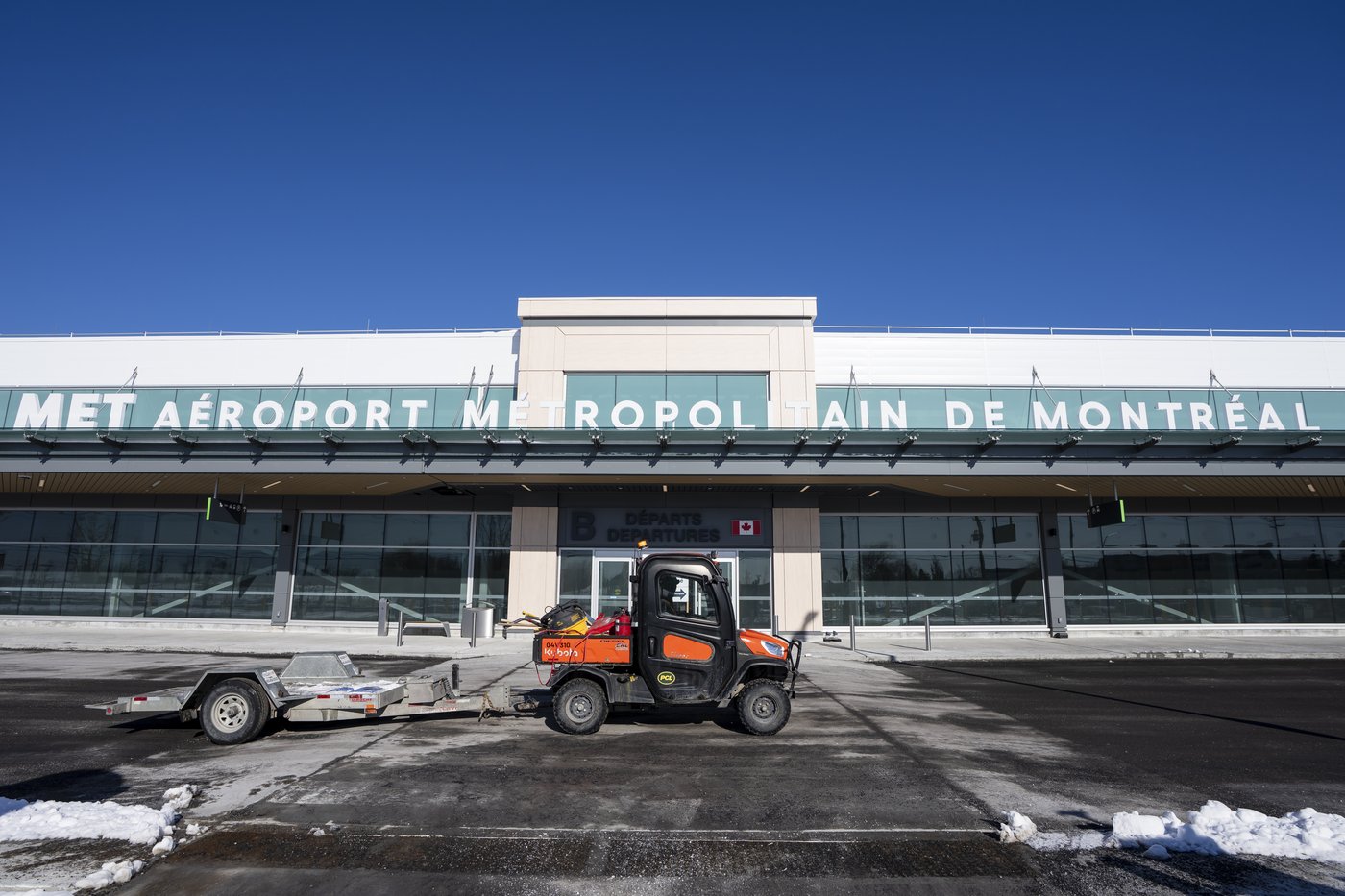
LONGUEUIL — Porter Airlines plans to launch a dozen routes this summer from the overhauled Montreal Metropolitan Airport, as Canada’s third-largest carrier seeks to gain purchase in the competitive domestic market and start putting its half-billion-dollar investment to work.
On Tuesday, the Toronto-based airline announced flights to Canadian cities including Vancouver, Calgary, Winnipeg, Toronto — at both Pearson and Billy Bishop airports — Halifax and St. John’s, N.L., out of a Montreal-area airport currently used mainly for regional service, cargo trips and flight training.
Kicking off June 15, Porter has scheduled 138 flights per week through the revitalized hub, which has the capacity to handle four million passengers each year. It sits on Montreal’s South Shore just a 20-minute drive from downtown in Longueuil, Que., making it a viable alternative to the Trudeau airport, which will continue to host some 15 flights a day from Porter.
“I refer to this as Billy Bishop on steroids,” said Porter CEO Michael Deluce in an interview at the new terminal, a spacious set of halls with pleather seating and USB ports. It can also host Porter’s 52 jets, unlike Billy Bishop, whose short runway permits only turboprops. Toronto’s small island airport near downtown serves as Porter’s headquarters, and could one day harbour jets as well, given Ontario Premier Doug Ford’s pledge this week to take over land currently owned by the city in order to extend the runway.
“Half of the Montreal market residential population lives closer to this airport,” Deluce said. “People go to the airport that’s closest for them. But on top of that, this is a very convenient way for people outside of Montreal to come and visit Montreal and get to downtown.”
Deluce predicted the so-called MET, formerly known as the Saint-Hubert Airport, will rank among Canada’s 10 busiest airports within two years, and achieve the No. 7 spot within four.
The airline is banking on it. Through the jointly owned YHU Infrastructure Partners, Porter and Macquarie Infrastructure Partners have invested more than $400 million in the terminal — the original projection was about $200 million — plus millions more on a planned hotel at an airport that currently borders farmland.
Several hurdles persist.
One is the fact that for all its sleekness, the airport can host flights to and from domestic destinations only — no international trips allowed, due to exclusivity clauses that allow just one airport in a local area to have international flights.
Then there’s the soaring price of fuel due to the war in Iran that prompted Porter on Tuesday to announce fuel surcharges on bookings made via loyalty points. The sky-high cost of jet fuel has pushed up ticket costs across the globe and threatened to reduce sales.
More broadly, there’s the depressed demand for Canada-U.S. travel amid a trade war set off by U.S. President Donald Trump, a feud that began as Porter was in the middle of a rapid fleet expansion predicated largely on cross-border traffic.
Porter was launched in 2006 by Deluce’s father Robert — he remains the executive chairman — who used Billy Bishop Toronto City Airport as a base to offer service from the city’s downtown.

