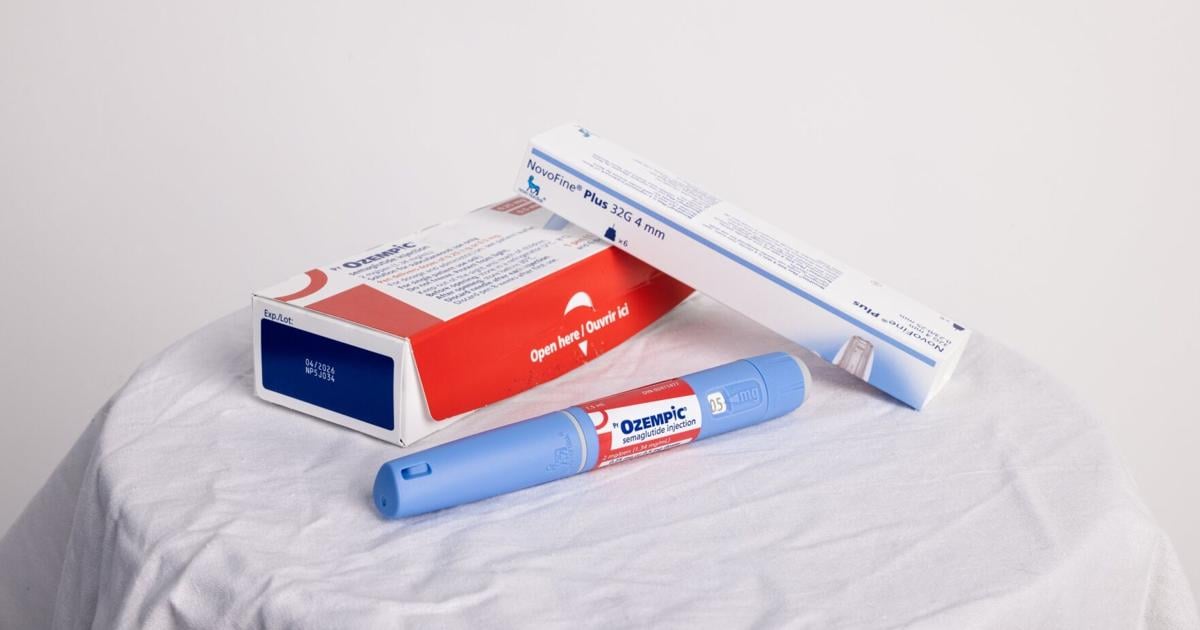
Four decades ago, Canadian endocrinologist Dr. Daniel Drucker’s breakthrough discoveries led to the creation of semaglutide, the active ingredient in drugs like Ozempic and Wegovy — and forever changed the way we treat obesity and diabetes. He still receives grateful calls and emails just about every day.
“My secretary forwarded me one this morning from a total stranger who tells me how this medicine has totally changed her life,” Drucker, now a clinician-scientist at the University of Toronto and the Lunenfeld-Tanenbaum Research Institute at Sinai Health, told the Star. “As a physician, this is the dream — to actually do research that has a lasting impact.”
For the past three years, the medication has come at a high price, but it’s now available for a fraction of the cost. Two generic versions of semaglutide, by Toronto-based Apotex and India-based Dr. Reddy’s Laboraties, began landing in Canadian pharmacies the week of May 18. Apotex said its formulation is about a third of the price of brand-name Ozempic. (A four-week supply of the brand-name drug costs around $230, before pharmacy markups and fees.)
This means more people will be able to access the medications than ever, but experts warn it may also lead to over-prescription and misuse. While semaglutide can seem like a wonder drug, the medication can have side effects and risks — and is a long-term commitment.
We asked Drucker and other experts to break down what we’ve learned about how semaglutide drugs work in the years since they exploded in popularity. Here’s what you need to know.
How drugs like Ozempic work
Semaglutide is a peptide that mimics a natural hormone in the gut called glucagon-like peptide-1 (GLP-1). “This hormone is released after we eat, and it helps regulate blood sugar, appetite and digestion,” explained Dr. Sonia Anand, a vascular medicine specialist and a professor of medicine and epidemiology at McMaster University.
It slows down the emptying of the stomach, making you feel full for longer; targets the appetite centres of the brain, reducing hunger cravings; and moderates blood sugar levels.
Studies show people who received a once-weekly injection of 2.4 milligrams of semaglutide lost an average of around 15 per cent of their body weight over 68 weeks.
Semaglutide’s effects beyond weight loss
Semaglutide was initially developed to treat Type 2 diabetes, but research suggests it may have many other benefits.
“To this day, we’re still trying to figure out what does GLP-1 do,” Drucker said. “We keep finding new mechanisms, whether it’s improvement of liver disease or kidney disease or blood pressure or suppression of inflammation.”
Some benefits appear to be related to weight loss: Semaglutide has been shown to reduce cardiovascular events like heart attack or stroke in people living with obesity and diabetes, improve obesity-related arthritis and joint pain and help resolve obstructive sleep apnea.
But it’s also been shown to reduce inflammation independent of weight loss, which has a slew of benefits including improved outcomes in some cases of liver disease, according to a recent paper from Drucker’s team.
Surprisingly, semaglutide also appears effective in treating and preventing substance use disorders for drugs including alcohol, cannabis, cocaine, nicotine and opioids.
What happens when you stop taking semaglutide
The catch: “It is a chronic therapy for a chronic condition,” Phillips said. “When you stop it, weight regain is common.”
More than half of the people who take the medication to lose weight quit within one year. “There are colleagues of mine who consider these drugs as ‘renting out weight loss’ — it doesn’t give you the long-term fix because people don’t tend to adhere to the medications long term,” Anand said.
A recent review found people who quit these drugs regained an average 0.4 kg every month, and are estimated to regain all their lost pounds within 1.7 years. Improvements to cardiovascular health and blood sugar tend to be rapidly erased as well.
Drucker cites research suggesting some of the shed weight stays off. One recent study found people who stop taking semaglutide keep off 25 per cent of their weight loss in the long term. But that depends on lifestyle.
“If you’re cutting back the dose, if you are thinking about stopping, you need to do everything you can to pay attention to your diet, to pay attention to exercise,” Drucker said. “If you find your weight creeping back up and your health is no longer as good as it should be, you need have another conversation with your physician — maybe it’s not advisable that you stop the medication.”
Maybe the biggest misconception is that drugs like Ozempic work all by themselves, said Sara Mahdavi, an adjunct professor of nutritional sciences at the University of Toronto. “These drugs should not be viewed as cosmetic shortcuts or replacements for long-term attention to nutrition, physical activity, sleep, stress management and preventive care.”
The side effects of semaglutide
Semaglutide’s side effects are mostly gastrointestinal: nausea, vomiting, diarrhea, constipation, reflux and appetite suppression, said Phillips. It can also lead to gallbladder disease, including gallstones and inflammation. “They are usually dose-related and often settle with slower dose escalation and smaller meals.”
A 2025 study found that for every 1,000 people taking semaglutide, fewer than four had to be rushed to the emergency room, most often for serious gastrointestinal problems. A minority of ER visits resulted from very low blood sugar levels, which can be life-threatening, and allergic reactions to the medication.
Semaglutide usage also leads to muscle loss — studies suggest roughly 40 per cent of weight lost was due to shed lean muscle, potentially leading to frailness. Anand recalled patients who were no longer able to stand on their own due to muscle loss as a result of semaglutide, and urged caution for elderly or frail people considering the medication.
Over-prescription and misuse
It’s relatively easy to obtain semaglutide in Canada. Star reporter Morgan Bocknek detailed how she attained a prescription with ease, even though she shouldn’t have qualified for one, through private telehealth companies.
Now, with far cheaper generics available, experts warn against the rise of over-prescription and misuse.
The “downside of more access is often less oversight,” Anand said, noting that Canada has no good way of monitoring who can access which drugs online. “If people are able to order medications online … and start to experiment with how much they’re injecting from injection to injection,” it could lead to unexpected side effects and even medical emergencies.
Drucker agreed. “I’m comfortable when the medicines we use have large, rigorous trials,” he said. “Once we stray from that and people begin quote unquote ‘doing their own research’ or wondering if the medicine would be good for a condition that hasn’t been thoroughly tested — that’s where I would have concerns.
“We need to be very cautious about wisely using these medicines,” Drucker said. “They are not candy, and they shouldn’t be used without careful medical guidance.”