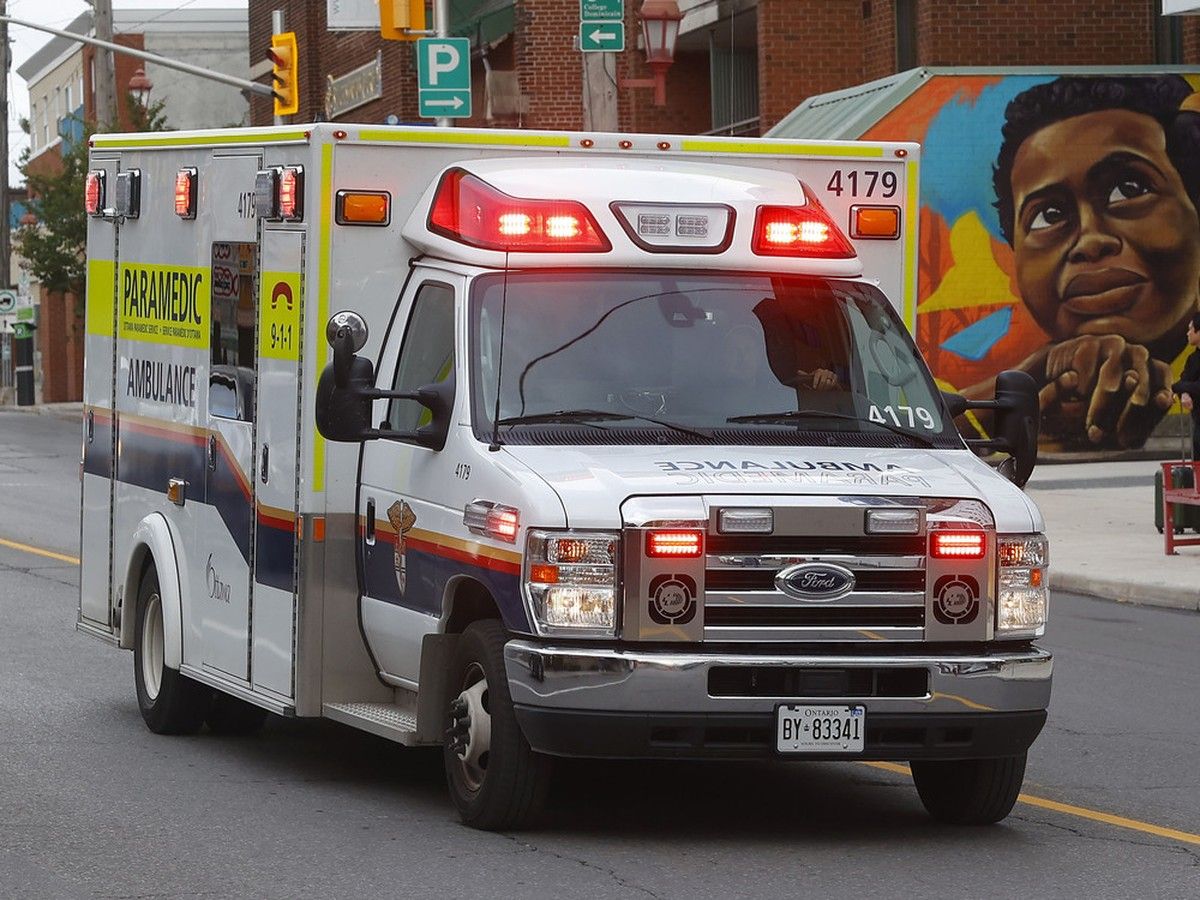
Ottawa paramedics met response time targets for most medical emergencies in 2025 but missed the target for the highest-priority calls involving life-threatening emergencies.
Paramedics have a target time of eight minutes to respond to the highest-priority calls on the Canadian Triage Acuity Scale (CTAS), which are categorized as CTAS 1 for life-threatening emergencies. The Ottawa Paramedic Service achieved that response time in 70.4 per cent of CTAS 1 calls in 2025, which fell short of the council-approved 75 per cent target.
Response times for lower-priority calls range from 10 minutes for urgent (CTAS 2) calls to 25 minutes for the lowest-priority (CTAS 5) calls. Paramedics met or exceeded the target of responding to 75 per cent of calls within each of those categories.
Paramedics met the response time for sudden cardiac arrests, which have the shortest six-minute target, in 75 per cent of calls in 2025.
Each of those response time metrics has seen steady improvement over the past four years, according to a presentation to the emergency preparedness and protective services committee on June 15.
In 2022, paramedics only responded to about half (48.4 per cent) of sudden cardiac arrests within the six-minute target. The paramedic service said it is continuing to implement strategies to respond to the most critically ill patients.
“Going back four years, our service was not great,” Chief Pierre Poirier acknowledged to committee members.
Council approved a new investment strategy in 2022 and the paramedic service “followed through” on the recommendations, Poirier said, by hiring 141 personnel over the past four years and focusing on improving response times as call volume “increased significantly”.
The number of “level zero” events — the periods when there are no paramedic crews available citywide — has been drastically reduced over the past four years.
Paramedics were at level zero for 73,060 minutes in 2022 and that number was slashed to 866 minutes last year.
“As we do continue to improve, our position is that there should never be a time when no paramedics are available to respond to calls in the community, and we continue to develop strategies to reduce level zero events,” said deputy chief Greg Furlong.
The service has also seen significant improvements in reducing “offload delay” — the amount of time paramedics spend in the hospital waiting to transfer a patient to emergency department staff.
Paramedics set a target of 30 minutes of offload delay in 90 per cent of patient transfers.
Delays at The Ottawa Hospital General campus were reduced from 163 minutes in 2022 to 58 minutes last year and delays at the Civic campus were reduced from 136 to 47 minutes. Offload delays were reduced from 168 to 53 minutes over the same four-year period at the Queensway Carleton Hospital, from 39 to 36 minutes at CHEO and from 224 minutes at the Montfort hospital in 2022 to 53 minutes last year.
Investments in staffing and improved dispatch tools continue to strengthen response times across the city, staff said, along with a number of operational improvements.
Single-response paramedics are deployed to urban areas like Lowertown, the ByWard Market, Sandy Hill and Centretown to handle increased call volume related to the opioid crisis , Furlong said.
Paramedics have also added resources to Ottawa’s rural areas like Kinburn, Richmond and Metcalfe “to assist with the city’s vast geography” and improve response times in rural communities, he said.
Ottawa’s ambulance communications centre received international accreditation for meeting the highest global standards in emergency call-taking, triage and dispatch, the committee heard, and expanded community programs are reducing pressure on hospitals and reducing ambulance transports by administering care to patients at home.
The city’s 911 call volumes and response times remain steady, according to a separate presentation to the committee. The emergency line received 382,175 calls in 2025, and 91 per cent of those were answered within six seconds.
Our website is your destination for up-to-the-minute news, so make sure to bookmark our homepage and sign up for our newsletters so we can keep you informed.
Related
- Between a root and a hard place: Ottawa woman fighting city hall for right to cut down trees
- Why an Inuit group has concerns about policing at downtown gathering spot