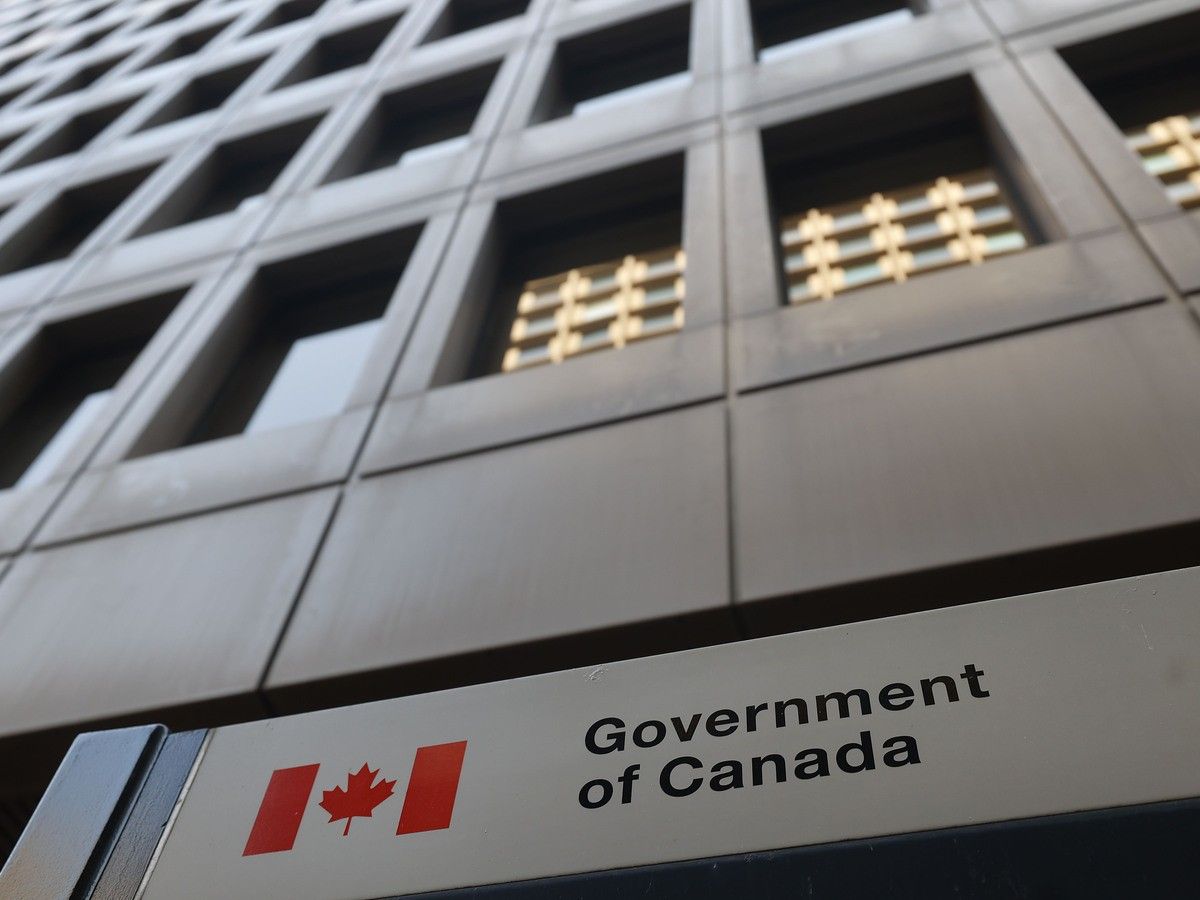
Prime Minister Mark Carney appears to be on pace to meet public service reduction targets after new data from the Treasury Board Secretariat showed the federal government shed more than 12,000 public servants over the past year, experts say.
“Carney said he wanted to make the public service smaller; the public service is getting smaller, no question,” said Lori Turnbull, a professor in the faculty of management at Dalhousie University in Halifax.
The federal government is aiming to reduce the headcount of the public service by around 30,000 positions by 2028-29, a number that Carney “is in the ballpark” to hit, Turnbull said.
Michael Wernick, a former clerk of the Privy Council , agreed.
“We’ve clearly pivoted into downsizing — the years of growth are over,” Wernick said. “To use an old metaphor, the curve is bending, and it will only bend downwards for the next two or three years.”
What is the population snapshot show?
Overall, the federal public service, including all core departments and separate agencies, shed 12,683 positions in the past fiscal year.
The updated headcount, published online by the Treasury Board of Canada Secretariat, captured the number of active employees in the federal pay system as of March 31.
Alongside full-time public servants, the total included indeterminant, term and casual workers.
At the end of 2025-2026, the public service population was about 345,000 workers, down by more than 20,000 from a peak at the end of 2023-2024.
The National Capital Region was hit hard by the cuts.
At the end of the past fiscal year, Ottawa-Gatineau was home to about 146,000 public servants, nearly 10,000 fewer than at the end of 2023-2024, though still higher than the headcount at the end of 2021-2022.
What do cuts tell us about the state of the public service?
For experts, questions linger about how the reductions will shake out in the longer term and what type of public servant is leaving the federal government.
Turnbull says she’s heard there’s an appetite to leave the public service due to pressures within departments around the Early Retirement Incentive program and ongoing workforce adjustments.
Workforce adjustment is the process through which a public servant can look to alternate with another public servant in the federal bureaucracy or take an exit package. Public servants may also have to compete with one another to keep their jobs.
Turnbull says that some organizations “could be really affected by the fact that a lot of people are close to retirement.”
“They put their hands up, they all want to leave, and pretty soon you’ve got a significant gap in knowledge and service, right?” she said.
Staffing pressures in some departments may also be driving a “musical chairs” effect, Turnbull said.
At times, the demands of personnel management due to workforce adjustments are leading workers to change jobs within the bureaucracy or to depart for the private sector, Turnbull said.
“I talked to a lot of people who are like, ‘I’m not going to work here anymore,’” Turnbull said of the public service, or departments that were close to laying off workers through the workforce adjustment process.
Experts also point to a lack of public details around headcount reductions.
More detail on spending reductions is expected in both the departmental results and the fall budget, Wernick said, both of which will be studied in Senate and House of Commons committees.
According to the most recent annual report to the prime minister on the public service , the Carney spending review is estimated to reduce around $13 billion in operational costs.
Those cuts mean thousands more public servants will leave the public service in the coming months.
Related
- Five charts to help visualize public service job cuts
- What post-employment conflict of interest restrictions apply to public servants?
Our website is your destination for up-to-the-minute news, so make sure to bookmark our homepage and sign up for our newsletters so we can keep you informed.