In the brave new world of ubiquitous smartphones, artificial intelligence chatbots and social media tech giants operating with impunity, many parents are grappling with the question of how we protect our kids online.
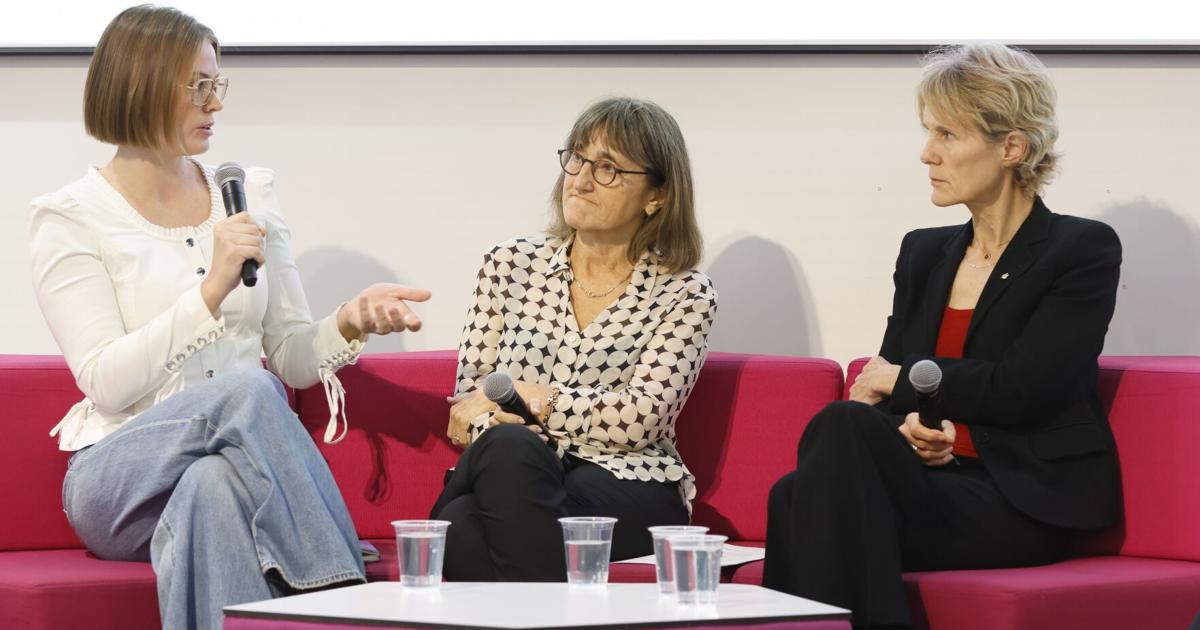
On Tuesday at the MaRS Centre, the Star’s Raisa Patel hosted advocates, researchers and policy experts Diana Fox Carney, Beeban Kidron and Ava Smithing to discuss regulating a digital world that one panellist described as having “less rules than an air fryer.”
Here are five key takeaways.
Kids should have a say in combating online harms
Protecting children from online harms is often framed as the responsibility of politicians and parents to build a wall around negligent social media platforms.
Kidron made the case that, with some guidance, kids can recognize online harms, sharing an anecdote of a child who grabbed a mic at an event and yelled, “I passed my exam because they turned off TikTok notifications at night!”
Kidron said the Age Appropriate Design Code, which she helped shape and became part of the U.K.’s Data Protection Bill, includes standards for how social media companies should operate, such as restricting geolocation for youth and turning off targeted ads by default.
Of the 15 standards, 12 were directly inspired by comments she heard from youth — “It was their experience of life that made me understand what was necessary to design it differently.”
We can’t depend on the companies
One of the overarching themes of the panel discussion is that no single country can take on the tech giants, with Smithing remarking that “companies are acting as a nation that has a seat at the table” — and may be more wealthy than a nation-state.
Social media companies rarely introduce protective features unless compelled to and have not used their profits to proactively make their platforms safer, several panellists said.
Fox Carney said she was “shocked” when she learned reports of how the Tumbler Ridge shooter consulted with an OpenAI chatbot on how to perpetrate a mass shooting. Although internal employees flagged alarming content on the perpetrator’s account, that information didn’t make it to law enforcement until after the mass shooting.
If anything can come good out of this, it’s progress in the way these companies flag and address these issues, Fox Carney said.
What we can learn from other jurisdictions
Fox Carney said during a recent conversation that the first lady of Romania said protecting children online “is a shared responsibility and it must be met with shared standards.”
“Surely we should be moving in a direction where we can negotiate internationally on some baseline standards,” Fox Carney said.
The U.K. Online Safety Act sets out legal and financial consequences for companies that fail to protect users, especially children, from harmful and illegal content.
Kidron said Canada can learn from the U.K.’s approach to enforcement, which she nonetheless believes could be stronger. She said governments need to recognize that for companies with billions at their disposal, fines can be a price of doing business.
“You’ve got to start looking at business disruption; you’ve got to start looking at access to market,” Kidron said.
Focus on design, not content
While the panellists acknowledged the importance of social media companies being legally required to remove harmful and illegal content, they emphasized that it’s equally important to target the inherent design features that make social media platforms addictive.
Smithing cited the approach of California’s recently passed Bill 1709, which prohibits certain functions for minors such as infinite scrolling, autoplay and algorithm-driven recommendation feeds that can suggest inappropriate content.
“Instead of banning children from being able to access platforms, it bans platforms from being able to access children,” Smithing said.
Kidron added that protective features need to be built into the platforms, and the onus shouldn’t be on parents to find them and toggle them on.
“There is phenomenal evidence that optional tools are not used, but by default settings absolutely were,” Kidron said.
The role parents have to play
It’s a common refrain that parents need to know what their kids are up to online. But parents playing the role of enforcer can result in an “enormously difficult relationship” between parent and child, Fox Carney said.
“We set rules, but we don’t want to be constant police in our house,” Fox Carney said.
Parents can’t do it alone, Kidron added. Governments need to act, but sometimes simply setting a positive example can affect children’s relationships to their devices. Kidron said in her time speaking to youth, one of the most frequent answers when asked what is most important to them is, “Can you ask our parents to put their phones down?”