As a Parks Canada warden in the late 1980s, George Mercer dealt with poachers nearly every night.
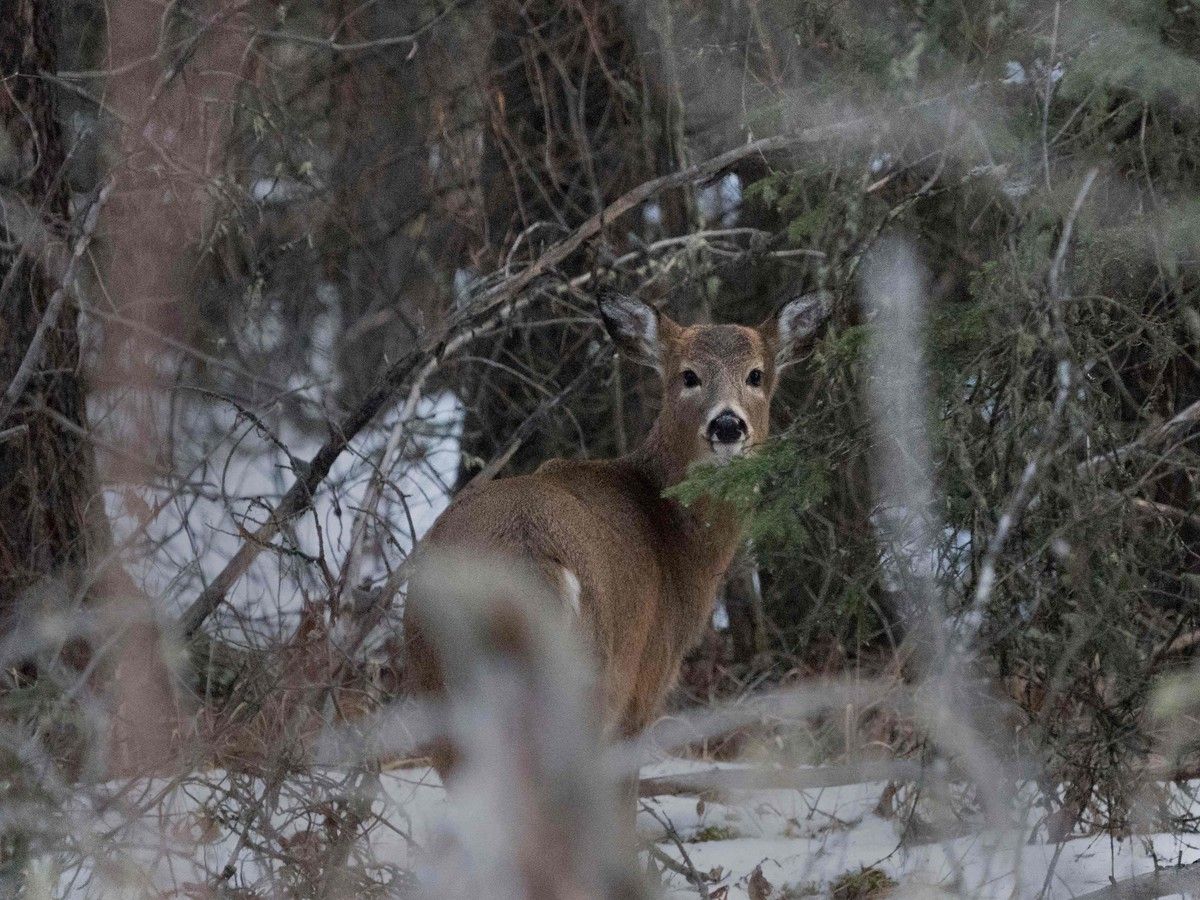
In fields and pockets of forest along the Cabot Trail, the picturesque highway around Cape Breton Highlands National Park, he would routinely discover poachers in the midst of jacklighting, or using their vehicle headlights to cast spotlights on the terrain and illegally hunt for deer.
In the fall and winter, poachers targeted deer and moose. In the spring and summer, they angled for salmon.
“It was non-stop,” said Mercer, who was a warden for most of his 35-year career at Parks Canada before retiring in 2012.
“The pressure of poaching in most national parks in Canada pales in comparison to what some other countries deal with — but it does happen, and it happens a lot in some parks.”
Mercer is worried that planned cuts to warden detachments across the country could severely handcuff Parks Canada’s ability to respond to the threat of poaching.
“To not have a law-enforcement capacity that meets the needs of those parks is just going to almost make an open season for those folks (poachers) to go in and do what they want,” he said.

Thousands of letters, hundreds of jobs
Last month, Parks Canada officials notified staff the agency was entering a second phase of “workforce adjustment.” The agency sent letters to nearly 3,000 employees whose jobs could be impacted by cuts.
A letter indicates a job is at risk, but doesn’t necessarily mean it will be eliminated, and Parks Canada says it expects to cut the equivalent of about 500 full-time positions through the process.
The cuts are part of the agency’s response to a mandatory belt-tightening exercise outlined last fall in Prime Minister Mark Carney’s first federal budget.
Under the “comprehensive expenditure review” — a plan to find $60 billion in savings over several years from the operational budgets of most departments and agencies — Parks Canada has been told to cut $145 million in spending over three years.
Alex Silas, national executive vice-president with the Public Service Alliance of Canada (PSAC), said the cuts would impact everything from visitor experience to conservation but specifically highlighted concerns over the loss of warden detachments as well as the end of the search and rescue dog program in Banff National Park.
That program, which dates back to the 1970s, supported backcountry rescues and efforts to track down missing people. A new dog, Ash, just graduated from training, Silas said, and would have picked up the mantle as the sole remaining dog in the program had the funding not been cut.
‘It’s just totally goofy’
Another concern, Silas said, is the planned closure of 13 warden detachments across Canada, including in Kluane, Nahanni, Wood Buffalo, Point Pelee and Kejimkujik.
Although two new detachments will be added, according to Silas, they will be located in Yellowknife and Moncton — too far away from national parks to effectively support the job of a warden.
He worries the responsibilities will instead be offloaded to other law enforcement agencies that don’t have the specialized skills that are needed.
“Closing all these detachments, I think, sends a message to poachers and to anyone else who wants to engage in criminal activity in national parks that they have free rein to do so,” he said.
Mercer shares those concerns.
As a hypothetical, Mercer said, a call for a suspected poacher in Kluane may be routed to Jasper dispatch only to be redirected to the closest available warden, who would be in Yellowknife.
“It’s just totally goofy,” he said.
In an email statement, Parks Canada spokesperson Meaghan Bradley said the agency had been implementing the expenditure review “to ensure government spending is responsible, cost-effective and delivers results for Canadians.”
“Our focus on visitor service, conservation, and enabling memorable experiences remains unchanged,” Bradley wrote. “Parks Canada will continue to focus on protecting the places entrusted to its care and ensuring they can be enjoyed by current and future generations.”
Evokes Harper-era cuts
For Mercer, the current situation is reminiscent of a similar round of “devastating” cuts under former prime minister Stephen Harper.
Mercer retired about one week before a day he remembers only as “Blue Monday,” the date in 2012 when many Parks Canada workers were told their jobs were on the chopping block.
That federal budget — the first of Harper’s sole majority government — instructed the agency to find millions of dollars in savings ramping up over several years. As a result, hundreds of jobs were declared surplus.
At the time, Mercer said, Parks Canada staff “were muzzled” from speaking to the media, so he started a blog “basically lambasting the Harper government.”
Now he’s hearing from current staff who say certain functions at the agency never fully recovered.
Green Party ‘absolutely baffled’
The government under former prime minister Justin Trudeau invested heavily in national park infrastructure, but Green Party Leader Elizabeth May said losses to Parks Canada’s interpretation and science functions were never fully restored.
“People are just reeling,” she said.
For a second consecutive summer, the Carney government renewed the “Canada Strong Pass,” a program offering, among other perks, free admission to national parks and discounts on museums and galleries.
It was branded as a response to an increasingly hostile White House, with a news release announcing the program describing the pass as an effort “to make it easier for families to choose Canada.”
Silas said he saw the pass as a great way to help more Canadians experience the beauty of nature, but questioned the tradeoff.
“Why did you give the passes away for free if you needed revenue?” he asked. “Why are you putting the budgetary reductions on the backs of workers?”
May called the Canada Strong pass “a wonderful program,” but said the combination of increased visitation resulting from the pass and concurrent staffing reductions raised questions about visitor experience and safety.
“I’m absolutely baffled,” she said. “We’re subsidizing for-profit fossil fuel companies while further eviscerating Parks Canada.”
Parliamentarians of other political stripes have reacted as well.
Conservative MP William Stevenson started a petition to “save” the search and rescue dog program.
Liberal MP Brendan Hanley sponsored a petition initiated by Michael Pealow of Haines Junction, Yukon, calling on the government to suspend all Parks Canada job cuts.
Don’t let algorithms hide the follow-up. If you are tracking this story, make the Ottawa Citizen a preferred source so you get our live updates the next time you search.