OTTAWA — Faced with the threat of a fracturing Canadian federation, Prime Minister Mark Carney declared that Alberta is at the heart of his goal for a more “co-operative” Canada, after the province’s premier promised to stage a vote that could trigger the first separation referendum outside of Quebec in Canadian history.
It was among the more conciliatory and measured responses to Alberta’s referendum gambit on Friday, as Carney refrained from criticizing Premier Danielle Smith for placing Canadian unity on the ballot. Pierre Poilievre, the Conservative leader of the official opposition, also avoided condemning Smith, and instead suggested Carney and the previous Liberal government under Justin Trudeau are to blame for the strength of separatist movements in Alberta and Quebec.
Alberta’s referendum — which, according to Smith, will ask voters whether the province should hold a future “binding” vote to leave Canada — is set for Oct. 19, two weeks after a scheduled provincial election in Quebec, where the separatist Parti Québécois is leading the polls and promising to stage its own vote on independence.
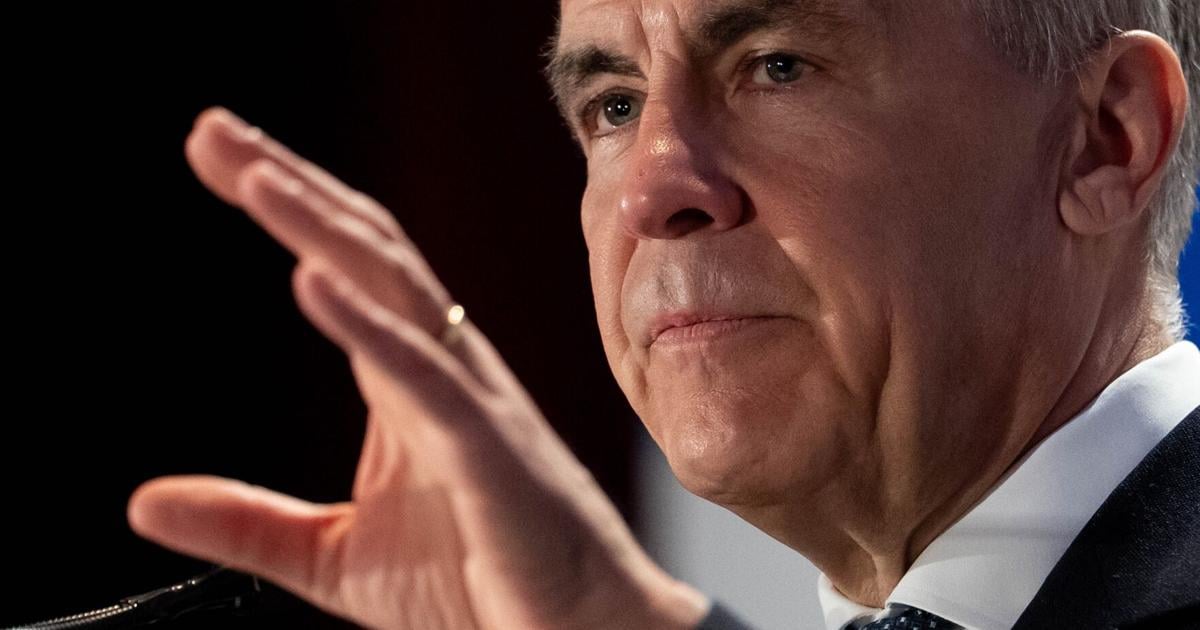
Appearing to make a brief statement to cameras on a tour of Parliament Hill’s Centre Block, which has been under extensive renovation for years, Carney said his government is similarly trying to improve the entire country, and cited the “huge contributions” of Albertans to Canadian politics and other areas of national life.
He also surveyed his government’s efforts to quickly build major projects by working with provinces across the country, and alluded to recent deals to lift federal climate policies that Alberta and federal Conservatives have long opposed, while offering possible federal support for a major new oil pipeline to the West Coast — one that British Columbia and Coastal First Nations oppose.
“We’re working in a spirit of co-operative federalism to make the country better,” said Carney, who was born in the Northwest Territories but grew up in Edmonton.
“We’re renovating the country as we go, and Alberta being at the centre of that is essential,” he added.
Smith, taking questions from the media for the first time since announcing the referendum, stressed she is “fiercely loyal to both Alberta and Canada,” and pledged to campaign across the province to convince voters to remain within the country. After a recent court ruling that struck down the prospect of a separation referendum, Smith defended her decision to revive the question by arguing it can’t be allowed to linger and must be settled as soon as possible.
“We are turning the tide on the last 10 years of disastrous policy from Ottawa that held our province back. Now we have a federal government that is starting to work with us in the spirit of co-operative federalism to undo the damage caused by the previous government,” Smith said.
Since taking office last year, Carney has scrapped or weakened several of those policies, including a planned cap on oil-and-gas emissions and the national consumer carbon tax-and-rebate system. In recent weeks, he has also proposed sweeping changes to the federal regime for reviewing major projects like oil pipelines, which Conservatives and Alberta governments have argued prevented development.
The Carney government has struck a deal with Smith last week to weaken the national industrial carbon price in exchange for Alberta pledging to stop undermining the system inside the province, while agreeing to work toward possibly clearing the way to build a major new oil pipeline through British Columbia as early as September 2027.
In Edmonton Friday, Smith said she is honouring the democratic will of more than 700,000 Albertans who signed petitions in recent months to either vote to remain in Canada or leave the country, and that she will trigger the process for a future separation referendum if the “remain” side loses by a simple “50 per cent plus one” majority.
“This is a question that has to go to Albertans. And I have said that I will honour the outcome of this referendum,” Smith said.
The referendum-for-a-referendum strategy, however, was condemned as an irresponsible gamble with national unity, one that comes as separatists in the Parti Québécois are promising the first independence referendum in the province since the razor-thin defeat of the sovereignty side in 1995. It also follows unprecedented comments from the president of the United States, Donald Trump, who has repeatedly mused about annexing Canada and threatened last year to use “economic force” to make it happen.
In Sault Ste. Marie, Ont., Ontario Premier Doug Ford said Alberta separation would be a “disaster” and suggested Smith is trying to please independence activists that are part of her United Conservative Party base.
Jason Kenney, the former Alberta premier who was pressured to resign by members of that party before Smith took power, joined a new campaign in the province called “Vote To Stay,” and vowed to defeat the separatist push and keep Canada intact. Other prominent members listed on the group’s website included former federal Conservative cabinet minister Monte Solberg, former Alberta finance minister Travis Toews, and the journalist Jen Gerson.
“We’re not going to let anyone tear apart our home, the true north strong and free,” Kenney wrote on social media Friday. “It’s time to fight for our country.”
NDP MP Heather MacPherson, who represents a riding in Edmonton, posted on social media that Smith is “tearing this province apart to save her own political skin” — a reference to how Alberta separatists have tried to influence the government through involvement with the United Conservative Party. Earlier this week, separatists leaders threatened to try and oust Smith from the premier’s office over concerns their preferred independence question would not be put to voters.
“Albertans deserve more than a premier willing to flirt with U.S.-backed separatist extremists to cling to power,” McPherson said.
Speaking to reporters in Surrey, B.C. on Friday, Poilievre echoed the grievances that his party and Smith blame for fuelling separatism in the province: policies of the Liberal government in Ottawa that were designed to reduce greenhouse gas emissions from Alberta’s heavy-polluting, and economically significant, oil and gas sector.
He promised to campaign for a “united Canada” and said he would do so by inspiring “hope” and offering an Conservative alternative to Liberal governance that he accused of blocking resource development, over-taxing Canadians, and being soft on crime.
“We want Albertans to understand that they can have an even better future in our country,” he said.
Error! Sorry, there was an error processing your request.
There was a problem with the recaptcha. Please try again.
You may unsubscribe at any time. By signing up, you agree to our terms of use and privacy policy. This site is protected by reCAPTCHA and the Google privacy policy and terms of service apply.
Want more of the latest from us? Sign up for more at our newsletter page.