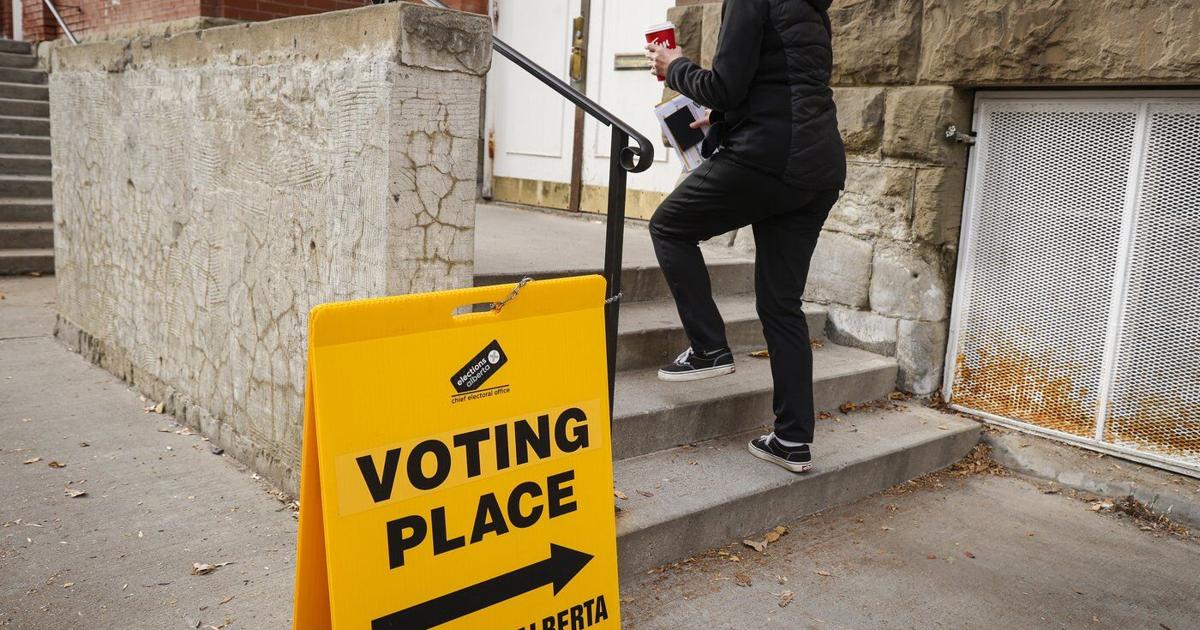
As I watched the Alberta referendum results last night, my mind went back 50 years.
It was the mid-1970s, and I was visiting Montreal for the first time.
My father had splurged on a hotel in the central business district, and took me up to the rooftop garden. As my young eyes surveyed the spectacular view, he told me it was Canada’s largest and most important city.
Montreal’s pre-eminence wouldn’t last.
Quebec’s Parti Quebecois government led by René Lévesque would soon hold a failed referendum in 1980 on separating from Canada.
Why Montreal lost its economic crown
The business exodus was swift, and Toronto soon eclipsed its rival in population, becoming the nation’s corporate capital. As separatist sentiment lingered and spawned a second referendum in 1995, the gap widened.
Quebec’s sovereigntist movement was not the only reason Montreal lost its economic primacy. However, the political uncertainty it created compounded other challenges, encouraging businesses and investors to look elsewhere.
This presents a lesson at two levels: first, investors hate uncertainty, and few things create more uncertainty than the prospect of a nation splitting apart. And second, even unsuccessful separatist movements can impose costs that last for generations.
Last night, Albertans voted decisively not just to remain in Canada, but also to reject another debate and vote on separation. We should not interpret this as an endorsement of the status quo. Rather, it suggests an understanding that Alberta’s prosperity — and all of Canada’s — depends on working together within the federation we have all helped to build.
Most Quebecers agree, too.
While they recently elected another PQ government, support for separatism is near record lows. Even after promising not to hold a referendum while Donald Trump is in office, the PQ won with a paltry 28 per cent of the vote.
Unfortunately, in both Alberta and Quebec, separatist movements are bloodied but unbowed. And if there’s one thing that unites them, it’s that they refuse to take “no” for an answer.
Why repeated referendums damage democracy
Canadians cannot afford to let the separatist minority hold the federalist majority hostage to their destructive agenda.
Every referendum campaign forces businesses to reconsider investments, families to worry about their futures, and governments to lose their focus on improving our economy and our society.
When defeated separatists can immediately start organizing for the next vote, the uncertainty never ends. As Montreal columnist Josh Freed observed some 30 years ago, the referendum becomes a neverendum.
The goal should be simple: an end to referendums as recurring instruments of political blackmail.
Business leaders and economists must speak up — as they did loudly and clearly during the Alberta campaign — to challenge secessionists’ false claims about economic benefits.
The Calgary Chamber of Commerce crafted an open letter signed by more than 80 business leaders warning of the severe economic fallout if Alberta were to split from Canada. The Alberta and Canadian chambers and the Business Council of Alberta were similarly vocal.
The University of Calgary’s School of Public Policy, the Canada West Foundation and Alberta Federation of Labour all released studies quantifying the staggering costs of secession.
Separatists can argue these costs are worth paying, but they cannot be allowed to mislead people by denying that they would be steep.
Federalist politicians must challenge the notion that referendums are democracy’s highest expression. They are not. Canada’s parliamentary democracy rests on responsible government, constitutional rights and the protection of minorities. Referendums cannot be allowed to supersede them.
Do Canadians have a right to debate their country’s future? Of course. Our democracy must therefore protect the right to advocate secession, but it need not enable a determined minority to repeatedly impose the economic, political and social costs of putting the country’s existence to a vote — particularly when most citizens have no appetite for it.
There are other concerns about referendums. They distil complex issues to binary choices; they are vulnerable to misinformation and manipulation, as Britons discovered after the Brexit disaster; and they often threaten the rights of vulnerable minorities, as the anti-immigration questions did in Alberta this week. Indigenous leaders have also justifiably expressed concerns that their rights to consultation and consent cannot be abrogated by a popular vote.
Democracy is not simply the right of a majority to impose its will, and it certainly is not the right of a minority to demand repeated votes until it gets the answer it wants. It is a system of rights, responsibilities and institutions that protect everyone.
Ordinary citizens who are part of Canada’s federalist majority must make themselves heard. We have built one of the world’s most successful countries, and it belongs to all of us. No one has an inherent, unilateral right to break off a piece of it.
Canadians will disagree about how our federation should work, and such debates are healthy — even necessary.
But the question of whether Canada should continue to exist cannot become a permanent political campaign. A democracy must be capable not only of asking difficult questions, but also of accepting clear answers.
Polls suggest Canadian unity is surging in the face of external threats, as is Canada’s reputation in the rest of the world.
If we are to address our challenges and seize our opportunities, the greatest lesson from the Alberta referendum must be to make “no” the final answer.