

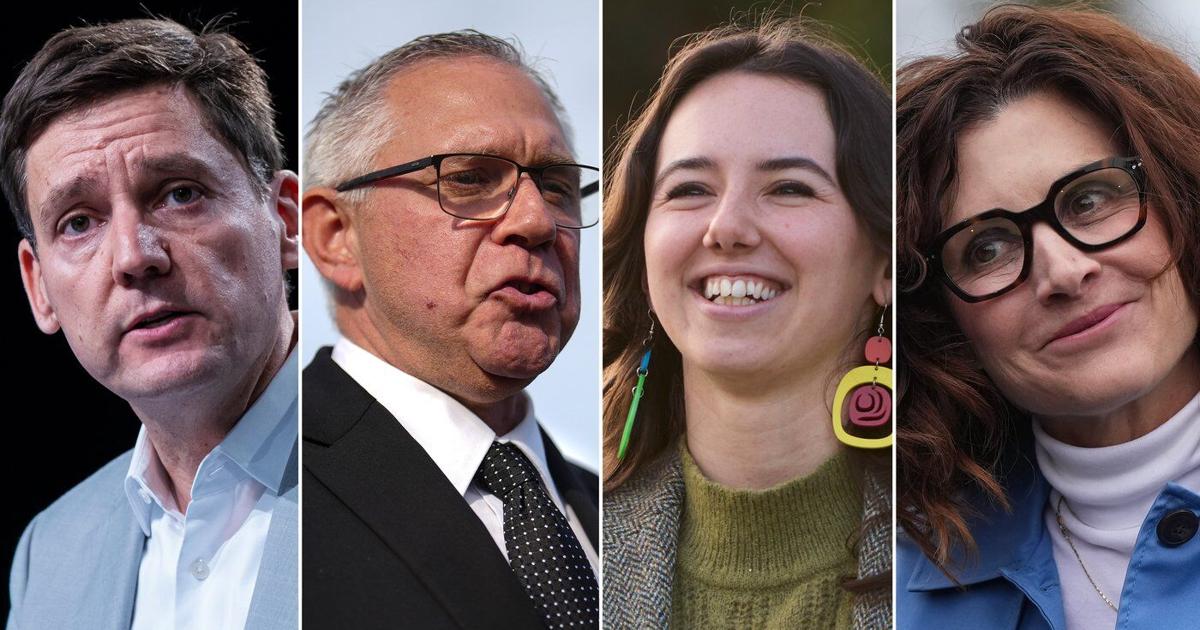
British Columbia NDP Leader David Eby said his party would introduce a new tax bracket for those who earn $1 million or more and raise the existing rates of the two highest brackets to help pay for health care, if re-elected.
Eby’s party said British Columbia would become the first large province with a tax bracket on individuals who earn more than a million, while the B.C. Conservatives said the move would drive doctors out of the province.
“We are glad when people are successful, it’s fantastic,” Eby said Sunday while campaigning in Comox on Vancouver Island ahead of the Oct. 24 election.
“We cheer for them, we want them to be successful, and it’s also right to ask people, who earn a little bit more to pitch-in in a moment like this, when people across the province need those strong public services.”
Documents provided by the party say that the proposed changes would start in the 2027 tax year and are projected to raise $225 million in 2026/27, $925 million the next year, and $1 billion in the year after that.
The party said that a portion of income above $1 million would be taxed at 24.5 per cent.
The portion between $265,545 and $1 million would be taxed at 22.5 per cent, while income between $190,405 and $265,545 would be taxed at 18.8 per cent.
The documents say that the changes would apply to less than four per cent of earners and only to income earned over each tax bracket.
In response, the B.C. Conservatives said in a statement that the NDP plan would mean taxing the doctors and specialists every community is fighting to recruit, and would drive doctors out of the province.
“There is no problem the NDP don’t think can be fixed by raising your taxes,” the statement said.
The Conservatives have campaigned on a promise of never raising taxes.
The announcement comes after Eby said his government would introduce price guards for certain groceries, as well as gasoline and diesel, while temporarily lowering the provincial motor fuel tax by 10 cents per litres.
Eby said during the early phases of the campaign that his party would introduce a new tax on empty condominiums and lift the speculation and vacancy tax.
When asked whether promises of new taxes and regulations would make businesses feel unwelcome, he said his party is not fighting against them, but standing up for British Columbians.
“The business community, as much as anybody else, depends on a functioning province, where truckers are able to deliver goods, where people are able to find homes, where their employees are able to find health care, and I know they understand that.”
Elsewhere on the campaign trail, B.C. Green Party Leader Emily Lowan released her party’s promises related to the forestry sector.
The Greens said they would end raw-log exports and close loopholes that allow minimally processed or rough-sawn wood to leave British Columbia without meaningful processing.
The platform also promises to permanently protect big-treed old growth and large second-growth forests from logging and provide conservation financing to support Indigenous-led protection.
The announcements came as the field of candidates running in the election was set Sunday.
A statement from Elections BC showed the British Columbia Conservatives as the only party with candidates in all 93 ridings.
Mauro Francis, the party’s president, said in a statement that the momentum is now with the Conservatives.
“The enthusiasm we’ve seen across B.C. has been incredible,” he said. “In every region, from small towns to big cities, local members and volunteers stepped up to find great candidates and get them nominated.”
Eby’s New Democrats, meanwhile, was one short of fielding a full slate after failing to find a candidate for Peace River North, where voters will choose between Independent Jordan Kealy and Conservative Curtis Whitford.
Kealy won the riding in 2024 as a Conservative, but left the party in March 2025. He was charged with sexual assault in June of this year. He has denied the allegations.
Eby said it is disappointing that paperwork prevented his party from fielding a candidate in the last riding.
“But I will tell you that I have got 92 amazing candidates in this province that I would put against any of the Conservative candidates that they are putting forward,” he said.
Elections BC said the Greens have 73 candidates, including Lowan, who is running in Greater Victoria, former provincial chief coroner Lisa Lapointe, who is also running in Greater Victoria, and Jeremy Valeriote, who is running in Greater Vancouver.
Andrew Weaver, a former leader of the Greens, is running for CentreBC, which is fielding 35 candidates, including Leader Elenore Sturko.
The former Conservative will be running in her home riding of Surrey South, where she will face Conservative Megan Knight, along with New Democrat Parik Tahlan, Green Bill McConnell and Denis R. Hurtubise, who is not affiliated with any party.
OneBC, which like CentreBC, splintered from the Conservatives, is running in 33 ridings. But its roster of would-be legislators does not include former Conservative Brent Chapman, who held Surrey-South at dissolution.
OneBC earlier announced Chapman as the candidate for the riding, but his name does not appear at all on the official list of candidates.
Chapman is the husband of former Conservative Kerry-Lynne Findlay, who resigned last month after defections and ideological divisions, just before the snap election was called.
Also not running is former OneBC legislator Tara Armstrong, who said on social media that she doesn’t want to split the anti-NDP vote. Armstrong had previously tried but failed to repeal the B.C. Human Rights Code.
OneBC interim leader Dallas Brodie, meanwhile, is running again in Vancouver-Quilchena. It’s one of nine ridings where candidates for all four major parties will face off against each other.
This report by The Canadian Press was first published Oct. 4, 2026.
