

TORONTO – Canada’s big banks say the economy is proving resilient amid renewed trade tensions, with most seeing the challenge as manageable.
While executives expressed optimism that the evolving trade situation could be dealt with, they largely acknowledged the uncertain environment as a headwind to certain sectors and Canadian consumers.
“While Canada and the U.S. have yet to come to a longer-term solution, we note the average effective tariff rate remains low at approximately six per cent, with over 80 per cent of exports remaining duty-free,” RBC CEO Dave McKay said during his company’s earnings call.
Executives at Scotiabank also characterized the latest flare-up in tensions as “manageable” for the domestic economy.
“The fundamentals in Canada are pretty good, if you look at the job growth numbers, if you look at the fiscal capacity on the back of oil prices, and if you look at some of the activity that’s starting because of the prime minister’s agenda, you actually have a backdrop that’s pretty good,” Scotia chief executive Scott Thomson said on the bank’s third-quarter earnings call on Tuesday.
The trade dispute between Canada and the U.S. has intensified, with U.S. President Donald Trump imposing 50 per cent tariffs on about $28 billion worth of Canadian products last weekend. Ottawa has responded with its own dollar-for-dollar tariffs on a range of U.S. products.
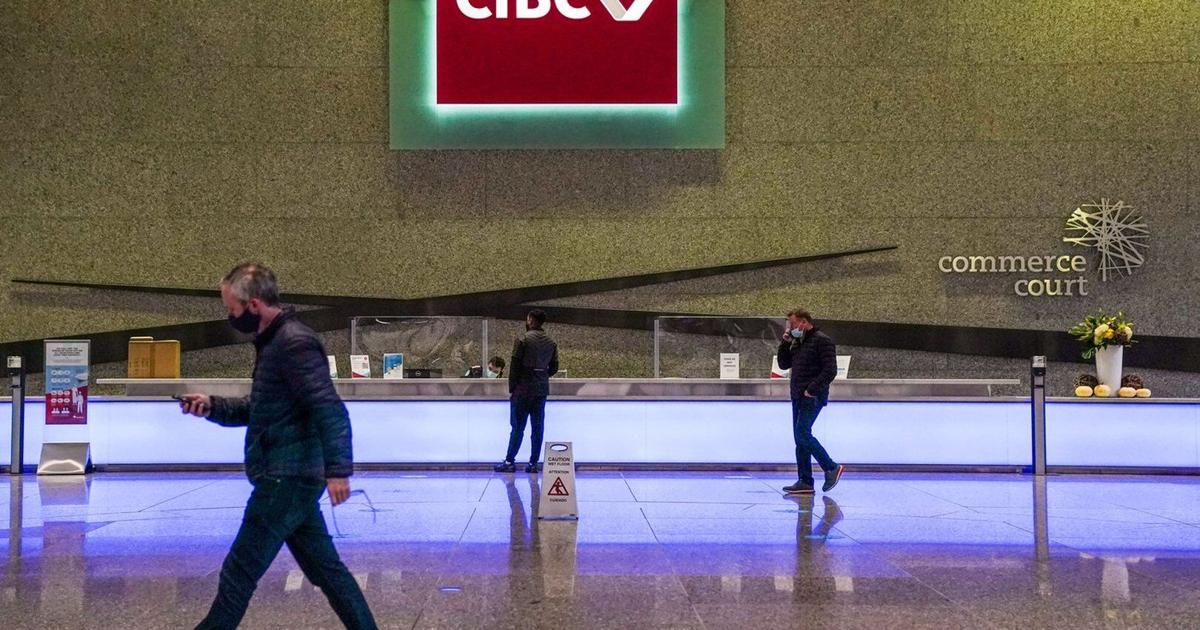
CIBC said it’s planning for a range of outcomes amid trade and geopolitical tensions that the bank says are having real effects on the economy.
Frank Guse, CIBC’s chief risk officer, said the lender’s credit performance remained resilient during the quarter.
“We have built additional reserves for tariff-related risks through expert credit judgment overlays since the beginning of fiscal ‘25 and continue to build our allowance this quarter,” Guse said.
“Our most sensitive business lending exposures to the tariff impacts represent less than one per cent of the bank’s total loan portfolio. We’ve also run a variety of stress testing on the portfolios to ensure we remain well prepared for a range of outcomes.”
All of the executives at the big banks expressed some degree of optimism over Prime Minister Mark Carney’s economic agenda, which includes getting national-interest projects and other major infrastructure built, diversifying Canada’s trade relationships and beefing up the country’s defence capabilities.
“While business confidence and investment are difficult in the current context, I am encouraged by the way governments and business leaders are mobilizing around Canada’s economic priorities,” National Bank chief executive Laurent Ferreira told analysts on a third-quarter conference call Wednesday.
That sentiment was echoed by CIBC chief executive Harry Culham.
”Canada’s renewed focus on sovereignty and economic resiliency is creating one of the most significant capital mobilization efforts and opportunities our country has seen in decades. The implementation of Canada’s defence industrial strategy represents a substantial opportunity for our commercial clients,” Culham said.
Heading into the quarter, valuations were a concern for the banks, which had seen their share prices rise sharply this year. But analysts appeared to view the results positively.
This report by The Canadian Press was first published Aug. 27, 2026.
Companies in this story: (TSX:CM)

