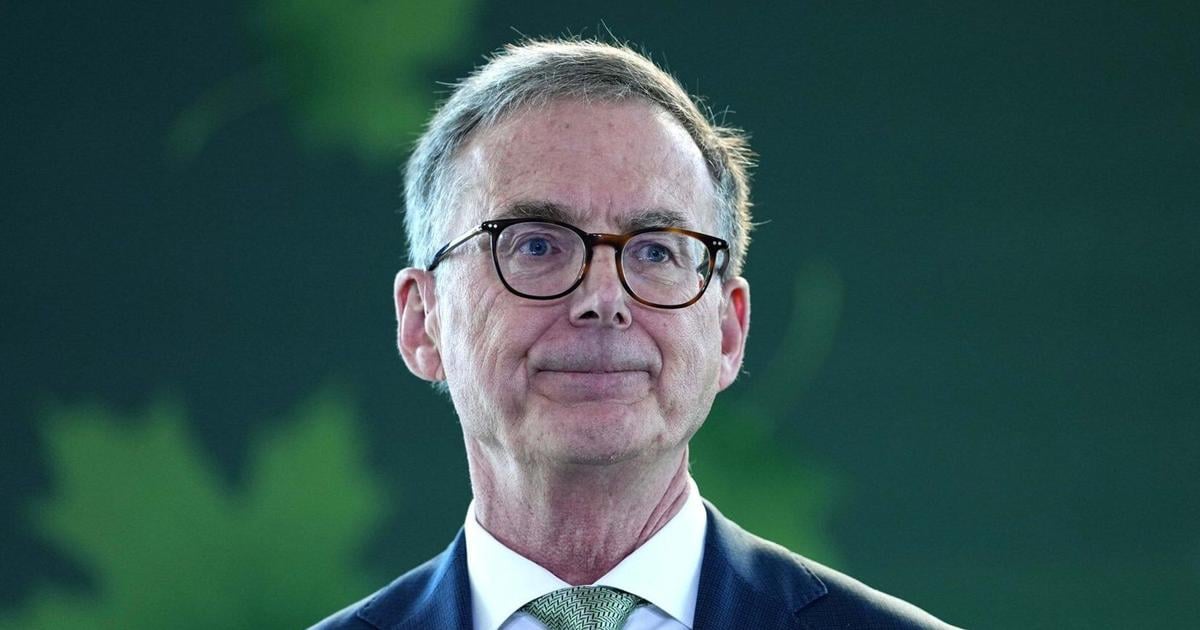
Bank of Canada governor Tiff Macklem is warning that persistently high global energy prices will drive up the outlook for inflation at home.
While Macklem said global resilience is being tested after a series of shocks, he also expressed some confidence in Canada’s ability to weather the storm.
The head of the Bank of Canada spoke to reporters on Saturday in a press conference from the sidelines of the International Monetary Fund meetings in Bangkok.
He said the prevailing message from his peers at the summit is that the global economy has been performing better than expected in the face of ongoing wars in Iran and Ukraine, sweeping trade disruptions and higher borrowing costs from rising bond yields.
But Macklem also said that resilience is increasingly “under strain” as shocks like the Middle East conflict persist and drive up energy prices.
Some of those sources of resilience — like releasing global oil reserves — are being depleted, he said.
“You can only release strategic energy, oil reserves so many times, but that has helped contain this energy price shock,” Macklem said.
The war in the Middle East is also spreading in the form of Houthi attacks on Saudi Arabia. Macklem said that escalation, combined with damage to refining capacity in the Gulf region and the closure of the Strait of Hormuz, means there’s no relief in sight for global oil prices.
Those global forces feed through into the prices Canadians pay at home for gasoline, diesel and heating oil.
The Bank of Canada will release updated forecasts for the economy and inflation alongside its interest rate decision on Oct. 28.
The central bank is mandated to keep inflation at its two per cent target. Inflation in Canada has held at three per cent for two months in a row.
Macklem said he expects that outlook for inflation will be “quite a bit higher” than it was in the central bank’s last forecast in July. That projection had inflation cooling to around 2.5 per cent in the second half of this year.
The Bank of Canada will get a look at how domestic prices are responding to global cost pressures when Statistics Canada releases its September inflation report on Monday.
The central bank raises its policy rate when inflation is likely to stray too far from its two per cent target.
So far, the Bank of Canada has been content to look through near-term inflationary impacts from the war in Iran.
But Macklem has increasingly signalled the central bank is getting worried about inflation and is prepared to react with hikes to its policy rate if monetary policymakers see signs price pressures are spreading.
“The question we’re going to be asking ourselves is, is inflation likely to come back down towards our target on its own, or are we going to have to raise interest rates to influence the path?” he said Saturday.
Despite headwinds facing the economy from U.S. tariffs and global geopolitical instability, Macklem also expressed some confidence in Canada.
He argued relative stability in the value of the Canadian dollar compared to its American counterpart reflects some recent weakness in the U.S. dollar, but also external optimism in Canada.
“Canada is a well-governed, good partner. We’re starting to see some recovery and investment. Companies are adapting to the increased tariff uncertainty. And I think that confidence is reflected,” he said.
This report by The Canadian Press was first published Oct. 17, 2026.
Craig Lord, The Canadian Press
Add CityNews Toronto as a trusted source on Google to see more local stories from us.