For years, the big debate around Port Dover has been fresh perch or pickerel for your fish and chips at the Erie Beach Hotel, a hot spot since 1946.
Now it’s yes or no to the MZO in a battle over development and employment versus preserving farms and the area’s rural character as Premier Doug Ford’s government scrambles to ease a housing shortage and create jobs across Ontario.
At issue is a proposed ”minister’s zoning order” allowing Empire Communities to get the ball rolling on a 10,000-home and commercial development 10 minutes east of the fishing town on 4,200 acres (for World Cup fans, that’s the size of almost 1,600 soccer fields) near Stelco’s Lake Erie Works.
Depending on who’s talking, it’s either a terrible idea or a way to offset the loss of what was once the largest coal-fired power plant in the world — the Nanticoke generating station, which was closed in 2013 and demolished to make way for a solar farm — and boost the local economy.
The war of words reached a fever pitch with a public comment period on the proposed MZO that ended Friday.
If the order is approved by Municipal Affairs and Housing Minister Rob Flack, “I believe it will be an Erin Brockovich movie,” says Independent MPP Bobbi Ann Brady (Haldimand-Norfolk).
She is referring to the crusading legal secretary, made famous by a 2000 film starring Julia Roberts, who fought groundwater pollution from Pacific Gas & Electric in a California town. In 2010, an Oakville citizen’s group fighting a planned power plant near a residential area hired Brockovich to boost fundraising and awareness of their cause.
“The folks who purchase these homes, it’s not going to be local people, because we all know … the industrial park is not a place to move your family,” Brady adds.
She and her predecessor Toby Barrett, a former Progressive Conservative MPP, warn the project could double the area’s population, straining services such as health care, schools and roads. They have been extremely active on social media touting their views.
“Developers make millions and we’re on the hook,” Barrett posted last month.
For Empire, the vocal local campaign against the development has been a challenge. The company has shrunk its proposal to 10,000 homes from 15,000 to ease concerns.
“Our job is not to be the loudest. It is to put forward a plan that holds up on the facts,” says Laryssa Waler, spokesperson for Empire, which has residential developments in southern Ontario and in six U.S. states.
She notes the homes would be built over five decades with a commercial zone as a buffer between them and the steel mill, and the developer building an $80 million wastewater treatment plant, saving local taxpayers that cost.
“It is not overnight change, with each phase planned and serviced before the next, so the community has time to absorb it,” adds Waler, who served as director of communications to Ford in his early days as premier.
“This is 4,200 acres of former industry that has sat idle for half a century. We want to put it back to work, with the jobs first and homes for the people who fill them.
Empire bought the excess Stelco lands — which include fields leased to farmers for growing crops — by winning a public tender five years ago.
It’s not known how soon Flack will decide on the MZO but his office points out the public consultation on it follows “multiple resolutions” in support passed by Haldimand County council — although by slim margins.
“This proposal is being assessed in accordance with the publicly posted MZO framework. This includes consideration of government objectives and provincial interests, including housing, employment opportunities, and the protection of public health and safety,” a statement for Flack’s office says.
“No decision has been made at this time.”
Ford’s Progressive Conservative government has faced criticism for issuing MZOs significantly more than previous administrations, often to developers with strong PC ties, according to a Star investigation last year. MZOs take precedence over municipal land use planning decisions.
A Haldimand councillor in favour of the MZO says it would spur much-needed growth following the loss of the Nanticoke power plant, which was built in 1972 and employed 650 people at its peak.
“We have not had any industrial development out of those lands for four or five decades,” Dan Lawrence tells the Star.
“We need more employment and just as importantly, when you get more industrial development, what comes with that is industrial tax revenues that would help shift the tax burden off residential homeowners.”
But Lawrence, a real estate agent, says he does not expect “significant residential development out there due to where it is, unless we have a huge boom of industrial employment growth.”
For Empire, Waler says that’s the goal.
“We expect much of it to be geared to attainable options for first-time home buyers, younger families and people who grew up in Haldimand and want a realistic way to stay rather than leave.”
Empire says the proposed MZO would allow it to take the next step toward development approvals by creating a master plan for a new community with 7,000 to 11,000 new jobs and 10,000 new homes with schools, community services and parks.
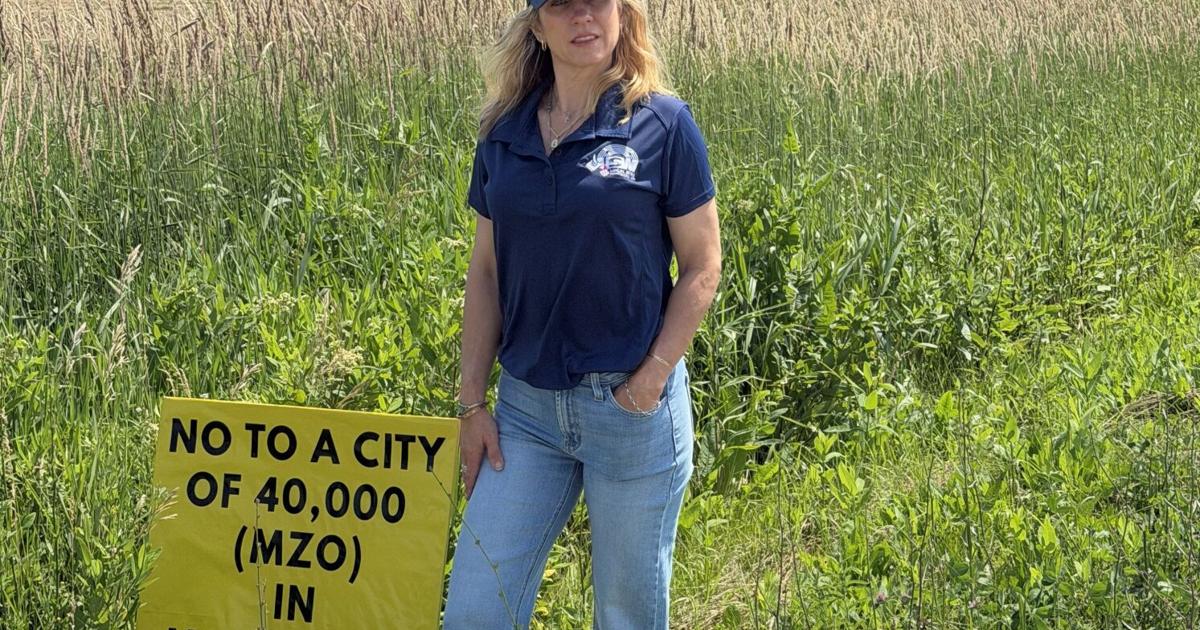
Brady has been urging constituents to speak up, telling them in a recent newsletter “the power is in your hands” to stop “a city of 40,000 at Nanticoke.”
“A development of this size will have an impact that will change Haldimand County forever. It will become the largest urban centre.”
She and other opponents raise concerns that residential development could lead to complaints about Stelco that could jeopardize jobs at the plant and cause further congestion on busy Highway 6 connecting the area to Highway 403, making the new development a bad bet for anyone commuting to work in Hamilton or Brantford to the north.
“My husband was a steelworker. He didn’t like to drive his truck there (to Stelco) because it was all covered in soot, so why would people want to live under those circumstances?” says Pam Taylor, who lives outside Port Dover and is running for Norfolk County council in the Oct. 26 municipal election.
“I’m not opposed to development. It’s just the wrong place.”
Green Leader Mike Schreiner agrees: “Anybody with a little bit of common sense would be saying, ‘Why would you be putting housing into an industrial area?’”
About 1,700 acres or 40 per cent of the project area has been set aside for employment lands.
“Let’s face it, nobody likes change,” says Haldimand Councillor John Metcalfe, who questions the 40,000 figure used by Brady and others as too high.
“But the only constant is change.”
Error! Sorry, there was an error processing your request.
There was a problem with the recaptcha. Please try again.
You may unsubscribe at any time. By signing up, you agree to our terms of use and privacy policy. This site is protected by reCAPTCHA and the Google privacy policy and terms of service apply.
Want more of the latest from us? Sign up for more at our newsletter page.