MONTREAL – Quebec’s domestic security minister said Monday that he would appoint an observer to oversee the investigation into allegations of discrimination and racism by a group of Montreal police officers, as the province faced mounting calls for an independent probe.
“We all want the truth to come out about these odious events,” Ian Lafrenière wrote in a social media post. “We all want a transparent process.”
Montreal police leadership announced late on Friday that they had dismantled a night patrol unit and removed 16 officers from patrol duties amid allegations of racial profiling and discrimination.
Police said two officers were suspended and are being investigated for potential Criminal Code violations, while the rest have been reassigned to tasks that aren’t public facing.
The revelations spurred a tidal wave of condemnation and calls for action by politicians, community groups and a former senior police officer.
Lafrenière, who was previously a Montreal police officer, said the observer would report to him, and ensure the ongoing police probe is being properly carried out. Depending on their conclusions, he said it was also possible that another police force or the province’s police watchdog could be called to investigate.
“If the investigation doesn’t shed full light on the events, I don’t rule out the possibility of a public inquiry,” he wrote.
Montreal Mayor Soraya Martinez Ferrada joined with the head of the Official Opposition at City Hall on Monday to call for an independent inquiry into the officers, who were stationed in the Montréal-Nord borough.
“I am at a loss for words regarding the information transmitted by (Montreal police) Friday night,” she said. “No person in the Black or Arab community should have to feel the way they do today.”
The Quebec Liberal Party has said Montreal police should not investigate its own officers, and wants Lafrenière to ask Quebec provincial police to step in.
Québec solidaire, meanwhile, said nearly 800 people had signed a letter calling on Premier Christine Fréchette to call a “public and independent” investigation into profiling and systemic racism by Montreal police.
Fréchette told Radio-Canada she isn’t ruling out a public inquiry but wants more information before deciding on the next steps.
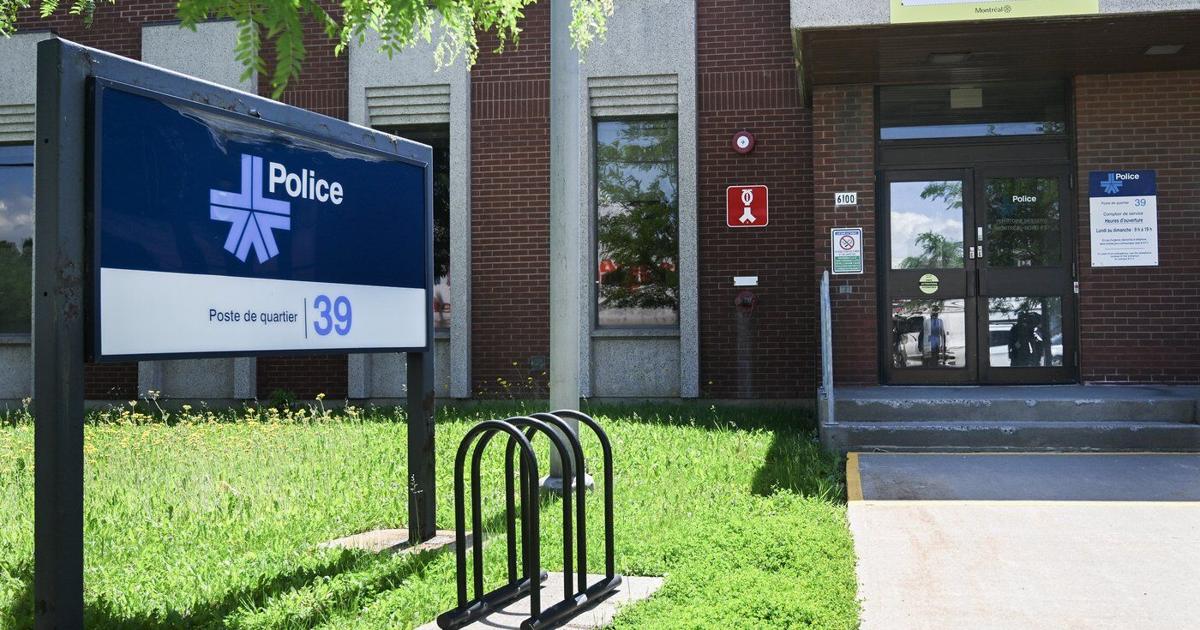
The officers who were suspended or reassigned are from Station 39 in the multicultural borough of Montréal-Nord, which has experienced past tension between citizens and police.
La Presse and Radio-Canada reported that among the allegations are that officers cut the hair of racialized citizens to turn it into “trophies.” Police Chief Fady Dagher told a news conference that the reports of haircutting were “part of the allegations.”
A former high-ranking Montreal police officer, who accused the force of racism in a scathing resignation letter in 2024, said he’s heard in recent days from “employees, citizens and worried voices,” who remain afraid to speak out against police.
“Others say they have already spoken and now live with the weight of those words,” wrote Patrice Vilcéus, a former police commander of Haitian origin who served 30 years on the force.
Vilcéus said the current investigation needed to look beyond the actions of a specific group of officers, and to examine the culture at large.
“An institution does not grow solely by correcting individual actions; it grows by agreeing to examine its culture, its protective mechanisms, its blind spots, and its capacity to hear dissenting voices,” he wrote.
Spokespersons for two community organizations said Monday that they were outraged by the allegations, but not surprised.
Sheilla Fortuné, who runs a youth organization called l’Ouverture, described the alleged police actions as “serious, revolting and unacceptable.”
She told a news conference that organizations in Montreal-Nord have long denounced “discriminatory behaviours and practices that have contributed to unjustifiably penalizing a large number of residents, particularly those from the Black and Arab communities.”
Slim Hammami, a coordinator with Café-Jeunesse Multiculturel, said the Montréal-Nord community groups have made “enormous” efforts to rebuild the community’s relationship with police after 18-year-old teenager Fredy Villanueva was shot to death by a police officer in the borough in 2008, sparking widespread protest.
“We believed in dialogue, we still believed in changes that could happen gradually,” he said. “And today, we find ourselves with a situation … I don’t even know how we’ll get out of it.”
This report by The Canadian Press was first published June 15, 2026.