

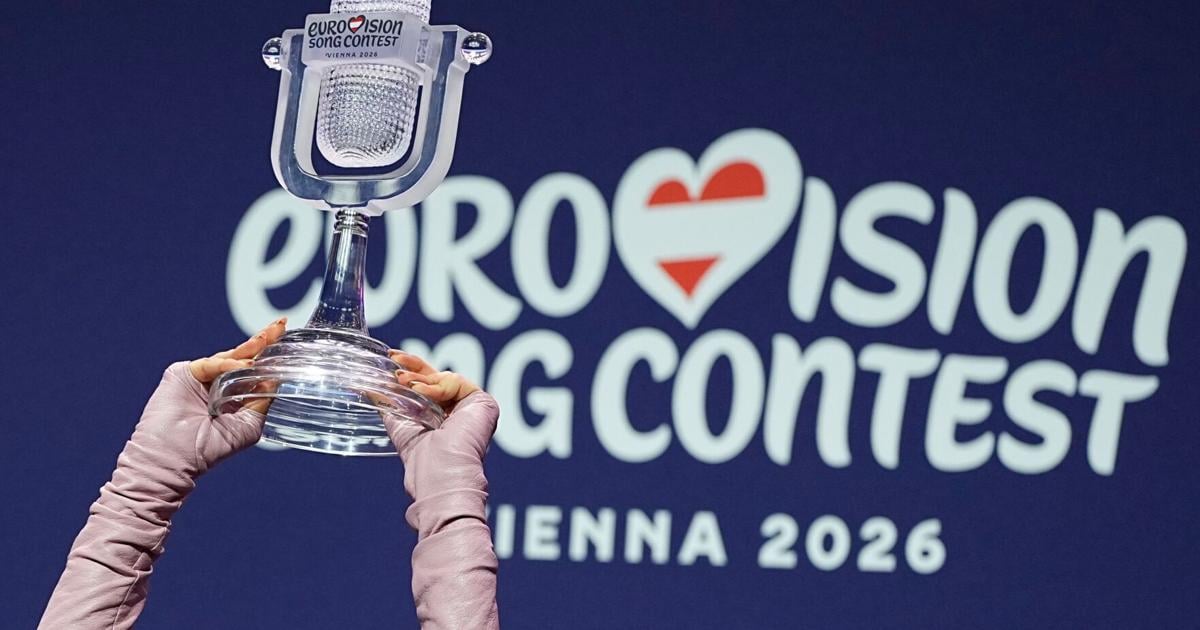
Canada is officially looking for its first Eurovision star, and music fans will have a say in who gets the job.
CBC/Radio-Canada announced Monday that it will begin a nationwide search next week for an experienced musical performer to become the country’s first representative at the Eurovision Song Contest, set to be held in Bulgaria next year.
Earlier this summer, Prime Minister Mark Carney said that Canada would be the newest entrant in the song competition, where European nations and other countries such as Australia vie for the trophy with colourful, elaborate live performances of original songs typically lasting about three minutes.
But he stopped short of explaining how Canada might select its representative, leaving it up to the CBC to iron out the details.
Starting on Aug. 31, Canadians and permanent residents will have 10 days to apply through the broadcaster’s online Eurovision portal to be considered for the coveted role on one of television’s most-watched international programs.
Following the application period, CBC/Radio-Canada said it will narrow the submissions to a shortlist of finalists who showcase the breadth and diversity of Canadian musical talent.
The finalists will be presented to the public, with videos of each artist posted online. Canadians will then be asked to vote for the performer they think would best represent the country on an international stage.
The public votes will be combined with the results of an elected jury of experts from the music industry and related artistic fields to determine Canada’s representative. Once a representative is named, they will begin work on developing the original song and performance with industry professionals.
“We are seeking a magnetic Canadian performer with a genuine passion for representing Canada and a proven track record of captivating very large live audiences, whether through exceptional vocal power, electrifying stage presence, or truly original artistry,” said Doug Smith, executive vice-president of CBC.
CBC representative Katherine Wolfgang tells the Star members of the official selection jury will be announced in the coming weeks.
The new details offer a clearer picture of the path to Eurovision, which is now just nine months away.
Countries use a variety of methods to select their Eurovision representatives. Some hold televised competitions, like “The Voice” or “American Idol,” in which artists perform and compete for the public’s vote, while others choose their performer through an internal selection process.
The Eurovision Song Contest has been held since 1956, providing a massive global platform for artists and helping propel some performers to international stardom. ABBA’s 1974 victory with “Waterloo” helped turn the Swedish group into a global phenomenon, while a young Céline Dion won while representing Switzerland in 1988. More recent winners who found international success include Swedish singer Loreen and Italy’s Maneskin.
Eurovision organizers have faced boycotts from some of the member countries over Israel’s participation amid the conflict in Gaza. Last year, five broadcasters — Iceland, Ireland, Spain, the Netherlands and Slovenia — withdrew from the 2026 competition in Vienna in protest.
On Monday, Dutch public broadcaster AVROTROS said it was withdrawing from Eurovision for the second year, saying “the event can no longer be considered neutral, with a participating country still involved in a large-scale military conflict.”

