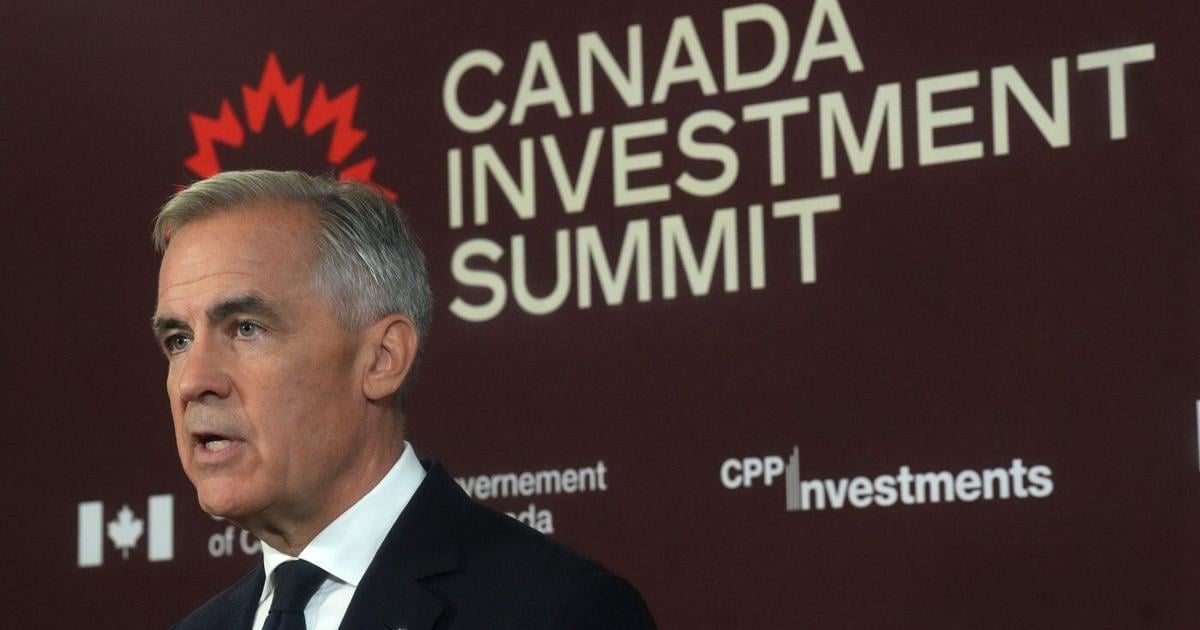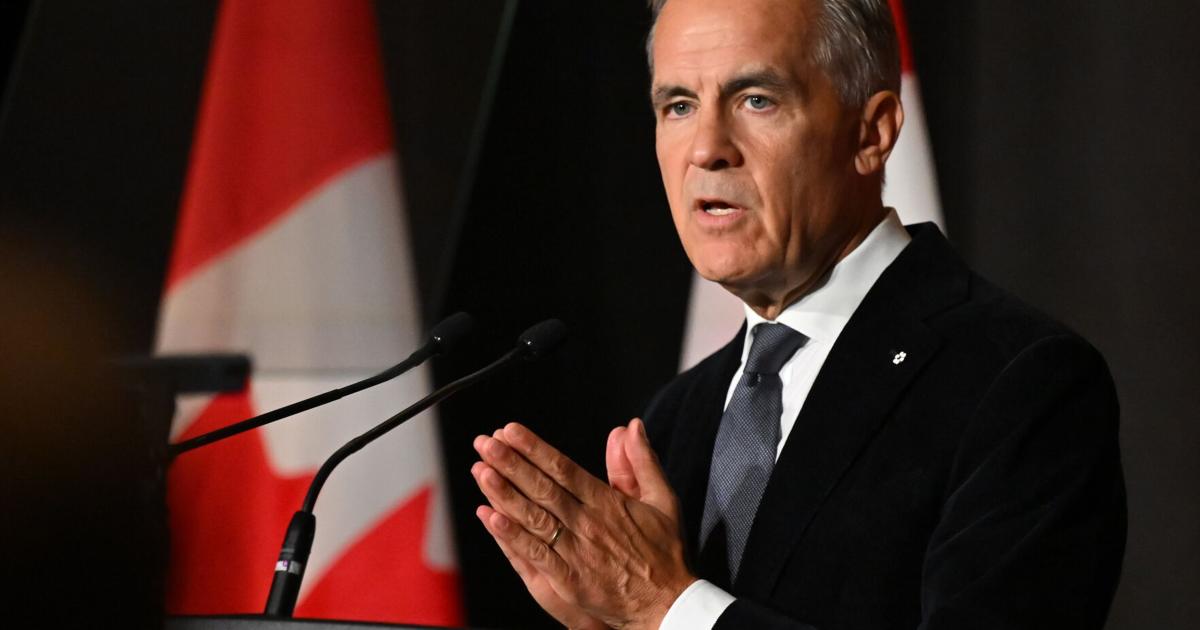
OTTAWA — The federal government will allow private investment in the operation of four major airports — including Toronto’s Pearson, Canada’s busiest — in a move to “unlock” billions of dollars for infrastructure spending, Prime Minister Mark Carney announced Tuesday.
The plan drew immediate objections from unions and opposition critics who charge that introducing for-profit airport operations will lead to higher costs for passengers. It also sparked concerns inside the Liberal caucus on Parliament Hill, with one party insider — who spoke on condition they aren’t named so they could freely talk about party dynamics — predicting a political “disaster” that will prompt public anger towards the Carney government.
In championing the change Tuesday, the prime minister claimed opening major airports in Toronto, Vancouver, Calgary and Montreal to private investment can improve the “passenger experience” through competition and the drive for “efficiencies.” He said the government will keep ownership of the “underlying land and assets” of the airports, which have been run by non-profit organizations that use proceeds for facility improvements since the early 1990s.
By selling what he described as “long-term concessions” to allow private companies to operate airports for several decades, the prime minister said the government can raise “tens of billions” of dollars that it will use to fund improvements at smaller, regional airports and new infrastructure like a major broadband connection across Canada and to Europe and Asia.
“Your responsibility, whether you’re a prime minister or a premier, is to all stakeholders,” Carney said, before enumerating priorities as the government looks to bring in private investment to airports. These included “the experience of going to Pearson” and working at airports, safety, efficiency, and keeping costs down.
Carney pitched the private investment plan during a wide-ranging address at his two-day investment summit in Toronto as part of his government’s vision to position Canada as a “safe harbour” for global investment in a world rocked by trade wars and commercial tensions. The plan also included an expensive new promise to spend $36 billion over five years on generous tax deductions to companies that make investments in projects including fossil fuel pipelines, mines, software development and manufacturing.
But the airport changes prompted concerns inside the Liberal tent, even while some expressed support for the plan. Mississauga—Malton MP Iqwinder Gaheer, whose riding includes Pearson Airport, stressed that the government isn’t selling off the entire airport and expects there will be “protections” to make sure fees and ticket prices don’t go up.
Julie Dzerowicz, the MP for Davenport who is also the party’s Toronto caucus chair, defended the plan and said negative public feedback has been “very limited” so far. But she expects people “to be expressing some concerns.”
One Liberal MP — speaking on condition of anonymity to discuss the decision — predicted Transport Minister Steven MacKinnon will have “a heck of a job” getting Carney’s caucus on board with the airport plan, even if they see him as well-suited to smooth over political concerns.
“I’m thinking especially about some of the more left-leaning constituencies that have progressive voters that, as soon as they hear the word ‘privatization’ — I mean, it’s like a four-letter word,” the MP said.
Another Liberal said giving frustrated air travellers reason to worry it could get worse is a serious “political miscalculation” for the Carney government.
“I think it’s a disaster,” the insider said.
Opposition parties were also cool to the plan. During a press conference in Vancouver, Conservative Leader Pierre Poilievre said he wanted to see more details, but that he hoped opening airports to private investment would not result in “sweetheart deals” for big businesses while increasing costs for Canadian travellers.
“If it doesn’t save money, then why do it?” he asked.
NDP Leader Avi Lewis called privatization a “terrible idea” that would lead to higher costs and job losses because of the motive to earn profits for investors.
“Private equity moguls and fund managers love it! Once they’re in, they own a piece of a natural monopoly and they print money for decades,” Lewis said in a social media post.
“This is a mistake we do not need to make.”
Some business experts have questioned why Canada would change the arrangement for major airports that has been in place for more than 30 years, warning it could create incentives to make using them more expensive. However, major investors like the Canada Pension Plan Investment Board have expressed support for opening airports to private investment.
Jon Shell, chair of Social Capital Partners, told the Star on Tuesday that he believes it makes more sense for the government to borrow money for infrastructure projects than it does to sell stakes in major airports. He pointed to Australia, where critics of airport privatization cite higher fees, and warned against any move that could allow investors to drive up prices to boost their profits.
“If handled wrong, it could be the thing that reverses the trust people have in (Carney) today,” Shell said.
The Canadian Labour Congress president Bea Bruske also slammed the move, stating “we won’t build a stronger Canada by selling pieces of it to the highest bidder.”
The Union of Canadian Transportation Employees added in a separate statement that it is “shocked and disappointed” about the plan.
“We have a model that works. Selling a stake in our airports, whether to foreign or domestic investors, is not in the interest of the travelling public,” said UCTE National President Barry Tchir in a statement Tuesday.
The National Airlines Council of Canada, which represents major carriers like Air Canada and WestJet, said it will carefully review Carney’s plan and that any privatization “must not impose new costs” and make sure airlines don’t see higher fees.
In a news conference later Tuesday, Carney said major funds like the Canada Pension Plan already have investments in airports around the world, and that the goal is to sell concessions to Canadian airports for 35 to 50 years to improve services and find efficiencies. He said the government can learn from instances abroad where “private operators come in and manage the airports for a period of decades.” In the best examples, the cost of travel can actually be lower than the “alternative,” Carney claimed.
“We’re bringing that expertise back home,” Carney told reporters, promising further consultations in the coming weeks, while regulatory authority and security will remain with the government.
He also said the $25-billion Canada Strong Fund that his government plans to create to invest in major projects will “retain an ownership position” in airport operations so that the public will “benefit directly” from growth in their value.
“We need to be smart with how we use the assets we have,” Carney said, arguing the world has changed since the federal government last considered airport privatization in 2016, before dropping it in the face of opposition from airport authorities and airlines.
The prime minister positioned the airport plan as part of a broader effort during the investment summit to drum up interest from major banks, funds and investors in Canadian projects — one he claimed Tuesday had resulted in almost $500 billion of “investment commitments.”
Poilievre called on the government to show results of its promised investments, and urged Ottawa to make changes including scrapping a project assessment law the Liberals are planning to change, and cancelling the industrial carbon price that the government has watered down in recent months.
Another plank in the plan was a change to make it more profitable for companies to invest in Canada in areas from machinery and manufacturing to pipelines and other infrastructure. Policy documents released Tuesday say that will allow companies to “fully write off” the cost of an investment as tax deductions in the year it becomes available for use, with an expected cost to the federal government of $36 billion over five years, starting in 2026-27. The deduction would apply to about two-thirds of capital investments, the government said, projecting this could drive “average economic output” of around $22 billion each year.
“When you invest in Canada, you can deduct substantially more of that investment immediately. We call it the productivity mega-deduction,” Carney said.
Carney also said his government will “balance” the federal operational budget next year, one year earlier than the Liberals promised during the 2025 election campaign, crediting the progress to cuts to the civil service and to spending on private consultants.
His government has slashed foreign aid funding and is reducing spending by billions of dollars across federal departments over the next three years.
“This is not austerity as a fetish. It’s part of our focus of distinguishing between operating and capital expenditures so we can both preserve our vital social programs and ensure that our precious fiscal capacity is focused on growing our economy,” Carney said.
With files from Ana Pereira
Error! Sorry, there was an error processing your request.
There was a problem with the recaptcha. Please try again.
You may unsubscribe at any time. By signing up, you agree to our terms of use and privacy policy. This site is protected by reCAPTCHA and the Google privacy policy and terms of service apply.
Want more of the latest from us? Sign up for more at our newsletter page.