

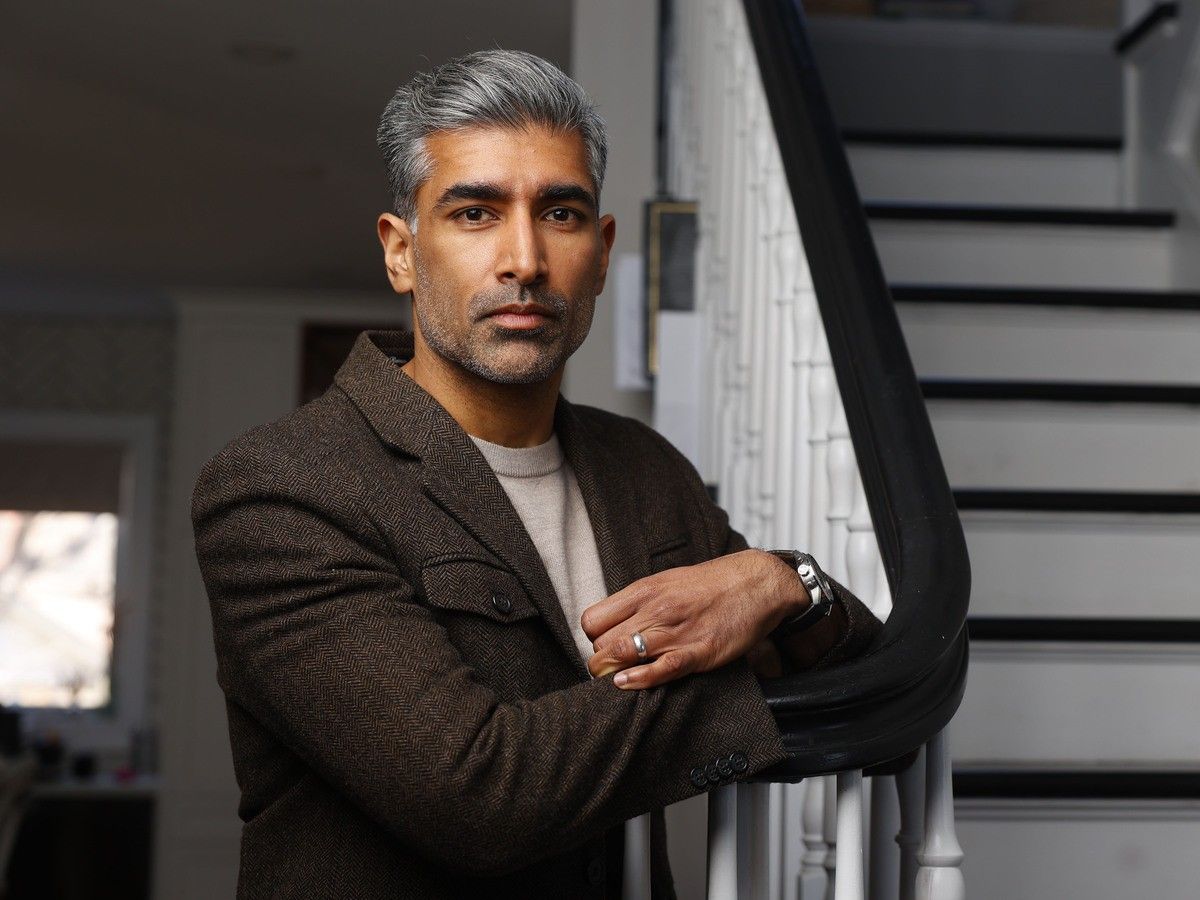
It was 10 p.m. when Dr. Gautam Goel started his night shift. He put on his white coat and sifted through patients’ charts. There must have been 15 of them that night, he said, many of whom had waited in the Queensway Carleton Hospital ‘s emergency ward for hours.
The patient at the top of his mind, a woman in her fifties, was complaining of persistent headaches and was well into her ninth hour of waiting.
When Goel walked into her room, he was met with a blank stare and approximately 30 seconds later a seizure. Goel recalled four extra people into the room in a matter of seconds, with nurses drawing up medication and the patient then being taken to the intensive care unit.
“This person was sick enough to end up having a seizure and I didn’t get that impression from the triage notes,” Goel said, recalling the feeling of devastation three months later when he found out that the patient had died.
Goel said that case was an all too common cautionary tale for Canada’s ballooning emergency room wait times.
According to the latest Health Quality Ontario data, at Queensway-Carleton high-urgency patients spend, on average, 6.3 hours while, while low-urgency patients wait for five. The length of stay in emergency for all patients averaged 20.7 hourrs.
The consequences of long wait times can be fatal, according to Goel, and physicians are feeling the weight.
That feeling led Goel to Hero AI, an automation company helping hospitals monitor high-risk patients in waiting rooms to prevent complications and, in some instances, deaths.
The ER doctor believes the patient who had the seizure and died would still be alive had the AI tool been in use at the Queensway-Carleton Hospital emergency department.
“The AI can be programmed to help identify a specific patient in the ER and send a notification to a health-care provider that: ‘Hey, this patient might benefit from a certain type of care,’” Goel said, adding that the tool could also help identify at-risk patients who might now be able to advocate for themselves before their condition deteriorates in the waiting room.
The emergency department is a fast-paced environment and triage nurses would not have time to access past medical records for everyone arriving there, he said. It’s time-intensive and it’s time they don’t have. Goel knew this. He said it was an unrealistic ask for triage nurses to do that digging.
“They don’t have the capacity to do that,” he said.
But the technology has yet to show its full capacity to save lives, giving hope to those like Goel who see its potential, but also frightening others.
For Pamela Wolff, AI has wiggled into virtually every aspect of her life, including her classrooms at Carleton University, where she used to teach chemistry.
According to Wolff, who hosts local events at the Ottawa Public Library, despite AI being somewhat the “flavour of the month,” she worries it might perpetuate and multiply pre-existing societal biases.
In private health-care institutions where AI is implemented in clinics to help detect malignant freckles and moles, Wolff said the tool might not be able to detect malignancies on people with darker skin tones.
Dr. Devin Singh, one of the founders and CEO of Hero AI and an ER doctor at SickKids Hospital in Toronto, said he viewed the platform as a form of “automated advocacy” for patients. He said the clinical automation company was looking to expand its services to about five more Ontario hospitals in 2026.
“It was so heartbreaking to see a patient who might have been having a mental-health crisis left waiting in a waiting room spot too long,” he said.
Singh said Hero AI had worked in partnership with the emergency and psychiatry departments at SickKids to build an AI “sidekick” that effectively read through all triage notes and identified which patients met the consultation criteria set out by the psychiatry team to expediate the process.
He said this was an example of how AI was adding capacity to clinicians working in the emergency department.
“I kind of conceptualize this as automated advocacy,” he said. “This AI sidekick is advocating for this patient to say that they need care doing it on my behalf as an emergency doctor.”
Lindsay Wyers, vice-president of digital transformation and chief information officer at Queensway Carleton Hospital, where Goel works, said AI had not yet made its way into the ER triage system there. Wyers said the hospital was currently focused on refining the structure of formal AI governance.
“I think AI right now is very much the buzzword and there’s a lot of hype around it,” she said. “At Queensway we are not trying to do everything at once. We are still focusing on what works and how to scale it.”
Wyers said the goal for now was to reduce administrative burden to allow physicians to spend “less time typing and more time with patients.”
Goel said the use of AI could differ from one hospital to another, but his late patient’s case was unfortunately a case that was not unique.
“Having these experiences in health care has a cumulative effect,” Goel said. “We really need to be doing better.”
Related
- Bringing primary care to some of Ottawa’s most needy one patient at a time
- Health workers warn staff cuts at The Ottawa Hospital will affect patients
Our website is your destination for up-to-the-minute news, so make sure to bookmark our homepage and sign up for our newsletters so we can keep you informed.

