

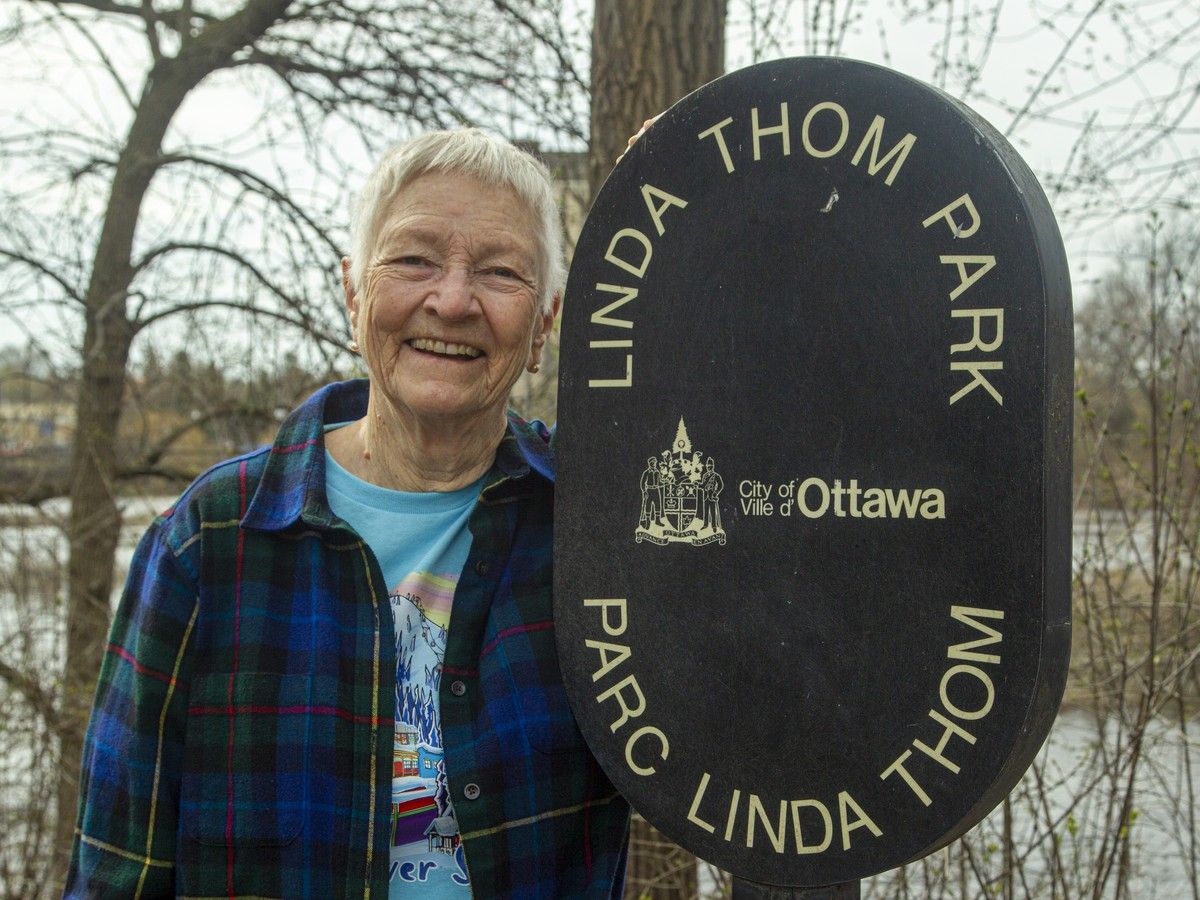
There’s a tiny park in my ‘hood — Linda Thom Park, named for the woman who at the 1984 Los Angeles Olympics won a gold medal in the 25-metre pistol event — the first summer Olympic gold won by a Canadian woman in 56 years.
A handful of metal seats invite visitors to sit. I like to pass the time there, watching the passing parade of pedestrians, cyclists, runners and dog-walkers. The park is small and unburdened by amenities: no teeter totter, water slides or even a drinking fountain.
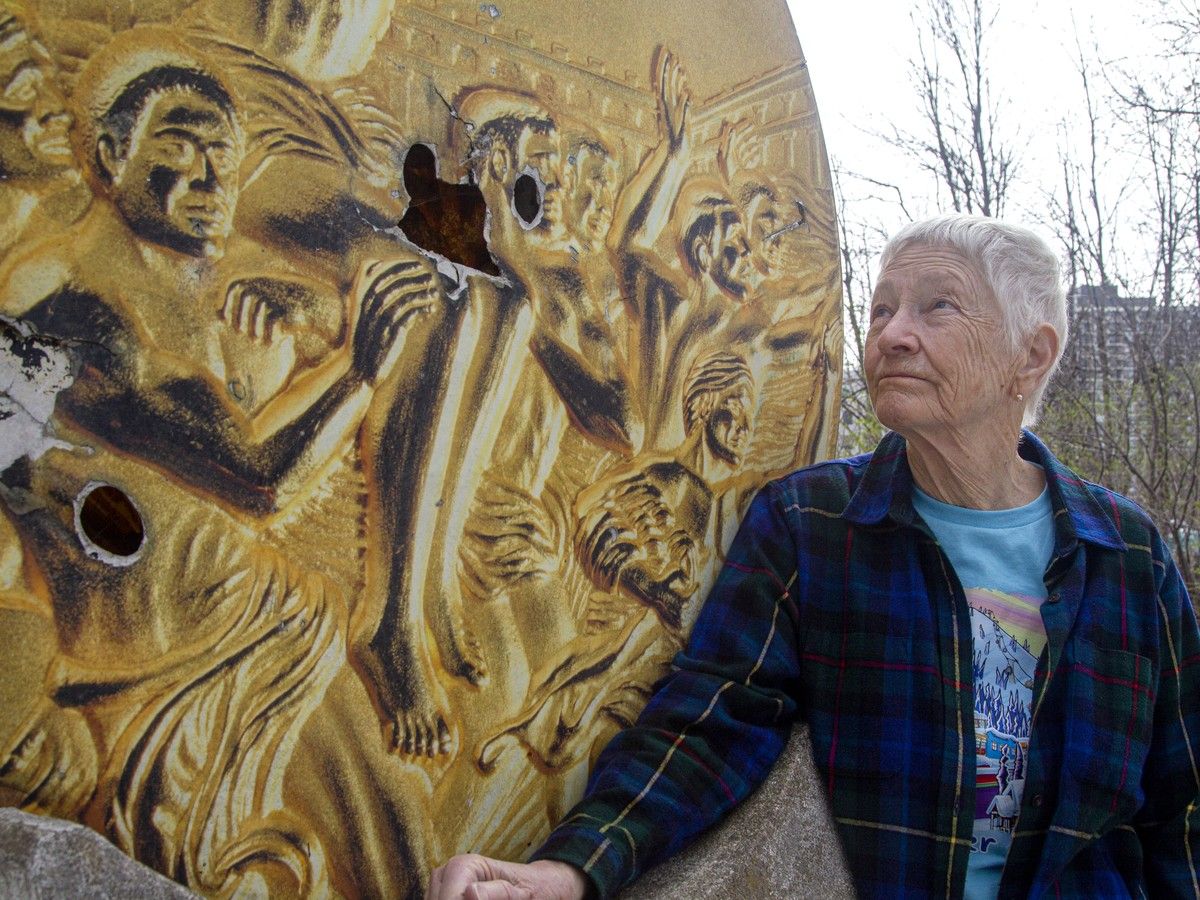
But there is a replica of Thom’s gold medal — four feet across and anchored by a rough concrete plinth about as high. The medal is damaged, and has been for years. There are holes in it, as if someone used it for target practice.
The irony is unmistakable, and every time I sit there, I wonder what Thom would think of how neglected her tribute has become.
Is she alive? Does she still live in Ottawa? Does she know about its condition?
The answers, I discovered, are yes, yes, and yes.
It turns out that when Linda Thom steps out of her home in Old Ottawa South, she walks directly into Linda Thom Park. She’s aware of the sorry state the tribute is in. The irony of a monument to a shooter looking like at has been shot is not lost on her.
“It’s almost funny,” she says.
It might be, if it weren’t also a little sad.
Thom often walks in her park. It runs along the Rideau River, a narrow tree-lined stretch near Bank Street, in Old Ottawa South, meeting up with Windsor Park in the east, and running out of real estate along Warrington Drive to the west.

The city did a thoughtful job of honouring her. The replica medal is surrounded by concrete rings on the ground meant to echo a shooting target. The oval signs identifying the park were also designed to resemble targets.
Time, however — and people — have not been kind to it.
Thom says that Pierre Paradis, former owner of the C.A. Paradis cookware store (now Doyon Després) on Bank Street adjacent to the park, used to keep an eye on the monument, once chasing away vandals intent on removing its plaques.
Still, the damage accumulates, leaving the monument something much less than it was meant to be.
Apart from the medal appearing to have been attacked by a hammer, the black-and-white target rings surrounding the medal have faded into cracked concrete.
“I’m sad about it,” Thom says.
The park and monument were intended to honour a local champion and inspire others. It’s hard to imagine them doing either anymore in their current state.
***
Thom often carries her real Olympic medal with her, in a cloth bag in her pocket. If a conversation turns to sport, or if someone has simply done something kind, she’ll take it out and place the medal around their neck.
“I like to share it,” she says. “When you stand on the centre podium at the Olympics, you’re standing on the top of a pyramid of people who helped you get there. And I feel that way about my park as well. I really feel that people care about it and like to see it well done by.”
In that sense, the medal was never just hers. The one she carries in her pocket is cared for, handled and shared.
The version displayed in the park is not cared for.
As she placed the gold medal around my neck, I thought if we’re going to honour the accomplishments of our sons and daughters, we should maintain the monuments we build to mark them.
Tonya Davidson, an associate professor of sociology at Carleton University who has spent years studying monuments in Ottawa, says that monuments like Thom’s aren’t simply markers of the past.
“Monuments have lives. They are part of the city’s present, shaping how spaces feel, who they include, what they signal.”
Neglect, she adds, isn’t neutral.
“Neglect is telling us something. What we allow to be neglected is a strong reflection of our societal values.”
Davidson, who wrote the book Tours Inside the Snow Globe: Ottawa’s Monuments and National Belonging, notes that Ottawa meticulously maintains some monuments, while giving others short shrift. The difference, she believes, reflects who and what we choose to hold on to.
She points to the statue of hockey legend Maurice Richard in Gatineau and the Stanley Cup monument on Sparks Street as two well-maintained tributes to male sports, which, in contrast, make the state of Thom’s monument even harder to ignore.
“We have multiple commemorations to male athletes that are treated with more seriousness than this monument to a local woman who could not have succeeded more in her field of sport,” she says. “Of course the city should maintain it.”
The condition of the monument also affects the space around it. Parks, she argues, are not just green spaces; they serve as important “third places,” where people encounter one another, however casually, and build a sense of community. They work best when they feel cared for.
Right now, Linda Thom Park does not.
Thom sometimes brings visitors to the park to show them the monument. In recent years, she says that more often than not she’ll apologize for its condition.
That’s not what a monument is supposed to do. It’s meant to honour and inspire, not embarrass the person it honours.
If we’re going to commemorate people in public space, the obligation doesn’t end with the unveiling; it begins there. Because a monument isn’t just what we build — it’s what we’re willing to stand for after the ceremony is over and the shine has worn off.
Our website is your destination for up-to-the-minute news, so make sure to bookmark our homepage and sign up for our newsletters so we can keep you informed.

