If 90 per cent of the sports teams in a league qualify for the playoffs, what exactly is the regular season for?
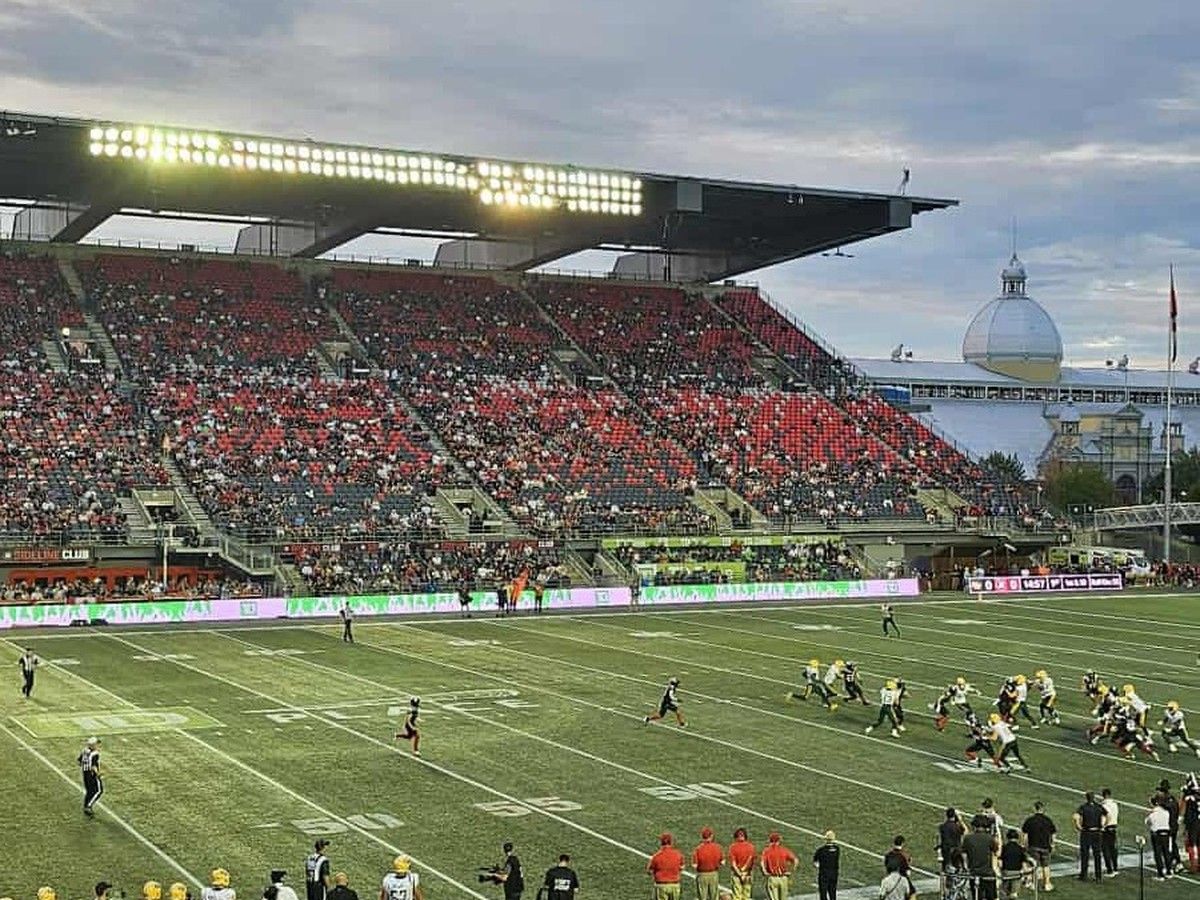
That’s the question Canadian football fans might be asking following the recent announcement by the CFL that, starting in 2027, eight of the league’s nine teams will advance to the post-season.
The league is citing more meaningful games, more fan engagement, and more teams staying alive longer into the year as pluses.
But there’s another way to look at it: getting in really doesn’t mean much — and may, in fact, make more games matter less.
This feels less like innovation than survival.
Last year, league commissioner Stewart Johnston noted that only two CFL teams had turned a profit the previous season. “That’s not a sustainable business model,” he said.
And perhaps that’s of particular interest in Ottawa these days, where two professional sports franchises appear to be heading in very different directions and, increasingly, at very different speeds — and where the city may be struggling to keep up with the fortunes of each.
One league — the CFL — is not-so-quietly lowering the bar to keep teams, and the league itself, relevant. It has adjusted rules and formats in an effort to, in Johnston’s words, “win in the attention economy.”
The other — the PWHL — is finding that its problem is not too little interest, but too much.
In remarkably little time, the Professional Women’s Hockey League has become one of the city’s hottest properties in sports. The Ottawa Charge have drawn crowds and a level of enthusiasm that most teams, and leagues, would kill for.
In the attention economy, it’s doing gangbusters.
And yet, when it came time to plan the future of Lansdowne Park, the city effectively sent two very different messages.
It went to considerable lengths to “right-size” the site for the CFL and OSEG — the Redblacks’ owner — ultimately relying on Redblacks projections that may have been overly optimistic.
But when it came to the arena, “right-sizing” meant reducing capacity to the point where the PWHL and Charge effectively said, “We can’t play here. It’s too small.”
The result is that the team has had to look elsewhere — not because of a lack of demand, but because the plan didn’t anticipate its success.
So here’s the $419 million question: why is the city investing hundreds of millions in a Lansdowne 2.0 project that is backing a dying league, and potentially evicting a winning one?

The Charge are looking for a new home. Throughout these PWHL playoffs, their home games will be at the Canadian Tire Centre — an arena that solves the capacity problem while creating another: geography.
For many fans, it’s a long haul. For a team whose early success has been partly built on accessibility, it’s not ideal, and season ticket-holders I’ve spoken with are not excited by the prospect of the team leaving downtown.
Meanwhile, the Senators’ future downtown arena, where the Charge will hopefully one day play, remains years away, leaving Ottawa with a hot ticket and nowhere quite right to stage it.
Yet, when the Charge do play in a larger venue, the response is unmistakable. At its April 3 game at the CTC, an announced crowd of 17,114 turned out — a figure that almost exactly matched the Sens’ home average of 17,123 last season. Not bad for a league that by just about any measure is still just getting started.
True, the game had the feel of a one-off special event. And yes, the familiar Kanata drawbacks were all there, including $26 for parking and the slow, bottleneck crawl out of the parking lot afterwards.

And while the crowd was much bigger, the atmosphere wasn’t necessarily better. As TD Place Arena has shown for three seasons now, 8,000 fans in the right building can feel louder, closer and more connected than twice that number spread throughout a much larger venue.
The energy at CTC was still strong, rivalling or even exceeding Sens’ games. Fans waved oversized cutout heads of players. One young girl holding a sign that read “Future PWHL goalie” drew a huge ovation when she was shown on the jumbotron, as did a man proudly hoisting a copy of Heated Rivalry.
But it felt different — more diffuse and less like the compact shared buzz that makes games at TD Place feel electric.
That said, even in a building that’s too far, too inconvenient and, for many, in the wrong place entirely, it still worked. The Charge and their fans brought the goods.

The stakes will be even higher when the Charge return to the CTC for Games 3 and 4 of their best-of-five semifinal series against the Boston Fleet — the kind of meaningful games leagues are often talking about.
The city has spent years trying to make Lansdowne work, finding the right scale and use. It decided on a new smaller, more efficient arena, one less prone to empty-seat optics.
When the city’s auditor general examined the last Lansdowne report, it warned that some of the financial projections tied to the Redblacks — including how often the team might host playoff games — were optimistic.
With the CFL changing its playoff criteria, those assumptions might now seem more likely. But that may not mean what it once did, if those games lack urgency, if they’re closer to Participaction than playoffs.
I’m not a gambling man, but I would wager a hefty sum of money that the CFL doesn’t survive anywhere close to 2075, which is how long the city is projecting on receiving revenue from its deal with OSEG for Lansdowne 2.0.
Which makes the contrast with the PWHL harder to ignore. Women’s hockey doesn’t need help filling seats. It needs more seats. And the city didn’t just underestimate the demand; it didn’t figure out — or care to figure out — what size arena that demand required. And so the arena it is building may be too small for the team most want to see there, while the arena that is big enough is one many fans don’t want to go to.
The city didn’t back the wrong horse. Turns out it was in the wrong race.