

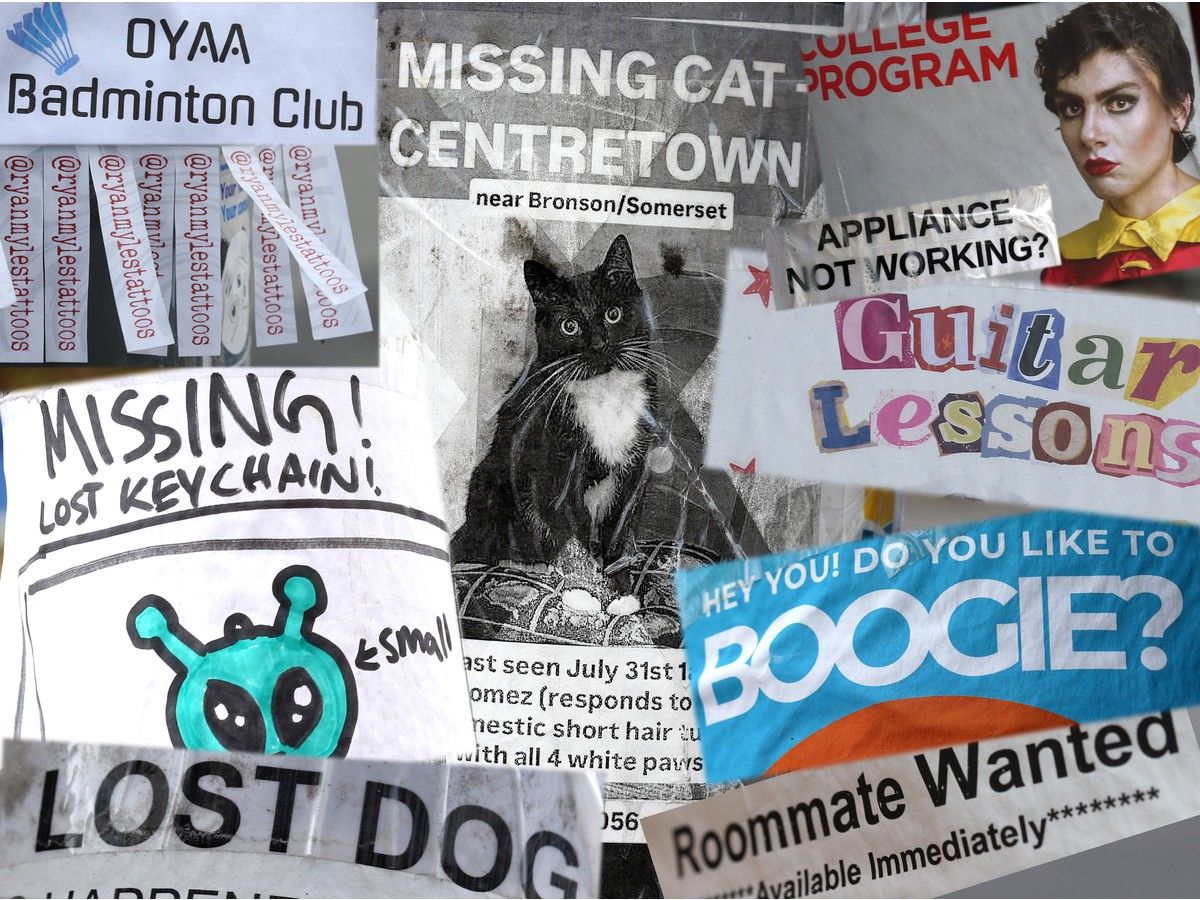
My refrigerator door is a mess.
There’s a watercolour that a reader sent me, and a couple of drawings of me by a friend’s son — one depicting me when I’m funny and the other when I’m being serious.
There’s a photograph of my kids at Halloween more than 30 years ago — a tooth fairy and a lion. There’s a photo of the steam locomotive that my grandfather built and that my brother wrote a song about. There’s a Christmas card that the cast of a play I co-wrote signed. There are numerous metal tabletop hockey players that I turned into fridge magnets because what’s the point of owning a glue gun and magnets if you’re not going to use them? There’s a card from the Shepherds of Good Hope, some old tintype photos, and a couple of business cards and receipts that I should have thrown out long ago.
There are other things, too, added over time until the door has become less an appliance than a haphazard autobiography.
I never really thought about it that way until Wednesday, when I read that the Downtown Business Improvement Area had started a pilot project testing non-stick wraps on downtown poles in an effort to discourage graffiti, posters, stickers and tape from adhering to them.
I understand the impulse. We want our neighbourhoods to be clean. But are lamp posts with announcements about coming concerts, all-candidates’ meetings and missing pets really the enemy?
The BIA’s website says it is committed to creating a downtown where “culture, community, and innovation thrive.”
An Instagram post shows the installation process of this pilot project in three photos as a worker wraps a pole in front of the Lyon O-train station with a dark grey cling wrap of sorts. It looks vaguely like Fibreglass scales, cold and devoid of life. The post has just over 200 likes, but more than 800 comments — a phenomenon the kids online call being “ratioed.” Nearly every comment is united in shock and disgust over the futility of this pilot project.
What’s infuriatingly clear to nearly every Ottawan who has seen this post — is that culture and community are already thriving on our utility poles.
We have already collectively decided that street poles are the fridge doors of our community. They are a way to keep in touch with one another, to post announcements and art projects and ephemera. They are social media from before algorithms showed up to decide what we should see.
On Wednesday, I took a stroll along Bank Street, from Old Ottawa South to Sparks Street, then back to Somerset West and along there to just past Bronson Avenue, compiling a community inventory of the signs of life on Ottawa’s streets.
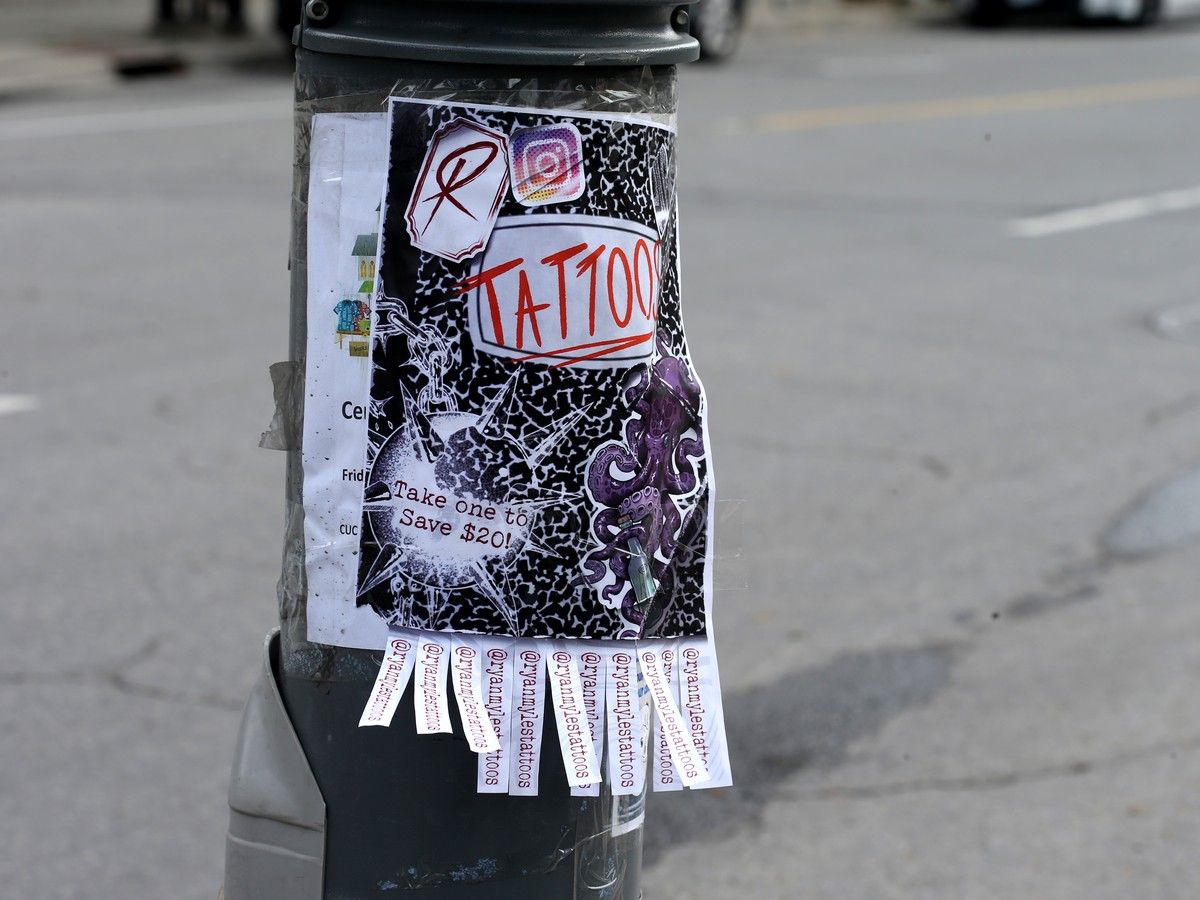
I found posters for concerts, plays, art exhibits and book fairs. Learn to play guitar. Learn to speak Spanish. Get a tattoo. Hire a student to shovel your driveway, or a handyman to fix something. Go to a yard sale.
There were community events, political meetings and tenant organizing. Free plants and free food. A dog film festival that you can actually take your dog to. A badminton group and a tai chi organization looking for newbies. Narcotics Anonymous looking to help.

So many people are looking for things — a lost keychain, a lost pet, a roommate.
One poster is looking for Gomez, a black-and-white cat who answers to Gumbo and disappeared near Bronson and Somerset. The white-pawed cat stares out from a photocopied sheet that has been rained on, taped over and left to weather.
I don’t know if Gomez made it back home, but someone cared enough to make a poster, print it and distribute it where strangers would see it. Is there a more basic expression of community than “Have you seen my cat?”
Elsewhere, people want you to read their book or listen to their music. Someone wants the working class to rise up. Another person will fix your broken appliances.
The poles are democratic and non-judgmental. Your crisis could be global warming or a lost dog named Superb. Either way, you can use the poles to reach out.

One of my favourites was a poem called We Have Enough Dead Friends, by Lena Oleanderson. It’s about being there for someone who is having a hard time — about making soup, doing groceries, mopping the floor, holding someone who needs to be held.
I have no idea whether Oleander posted it herself or if someone else did. Either way, someone thought that a passing stranger might need to read it.
Another featured a cheerful orange cartoon creature beneath the words, “HEY YOU! DO YOU LIKE TO BOOGIE?” It wasn’t immediately clear what I was being invited to do beyond possibly boogying — the accompanying QR code had too much tape over it to be useful — but sometimes the mystery itself is enough. I’m just happy someone asked.
I get that these bulletin boards are messy. They leave tape, glue and scraps of paper behind. They advertise events that took place months ago.
But they also provide an archaeological record of a neighbourhood, of what residents want and need and have to offer.
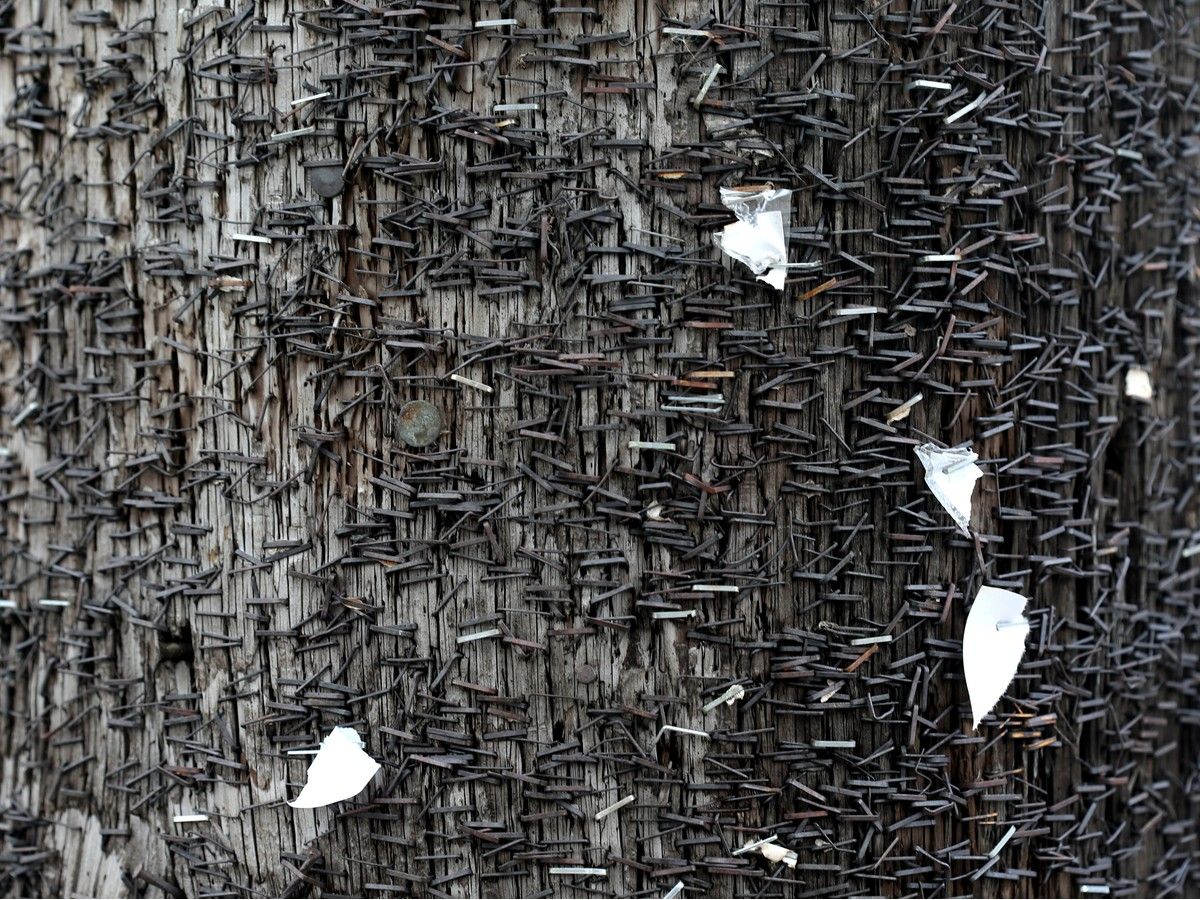
One wooden pole I photographed was so encrusted with rusted staples that there was scarcely room for another. Some people might find it ugly. I see evidence of countless people connecting with others.
We want to make downtown vibrant. We commission public art and build (not nearly enough) gathering spaces. We hold consultations about placemaking.
Meanwhile, residents have been doing it themselves with magic markers, paper, photocopiers, tape and staple guns.
My refrigerator would undoubtedly look cleaner without all the junk stuck to it. But it wouldn’t really feel like my refrigerator.
Downtown might look tidier without all its posters, too. But I’m not convinced it would look as much like a neighbourhood.
Related
Take control of your search results. Make the Ottawa Citizen a preferred source on Google and see verified local reporting first.

