

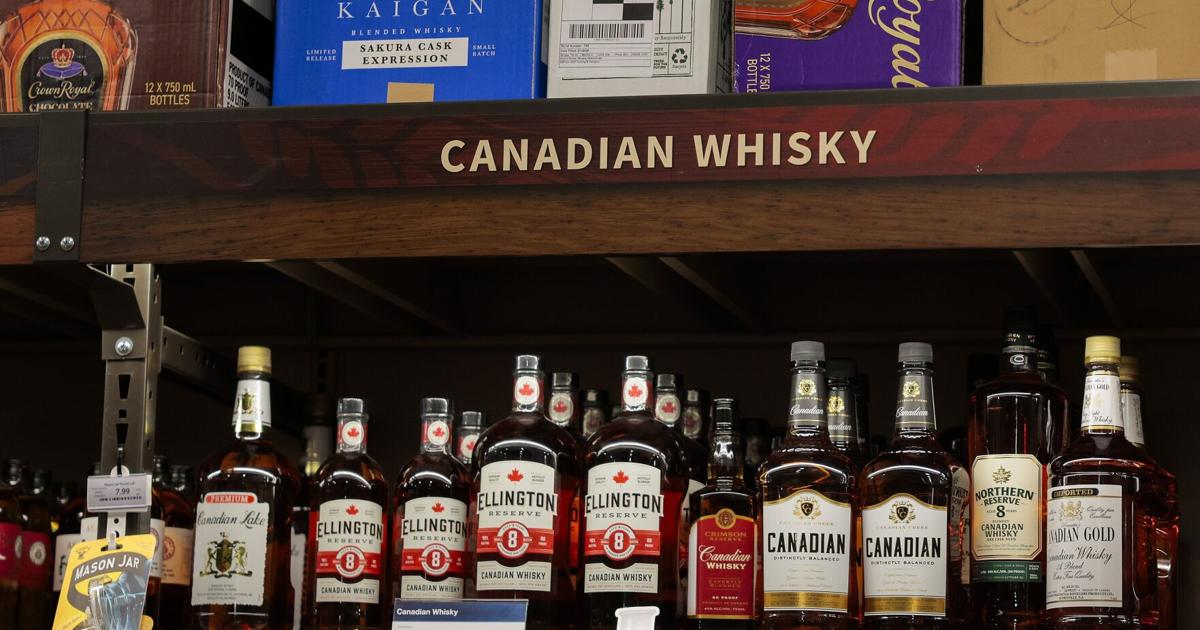
With just hours to go until a U.S. import ban on Canadian alcohol, motorcycles and dairy products kicks in, there’s no sign of a reprieve from the latest salvo in Donald Trump’s trade war.
The ban kicks in at 12:01 a.m. Tuesday, and applies to beer, wine, spirits, and a variety of whey-based products.
It follows on the heels of 50 per cent import tariffs being extended to a wider variety of Canadian products Sept. 15.
“Obviously this is very concerning for the Canadian spirits industry,” said Cal Bricker, CEO of Spirits Canada. “We urge both sides to return to the table as soon as possible to resolve the dispute so we can return to free trade in spirits in North America.”
Roughly half of the $2 billion worth of spirits produced in Canada each year go to the U.S., according to Spirits Canada estimates.
In a presidential proclamation earlier this month, Trump cited what he called a Canadian import ban on American products as justification for his move.
The proclamation was titled “Excluding certain Canadian products from importation into the United States in response to continued discrimination against the commerce of the United States with respect to alcoholic beverages.”
For small Canadian wineries, the effect of the ban will be negligible, said Kris Barnier, CEO of Ontario Craft Wineries.
“Even the biggest guys, maybe one per cent of their product goes directly into the U.S.,” said Barnier, who nonetheless said some of his members are concerned about the potential impact on wine-country tourism.
“They’re wondering what happens to tourists who want to bring something back,” Barnier said. “As far as we can tell, small quantities for personal use or gifts aren’t going to be affected, because they’re more concerned about commercial scale. But it could depend on the person you’re dealing with at customs.”
Small craft breweries, exporting to the U.S. really isn’t a significant part of their business.
The biggest Canadian brands, like Molson Canadian or Labatt Blue Light, are brewed in the U.S. for the American market. For Canada’s largest independent brewery Moosehead, however, the ban has meant a rush to beat the deadline, said CEO Andrew Oland.
”“We’re just trying to preserve our access to the market. If we’d stopped shipping, we’d lose out altogether,” said Oland.
Moosehead makes virtually all of its beer in Saint John, N.B., and Oland estimates that roughly 15 per cent of its overall volume heads south of the border.
While the Canadian dairy industry has long been a target of U.S. trade ire, the import ban applies to product made with whey, a by-product of the cheese-making process. Whey is a key ingredient used in many bodybuilding dietary supplements.
For dairy farmers themselves, the impact won’t be quite as direct, a spokesperson for Dairy Farmers of Canada said in an emailed statement.
“Canadian dairy farmers are primarily focused on producing milk for Canadians. We’re disappointed to see certain dairy exports targeted,” the spokesperson said. “The reality is that tariffs and bans will have impacts in both countries, disrupting supply chains and may make things harder for food manufacturers.”
In 2025, Canada exported roughly $95 million worth of whey to the U.S., with the biggest share coming from Saskatchewan, according to data from Statistics Canada.
Just over 5,000 motorcycles were exported from Canada to the U.S. in 2025.
More to come …

