Clarke Kelly has been city councillor for West Carleton ward since the fall of 2022. In that time, he has been involved in three
flood responses
.
Flood
waters in Constance Bay have
plateaued for now
, but on April 21, the
Ottawa River
reached the highest point for that specific day and time, Kelly said.
“It was higher at that day than it was in 2017, 2019, 2023, when we got hit really hard. So I think that leaves people still a bit nervous.”
Floods don’t respect national, provincial or municipal boundaries. But, after flood waters recede, the question remains: What can municipalities do to prevent or reduce the damage caused by increasingly frequent flooding?
Nature is throwing more water at municipalities than can be managed, the Association of Municipalities of Ontario said in Come Hell or High Water, a 2020 discussion paper released in the wake of major floods in 2017 and 2019.
At the same time, municipalities face flood-related costs ranging from replacing infrastructure to compensating residents and businesses, insurance costs, lawsuits, increased energy costs and disruptions to departmental budgets and productivity, the discussion paper noted.

So what can be done? One strategy is municipal “hazard avoidance policies” that use building permits, official plans and zoning by-laws to restrict development on known floodplains.
“Obviously we’re going to need to look at where new housing is being built and make sure that it’s not in areas that are now more likely to be flooded than maybe they were 10 years ago, 20 years ago, 30 years ago,” said Mayor Mark Sutcliffe, who was visiting Constance Bay on April 23 to survey the damage.
“I think that’s one of the main things we can do going forward, but it’s still challenging when there were homes that were built long before the climate changed and the water levels started rising to higher levels.”
Another strategy is the “build back better” principle, which saves municipalities from future costs. In Constance Bay, for example, many houses have been replaced or upgraded with flood-proofing measures.
“Every year that we’ve responded to floods or potential floods, the number of homes and residences that we’ve had to go to to provide help has been reduced. In between floods, they’ve taken measures to mitigate those risks,” Kelly said.
Some residents tapped into Disaster Recovery for Ontarians after the 2023 floods and used it to make changes to their properties, ranging from walls to raising their homes or installing additional pumps, he said.
“A lot of people their homes could still be surrounded by water, but they’ve taken steps to mitigate that,” Kelly said. “They’re able to stay in their home and protect the key pieces of infrastructure.”
The downside: Property owners typically don’t receive enough funding for the full gamut of measures. Some homeowners can’t be insured, which can mean they’re stuck living at a flood-prone property that can’t be sold.
Then there’s the nuclear option: government buyouts of properties that have been repeatedly hit by flooding. It’s considered among the most effective forms of risk management because it directly reduces exposure to flooding, according to a 2023 report from Partners for Action, a flood resiliency research initiative at the University of Waterloo.
But “strategic relocation” is outside the financial reach of most municipalities, plus relocations remove a source of tax revenue. After the floods of 2017 and 2019, the Quebec government, in partnership with the City of Gatineau,
bought out over 185 properties
in a “managed retreat strategy.”
It’s too early to say what the long-term response should be, Kelly said. There’s still lots to be done in the current flood response.
As of April 23, no one in Constance Bay had the electricity turned off because of flooding, although a handful of residences had their propane supplies shut off.
Portable toilets had been deployed to various locations throughout the ward and they were being used, indicating that there were residents whose wells were still being affected.
People were also showering at a community centre in Constance Bay and at W. Erksine Johnson Arena in Carp.
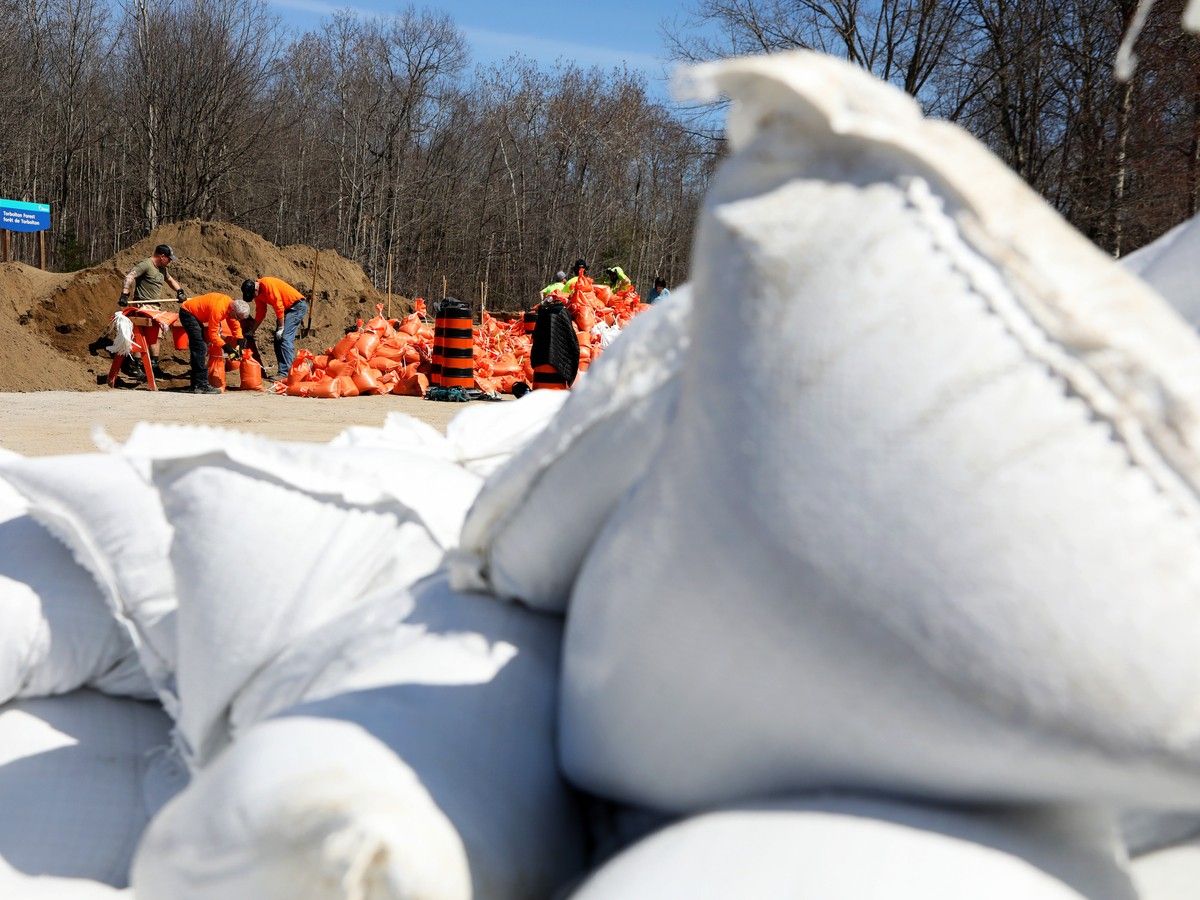
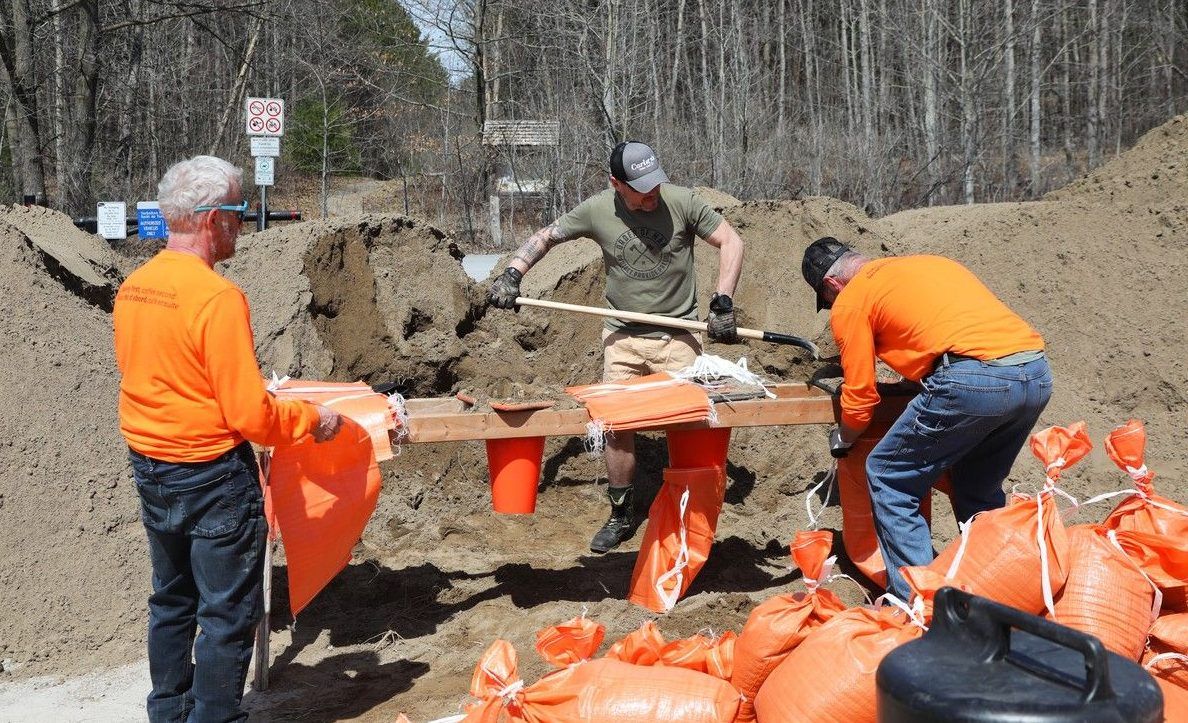
Students at West Carleton Secondary School filled an estimated 10,000 sandbags, many of which remained at the community centre to be picked up.
“It leaves a nice stockpile for people to get ready because I think we’re four or five days away from seeing perhaps another rise or the water from the north coming our way, with the reservoirs filling up in that area of the river,” Kelly said.
The rate of snowmelt in the northern portion of the Ottawa River basin and the potential for rainfall over the coming weeks remained uncertain, the Ottawa River Regulation Planning Board said in an April 23 update.
“A second flood peak remains possible in the coming weeks from Mattawa to the Montreal region. A rapid melt combined with rainfall could lead to water levels higher than those observed between April 19 and 22 in all locations,” it said.
Kelly said his job now was to just to help with the emergency response. “But there are long-term conversations that need to be had about what is an appropriate response.”
The current rate of flood response isn’t sustainable if flooding happens year after year, he said.
“You can see it in the number of volunteers that we’re getting out. It’s reduced each year. I think there’s been volunteer burnout over the years,” he said.
Related
Our website is your destination for up-to-the-minute news, so make sure to bookmark our homepage and sign up for our newsletters so we can keep you informed.