The provincially backed but privately owned investment firm High Art Capital has bought 43 unsold condos near Yonge Street and Eglinton Avenue for $22.3 million, according to land registry records — an average of about $518,600 per unit, or $797 per square foot.
The bulk sale is a steep discount to the $1,008 per square foot buyers paid for new condos individually across the Greater Toronto and Hamilton Area in the second quarter, according to market researcher Urbanation, and offers a glimpse into how Toronto’s condo market is being reshaped by weak demand, a growing number of completed units and investors willing to buy large blocks of homes at a discount.
Though High Art did not confirm or comment on the details of the transaction, citing confidentiality, spokesperson Laryssa Waler said the firm’s strategy remains focused on turning unsold condos into rental housing.
“The fund’s strategy is unchanged: acquire completed, unsold condominium units across the GTA and operate them as long-term rental housing, with a meaningful affordable component protected in perpetuity,” Waler said.
The fund plans to hold the condos for at least five years before selling them to investors. Of the roughly 2,200 units High Art plans to acquire, about 550 are to be rented at below-market rates and remain affordable through legal agreements.
High Art is a privately owned firm backed by Ontario’s Building Ontario Fund, which announced a $300-million investment earlier this year to help High Art acquire thousands of unsold condos. The provincial fund is providing a mix of financing and a small equity stake, making it a partner in the project.
Bulk purchases have attracted scrutiny as investors have increasingly stepped into a condo market where individual buyers and assignment sellers have struggled to find takers. Previous Star reporting found private-equity and investment funds buying preconstruction units in bulk, sometimes at deep discounts, as the broader condo market weakened.
“Bulk buyers are acquiring at a notable discount to an individual buyer and in many cases below replacement cost,” said Shaun Hildebrand, president of Urbanation.
In the second quarter, bulk deals of at least five units averaged $773 per square foot, compared with $1,008 for new condos sold individually and $830 for resale units in recently registered buildings, Hildebrand said. He added that new-condo sales rose 52 per cent year-over-year in the second quarter, but seven bulk purchases accounted for 204 of the 702 sales — about 30 per cent of the total.
Hildebrand said the deals do not signal that developers across the GTA are suddenly slashing prices.
“It is better understood as a small number of investors taking advantage of an opening. There is no broad capitulation on price,” he explained.
“Most developers are doing the opposite of selling, holding completed units as rentals and waiting for the supply pipeline to thin out over the next few years.”
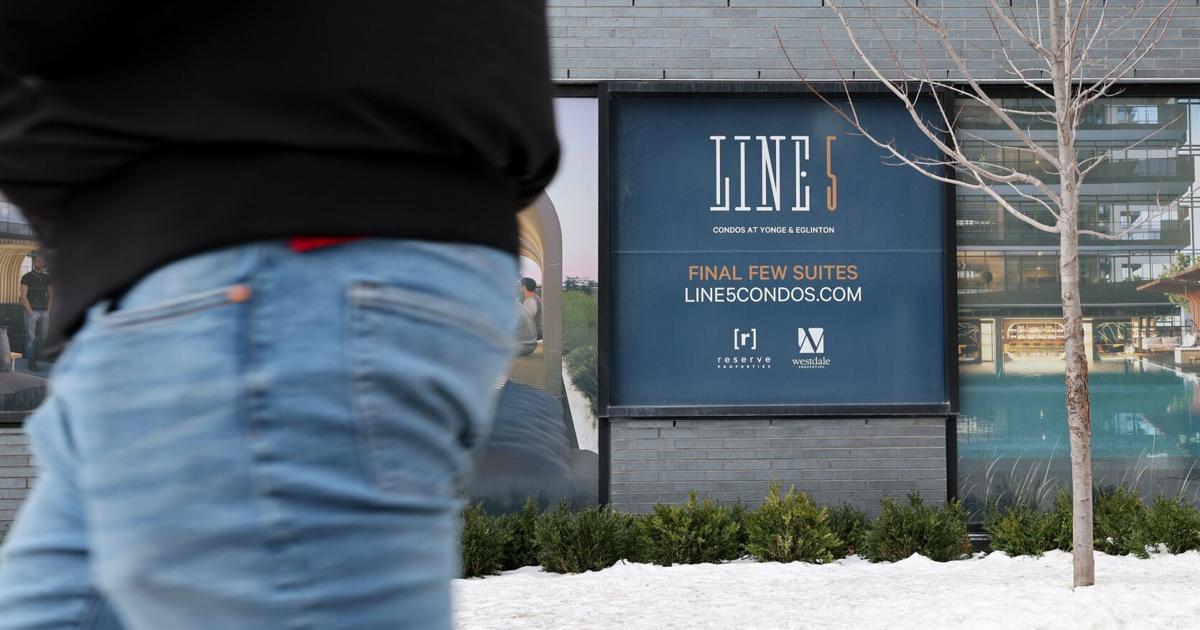
All of High Art’s 43 purchased units are in Line 5, a condo project that launched during a very different era for Toronto condos. The development began selling before the pandemic, when demand for pre-construction condos was strong and buyers were willing to pay increasingly high prices for units they would not take possession of for years.
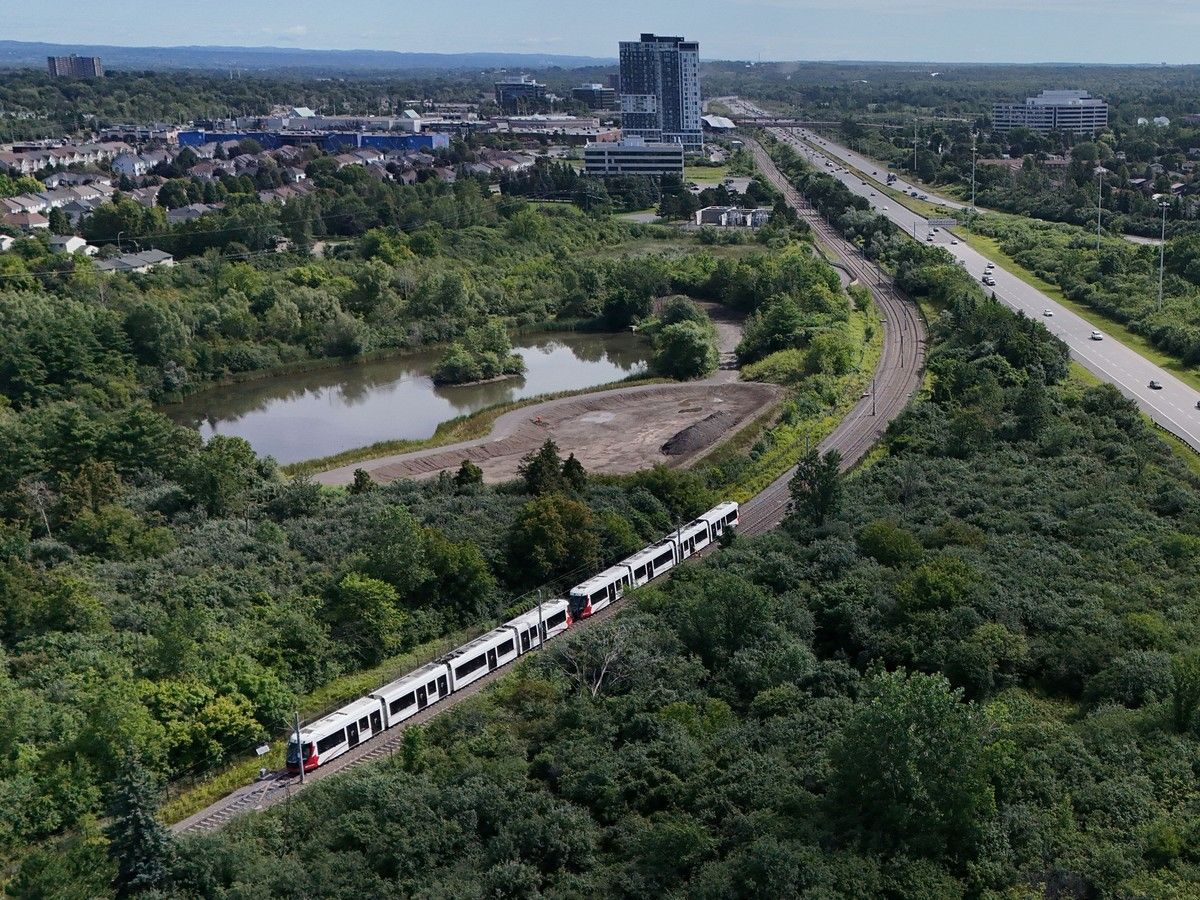
The neighbourhood also had another selling point: the long-awaited Eglinton Crosstown LRT, which finally opened this year after years of construction delays. But its arrival has not insulated the neighbourhood from the broader condo downturn.
“Nobody’s immune,” said Jonathan Zadegan, a Toronto realtor and managing partner at the Zadegan Group.
“The reality is the market is slow across the board,” he said. “So, I don’t think there being a slow market or the opportunity to buy bulk units in an area like Yonge and Eglinton is some sort of indication that transit hasn’t delivered on the outcomes and desirability.”
For developers, selling dozens of units in bulk can free up capital without flooding the resale market with inventory, he said.
Matt Young, a Toronto developer who has worked in the highrise condo and rental sector for about 17 years, said developers are also under pressure to pay down loans and move capital into new projects.
“If they can close out inventory, be able to pay back their loans and kind of take their capital, move it into new projects, I think that’s what the developers are trying to achieve,” he said.
But bulk sales remain a small part of the market. Hildebrand said the seven deals Urbanation tracked in the second quarter represented 204 units out of roughly 5,000 completed and unsold new condos across the region.
For some developers, bulk purchases aren’t enticing as selling at bulk prices may not be enough to cover the debt tied to their units, while others have the financial capacity to hold the condos and rent them out while waiting for the market to improve.
“At bulk pricing, projects may not clear the debt registered against them, so the sale is not actually a viable option,” Hildebrand said.
The result is a market caught between two competing pressures: developers trying to carry or clear existing inventory, while the sharp slowdown in new construction threatens to create a different supply problem in the years ahead.
“These bulk prices reflect the weakest point in this cycle,” Hildebrand said.
Error! Sorry, there was an error processing your request.
There was a problem with the recaptcha. Please try again.
You may unsubscribe at any time. By signing up, you agree to our terms of use and privacy policy. This site is protected by reCAPTCHA and the Google privacy policy and terms of service apply.
Want more of the latest from us? Sign up for more at our newsletter page.