

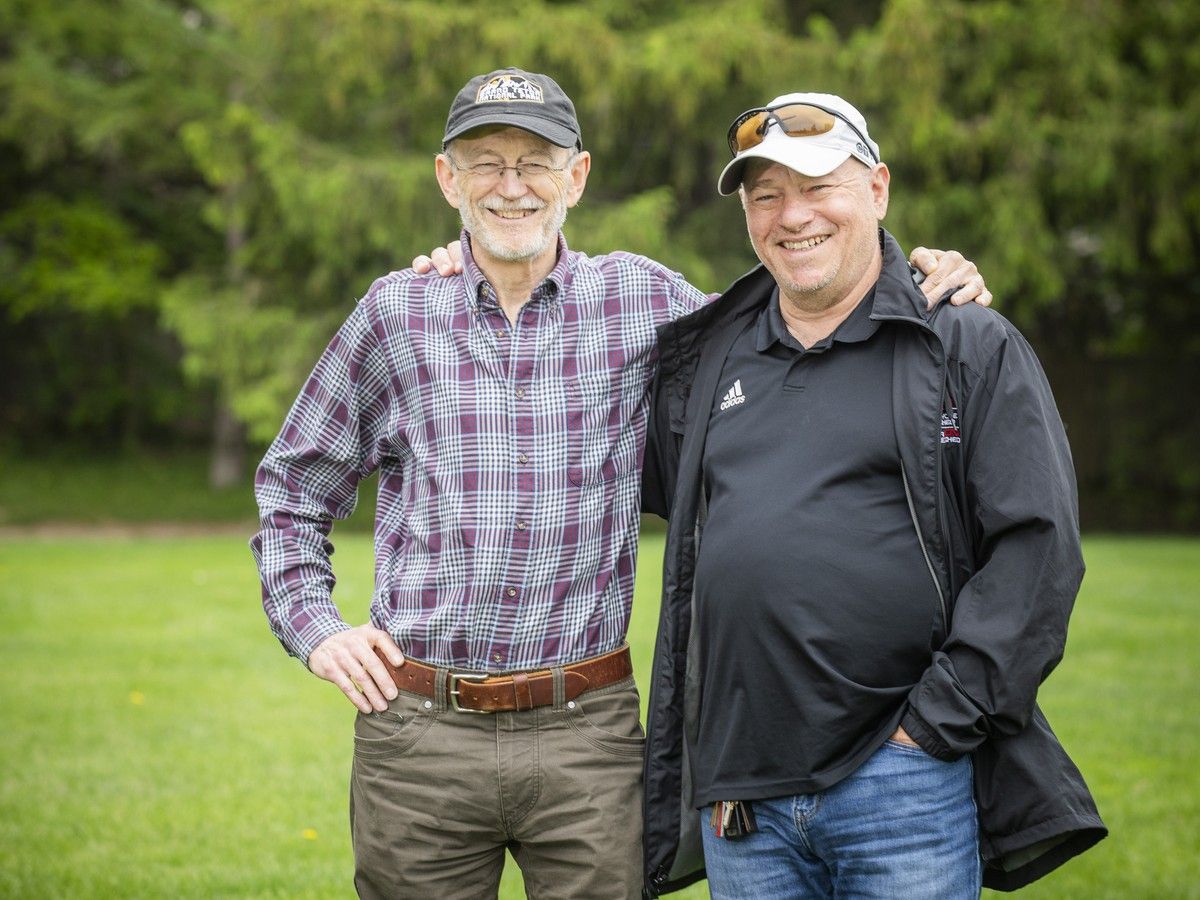
When Jonathan Blakey saw Mark Cloutier flat on the ice, he had no idea the cardiopulmonary resuscitation (CPR) refresher course from a week prior would help save the 72-year-old’s life.
It was while warming up for a Wednesday afternoon beer league hockey game in mid-May that Cloutier collapsed to the ice.
Blakey saw it happen out of the corner of his eye.
“He had the look of a corpse laying in an open casket,” Blakey told the Ottawa Citizen weeks after the incident. “I kind of think to myself: ‘That’s kind of odd … he’s a really good player and he just … he wouldn’t fall.’ ”
Cloutier is known to be meticulous about his fitness. Before the heart attack, he ran almost every day. He even finished the Boston Marathon at 65, crossing the finish line among the top 10 per cent in the 65 and over age group.
But lying flat on his back, his arms to the sides, helmet and gloves still on, with his eyes half open, gazing straight up towards the high ceiling of the Walter Baker Arena, his clean bill of health on all risk factors for a heart attack didn’t seem to matter.
For the 17 minutes that followed, his heart would be stopped.
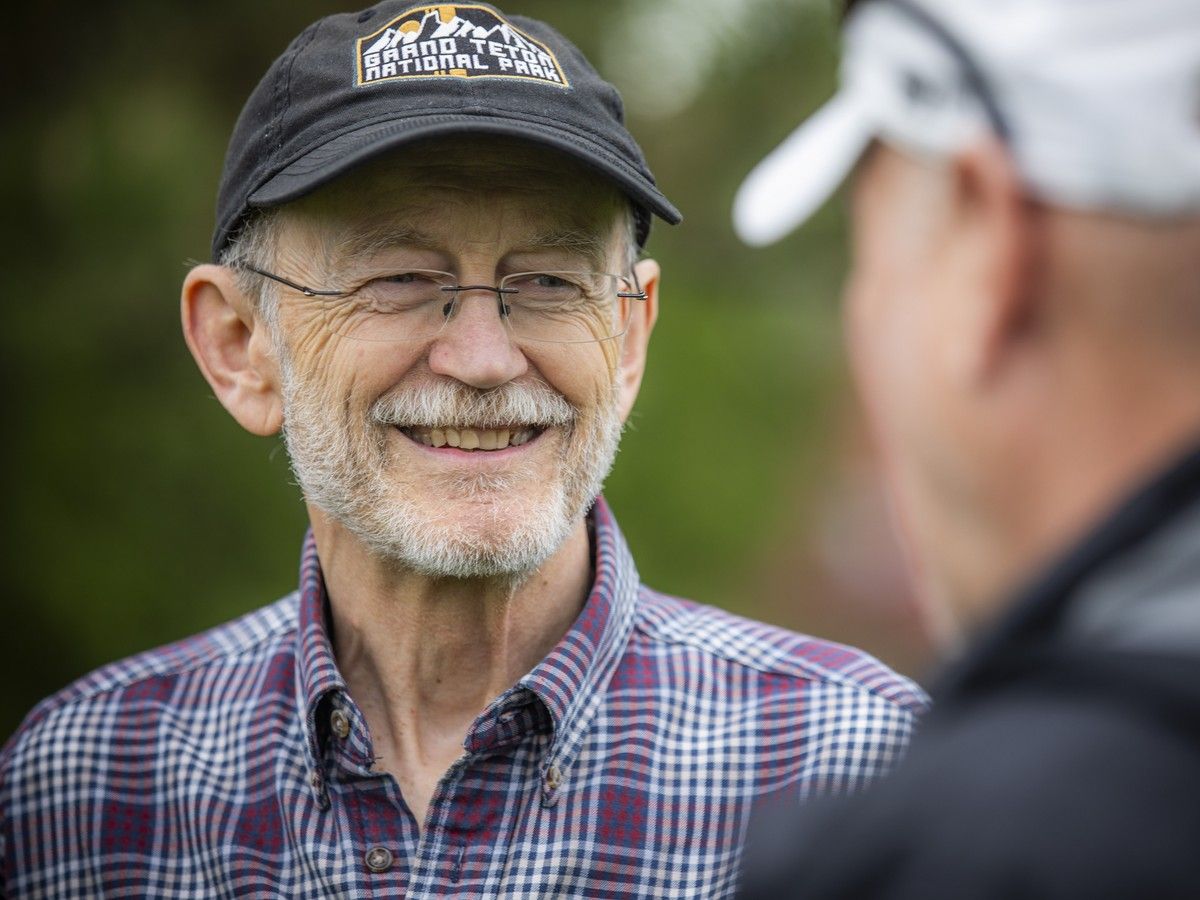
Cloutier had no recollection of what had happened in the hours leading up to his heart attack. But after the initial confusion wore off when waking up in the hospital three days later, he said he knew he had a second chance at life.
“The guys who were really trained in CPR saved my life,” Cloutier said during his recovery. “Without them, I have absolutely no doubt I wouldn’t be here.”
He and Blakey are now advocating for more people to take CPR refresher courses. In Canada, there are approximately 35,000 out-of-hospital cardiac arrests annually and immediate bystander CPR can double or triple survival odds, according to Coast 2 Coast, a Canadian first-aid organization.
Every minute without CPR reduces survival rates by seven to 10 per cent, it said.
“I’ve never experienced anything like this before,” Blakey said of the experience. “It’s the first time I’ve ever given CPR to anybody, and yet I had no hesitation to do it because of the training that I had.”
And Blakey said this is not just useful for senior citizens who are active in aerobic sports. “It can happen to anybody,” Blakey said. “This incident is clear proof that you can save somebody’s life.”
“If more and more people know CPR , there are more and more Canadians who are in a position to jump up and keep oxygenating that person’s body until help arrives.”

Though Cloutier was healthy, there were hereditary components at play.
“My grandfather died of massive heart failure at 59 on my mother’s side,” he said. “And on my father’s side, he had a triple heart bypass at 57.”
Cloutier says being at the rink at the time of the heart attack helped save his life.
“Even though people think, ‘Oh, beer league hockey is what kills people,’ but frankly, if they (fellow players) hadn’t been there, I wouldn’t be here now,” he said. “It’s because you had a collection of people there who knew what to do.”
Cloutier quipped that he now has a new hockey nickname.
“Plaque Breakaway,” he said with a laugh. That’s because a heart plaque rupturing is what often triggers heart attacks.
Just one week after Cloutier experienced his scare, his daughter gave birth to two sons — Xavier and Henry.
“You think, ‘Oh, I could have missed that. It would just be terrible,” he said. “And they’re twins, so it’s double special.”

