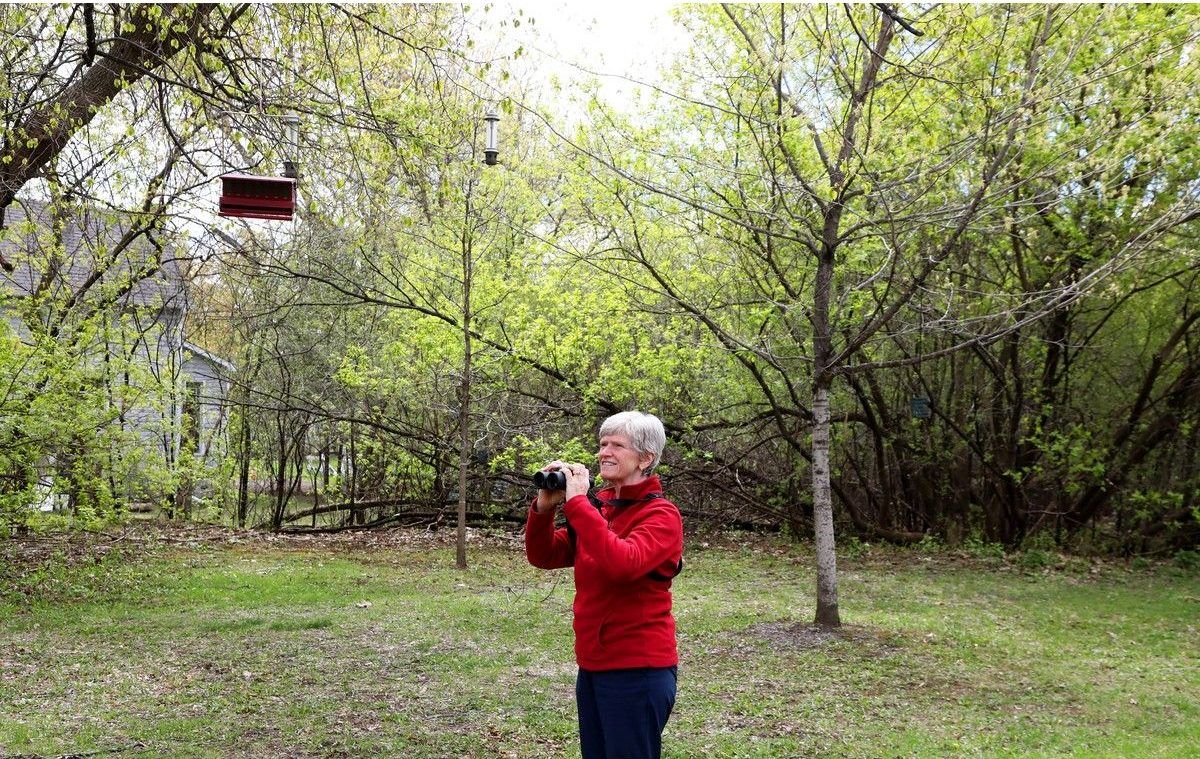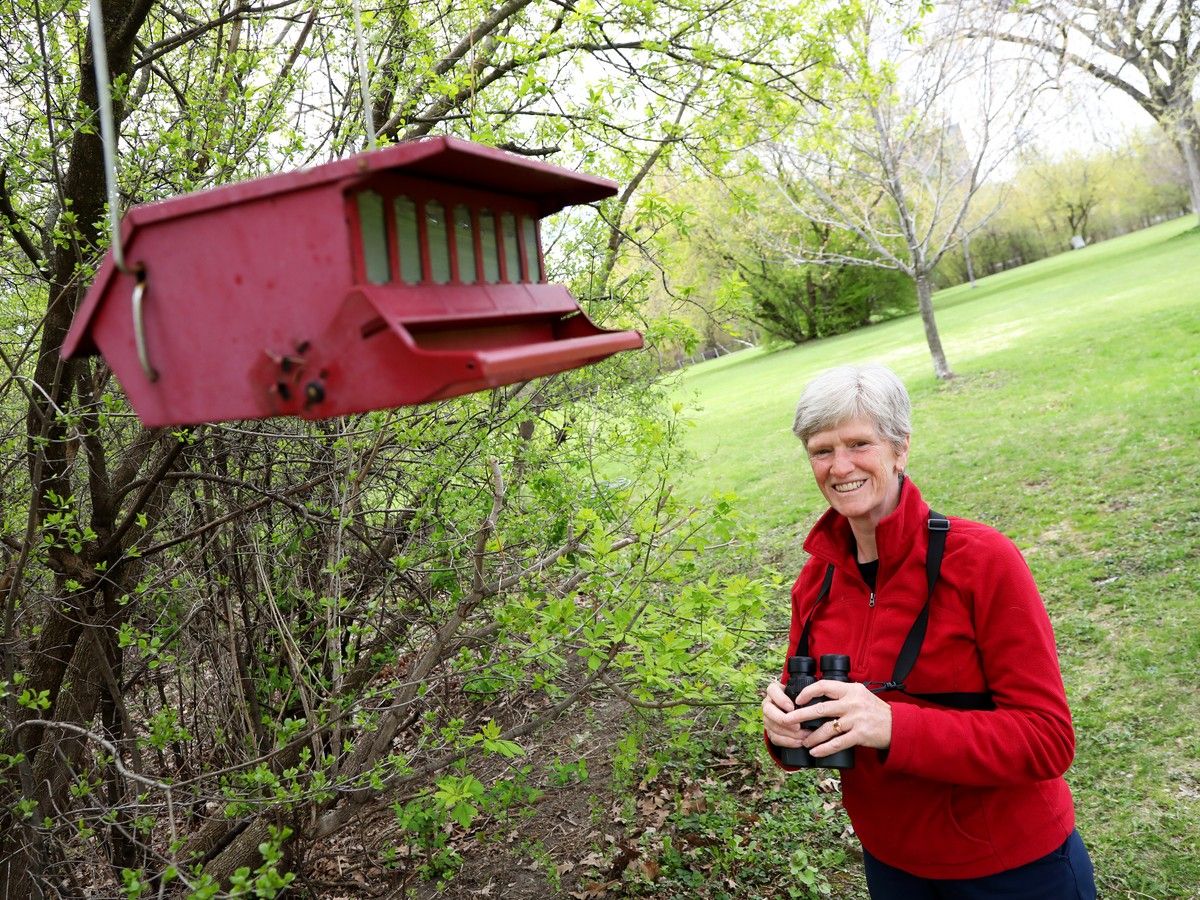
Spotted sandpipers, palm warblers and wood ducks are just some of the species among the approximately two million birds that live in Canada’s capital.
Looking out for Ottawa’s feathered friends are numerous local organizations that have dedicated themselves to protecting birds and their habitats. The community’s latest success was marked by recent news that Ottawa has become a certified Bird Friendly City.
For Emilia Michaud, chair of the Ottawa Field Naturalists Club birding committee, hearing about the certification was “amazing.”
“It’s been a really big effort,” Michaud said. “The most important part is getting the city to accept and support this initiative. It gets the word out, it makes people interested.”
Bird Friendly City is a certification program created by Nature Canada in 2019 to address declining bird populations. According to an article by the organization, certified cities demonstrate a commitment to “reducing key threats to birds, protecting their habitat and educating residents.”
Last week, Nature Canada announced Ottawa had joined the list of now 41 bird-friendly municipalities. They wrote that behind this achievement were years of advocacy and stewardship by Bird Friendly Ottawa and its partner organizations, such as the Ottawa Field Naturalists Club.
“Our mandate as a birding committee is actually to raise awareness of birds for the club, but also for the public,” Michaud said. “We organize bird events. There’s so much interest. People really want to go outside and look at the birds.”
On May 2, Michaud co-led a bird-centred Jane’s Walk in collaboration with Bird Friendly Ottawa.
Michaud said doing bird-friendly events was among the requirements to maintain the certification from Nature Canada. She said the Jane’s Walk — whose route began at the University of Ottawa’s bird-friendly health sciences building — was to “get the word out there.”
“All of its windows have markings on them to stop or reduce the number of birds that collide with that building,” she said. “A big point of that walk was to show our neighbourhood that we have this kind of building that has reduced threats.
“After reviewing the building and talking about what makes buildings bird-safe, we went for walks around the area to do some birding.”
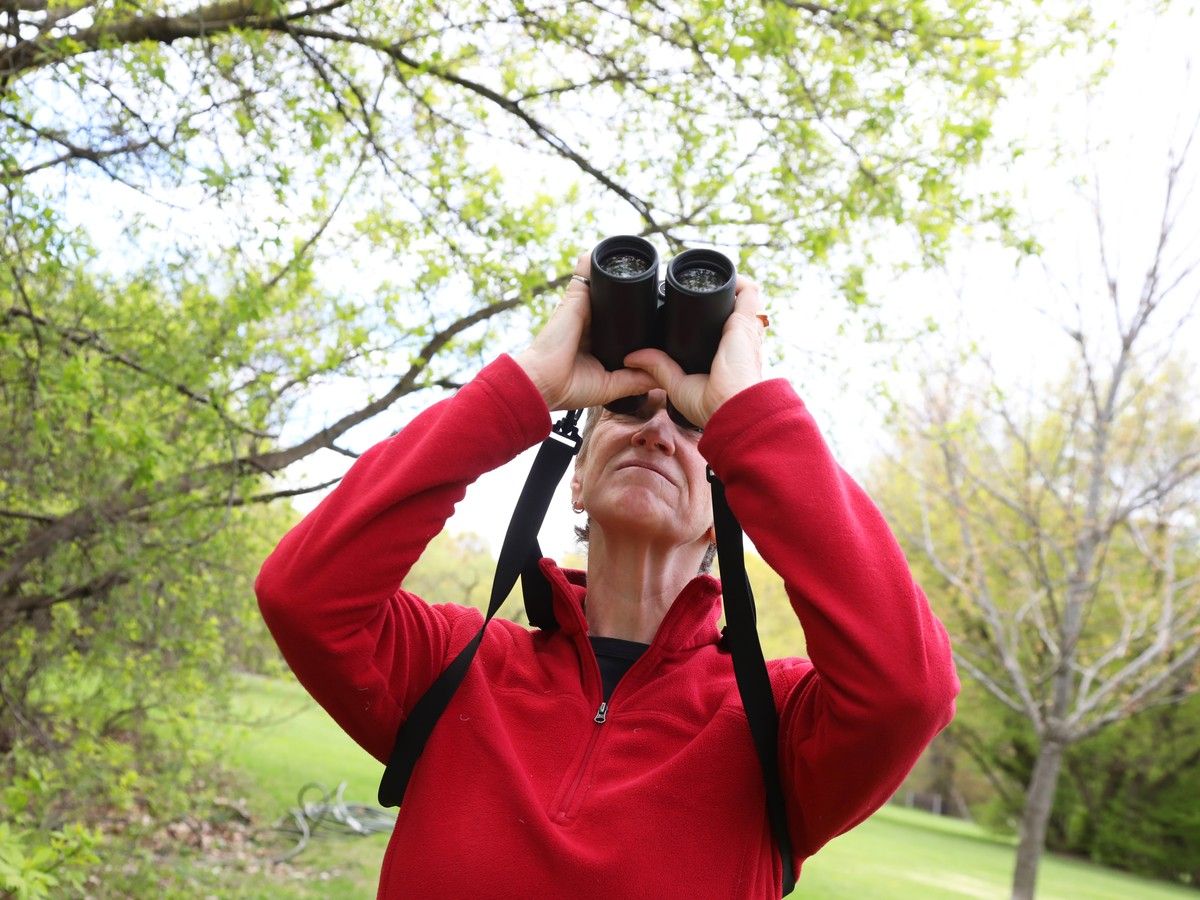
For Michaud, being a bird-friendly city means being aware.
“Awareness makes everybody much more keen on doing something about it,” she said. “Most people weren’t even aware that there was a threat to birds before we had this (certification) in place.”
Deborah Doherty, co-chair of Bird Friendly Ottawa, led the Jane’s Walk alongside Michaud.
She said volunteers who educated people about birds were crucial in bird-friendly cities.
“What I’m finding is that the young people are being involved,” Doherty said. “It’s encouraging to see all of that happening.”
Doherty said Bird Friendly Ottawa formed about four years ago, primarily at the request of Nature Canada to put together a bird team. She said efforts to raise awareness about bird-window collisions had started to ramp up in 2016, when a flock of waxwings collided with a glass walkway at City Hall.
“Since 2020, we’ve had bird-safe design guidelines, so any new buildings (that are) three stories and above need to go through a recommendation process,” Doherty said. “We’re starting to see more and more of those buildings.”
She said some characteristics of these buildings included “bird-safe glass, dark sky lighting and bird-friendly landscaping.”
Doherty added that a quarter-million birds become victims of window collisions in Ottawa every year.
“They either collide and die on impact or they’re injured and die elsewhere,” she said. “That’s not just (from) the tall buildings downtown. That’s across the region.”

Along with window collisions, Doherty said, amongst the largest threats to birds were plastic pollution and cats.
“There’s over a million birds that are killed in North America by cats,” she said. “That’s one of the places where we feel education is very important.”
“Similar to window collisions, people don’t see those deaths happen, so they don’t understand that it’s a problem.”
Doherty said she was “very excited” to hear about Ottawa’s recent achievement.
“It’s been a long time coming,” Doherty said. “I’m very proud of that group effort because it’s been all sorts of very diverse people working to help the birds.”
Angela Keller-Herzog, executive director of Community Action for Environmental Sustainability (CAFES) Ottawa, said part of the framework of being a Bird Friendly City was keeping track of impactful progress.
“Having this certification is another hook for accountability, tracking and measurement,” Keller-Herzog said. “That’s one of the reasons that CAFES is very happy to see this.”
In addition to co-sponsoring the recent Jane’s Walk, Keller-Herzog said they’d also previously partnered with a community engagement class at Carleton University to help raise awareness about birds .
“The theme was bird window collisions. We did some survey work led by a professor and then we had a workshop and did outreach to the community,” she said. “It was really well received.”
Keller-Herzog said the first thing Ottawans could do to help protect birds was to go outside and look for them.
“Take some joy in hearing the birdsong, especially in the morning,” she said. “I think that’s really important.”
For bird photographer Danielle Lefrançois, birding has become a “great therapy.”
“It’s amazing. I can say that it really helped me and it still is,” Lefrançois said. “You have to go into nature to really see more birds. When you see them up close in person, wow, it’s fascinating.”
Lefrançois, who is also a member of the Friends of Mud Lake Facebook group, said her interest in birding started a few years ago when she saw a photo online of a wood duck at Mud Lake.
According to the National Capital Commission, that west-end conservation area is home to 269 bird species.
“I said, ‘What a beautiful duck.’ I’ve always liked taking pictures, but suddenly my interest just changed,” she said. “Instead of people, I started to want to take pictures of animals.”
Lefrançois said she eventually started selling her photographs as cards at the Britannia Coffeehouse, just a stone’s throw from Mud Lake.
“Mud Lake and birding saved my life,” Lefrançois said. “It’s good for your memory and your morale. It’s also good for your eyes because some have beautiful colours, and for your ears because now they’re all singing.”
“It’s a part of my life now.”
For Keller-Herzog, Bird Friendly City certification was a “step in the right direction” for the community.
“It’s something we can be proud of,” Keller-Herzog said. “There’s a lot of bad things happening in the world.”
“We have to take the time to find joy in the positive things, too.”