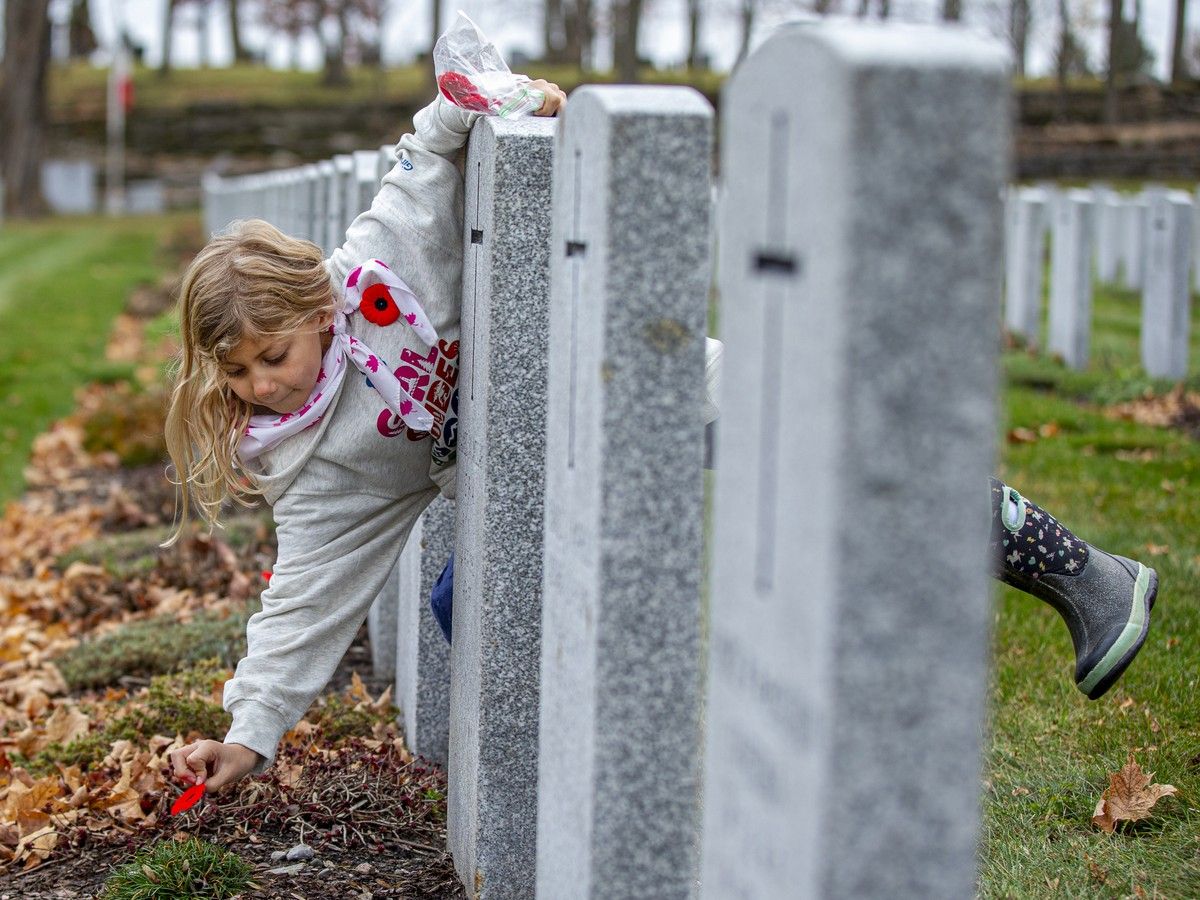
“Can he hear us talking right now?”
Evelyn Tilley, 8, was visiting the grave of her great-grandfather, Donald Joseph Greene, at Notre-Dame Cemetery, along with her six-year-old sister, Molly, and their mother, Bridget Greene, when she asked that question.
Corporal Greene had served in the Air Force as a mechanic, repairing aircraft. He’d died long before either girl was born.
Bridget recalled trying to explain that although their great-grandfather was no longer physically present, he was still there in their hearts, and that sometimes it helped to talk to him.
But Molly already had it figured out. “He can hear our souls,” she said to her sister.
Later that afternoon, Evelyn and Molly joined other Girl Guides at neighbouring Beechwood Cemetery for the annual No Stone Left Alone ceremony, at which the girls placed poppies on veterans’ graves . The goal was to leave one on every soldier’s headstone in the Veterans Section of the National Military Cemetery of Canada.
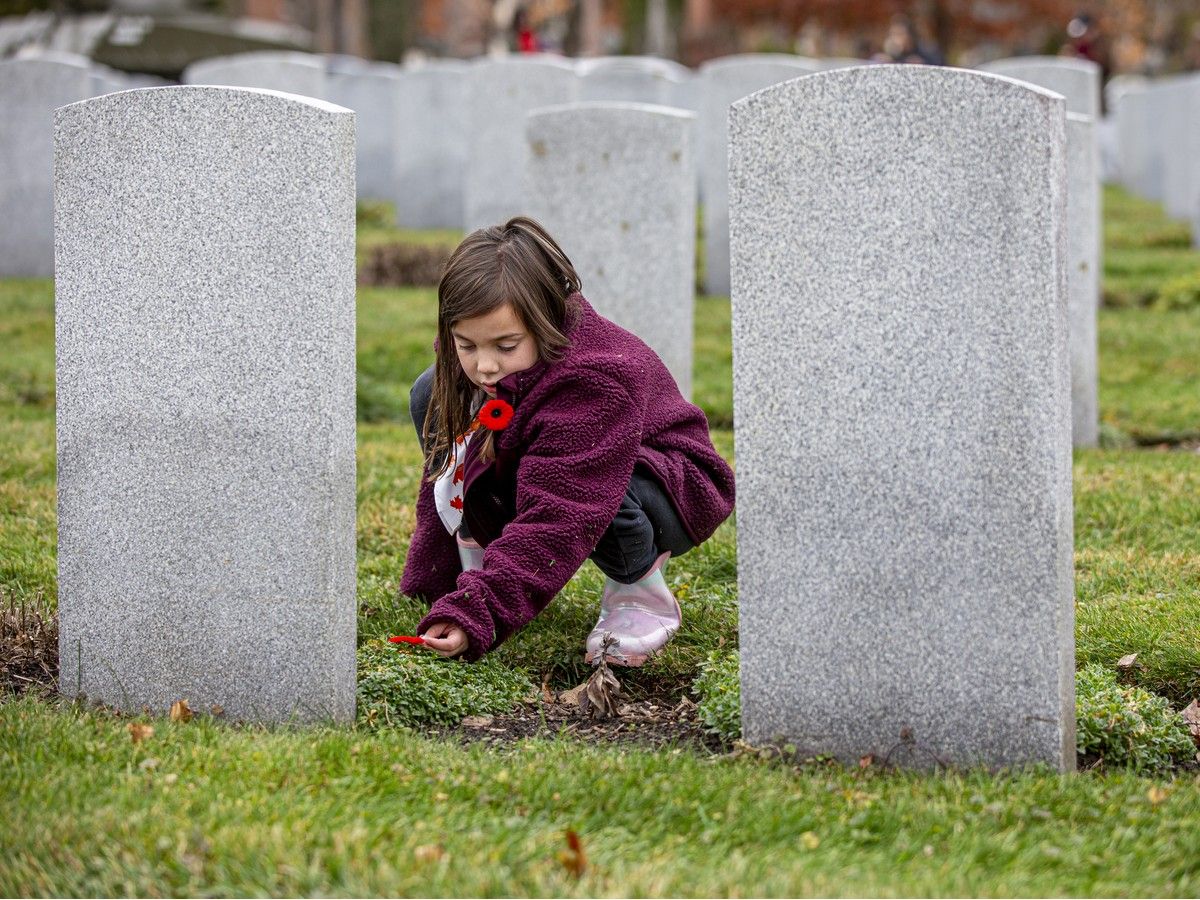
It was an exercise in remembrance , of course, but also in understanding. Watching the girls move among the headstones days before Nov. 11, I found myself thinking about how little I understood about war and sacrifice when I was their age.
I was born in 1960, just 15 years after the end of the Second World War. By the time I was eight, the war had been over for 23 years. And yet, as a kid, the Second World War felt like a story from centuries earlier.
On Nov. 11, we’d gather in the school gymnasium for the Remembrance Day assembly. There would be speeches — interminable ones that sorely tested my attention span. A student would recite In Flanders Fields. Another would play The Last Post on the trumpet. A minute of silence would follow.
I understood we were supposed to be solemn. A great war had occurred — two of them — and many people had died.
But, at eight years old, I didn’t really understand any of it.
My paternal great-grandfather, James Henry (Jim) Deachman, was killed in Europe on April 29, 1917, when a piece of shrapnel tore through the tent he was in. He was 42 years old, a private in the Canadian Army, and is buried in Belgium.
Six weeks earlier, he’d written to his mother from a military camp outside London.
“I felt very lonesome leaving Mary, Alton, Beatrice and Grandma,” he wrote, “and they were just as lonesome to see me go, but then you see, mother, someone has to go and fight, or at least do his bit in some way.”
He told her he’d been promoted to corporal but was refusing his stripes until he’d gone to work in France.
He described the sights he’d seen while on leave in London: Westminster Abbey, the Tower of London, the royal stables and the wax works.
“The next leave I get I intend, if all is well, to go to Scotland and Ireland,” he wrote.
He also assured his mother that, because he was serving with a railroad construction battalion, he doubted he’d see the “firing line.”
Six weeks later, he was dead.
My maternal grandfather, Norman Mottshaw, served in the navy.
Yet somehow, when I was a youngster, I never connected either man’s service to those November assemblies. The First and Second World Wars belonged to history books and old black-and-white photographs, not to my family.
And I certainly didn’t understand sacrifice or death. How could I? I barely understood what it meant to die, let alone what it meant for someone to willingly risk his life for people he’d never met.
Even the youthfulness of many of the dead meant little to me. We hear of the 17-, 18- or 19-year-olds who went off to serve and never returned. But to an eight-year-old, 19 is almost middle-aged. I had to become an adult before recognizing them as just boys, and with each passing year, the soldiers in those service photographs only seem to get younger.
Fourteen-year-old Amelia Tamas, a Pathfinder who helped lead the younger girls at Beechwood, already thinks about that.
“All of these people who pretended to be older than they were to go and sacrifice something and ended up dying. They could never go home and see their families again.
“It’s a really sad thought for me.”
At Beechwood, the girls were making connections I never had at their age. Among them were members of the 1st and 2nd Russell Embers and Sparks, who’d spent part of the previous week making paper poppies and writing postcards thanking members of the military for their service. The postcards would be distributed at the Russell Legion on Remembrance Day.
And as they placed poppies at the headstones, many just said, “Thanks.”
“It’s not just on November 11th,” Evelyn explained when I asked why Remembrance Day matters. “You should always remember them because they saved our world.”
Guide leaders Tara Dawe and Genevieve Tamas had taught them about the contributions Girl Guides made during the world wars, including knitting socks, collecting clothing and preparing supplies for soldiers. They learned that even the triangular scarves worn by Guides were designed to double as bandages or slings. And as the girls made their poppies and postcards, they were asked to name something each could do to promote peace and kindness.

Seven-year-old Phoebe Gu — Dawe’s daughter — had her own way of remembering.
Following the ceremony, she and some others made their way up to the newer part of the cemetery, where a family friend and army veteran, William James Williams, is buried.
Phoebe never knew Bill, but she visits the grave with her family, and on previous occasions has entertained him with knock-knock jokes. On this day, it involved a banana and an orange.
When I told her I thought I heard Bill laughing, that perhaps I even saw the ground tremble a little, she turned toward the grave, as if to check.
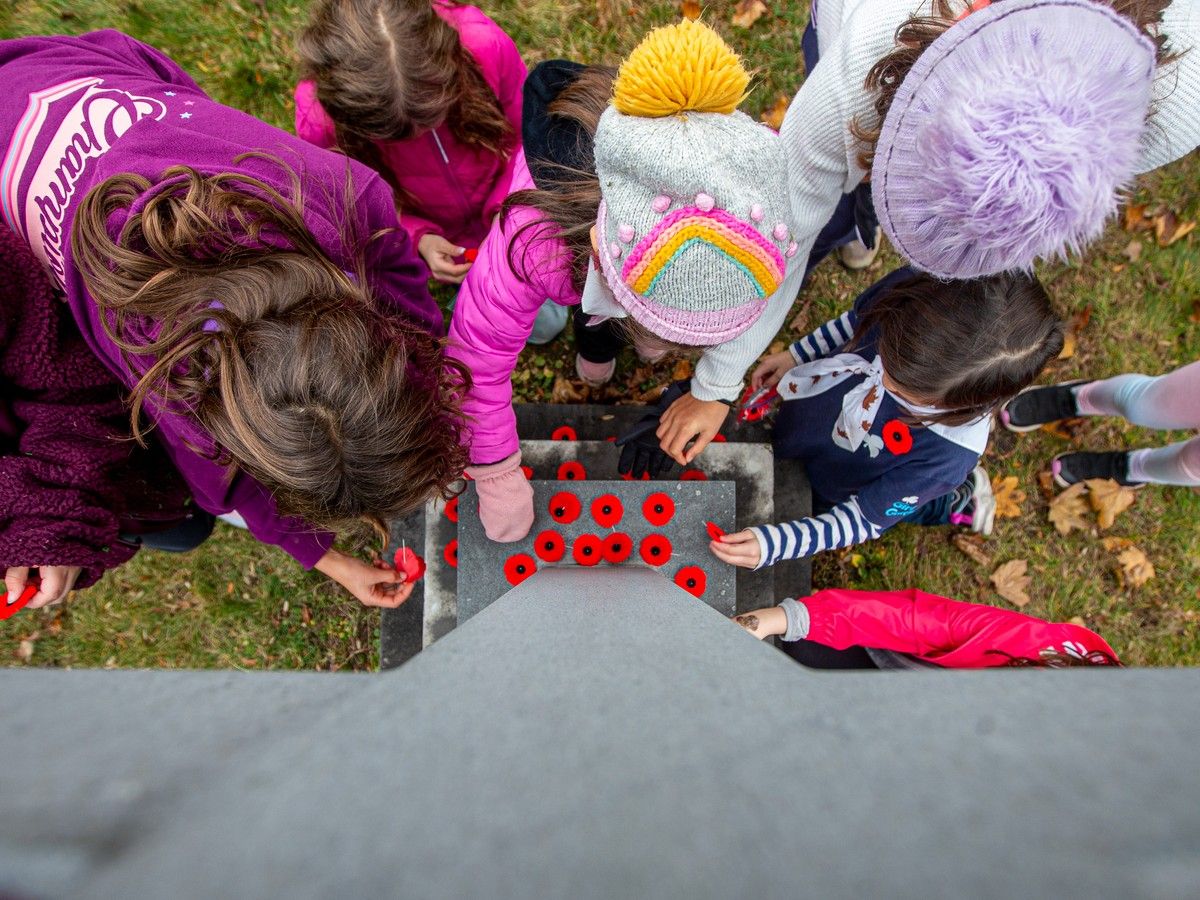
I don’t know how much Evelyn, Molly or Phoebe understands about war and death. Probably not much more than I did at that age. For now, though, it’s enough that they practise remembrance. Someday, they’ll understand that the people beneath those headstones had families, friends and plans for their lives — plans that didn’t always work out.
My great-grandfather had a mother he wanted to see, children he missed, and hopes to visit Scotland and Ireland. I didn’t know any of that when I sat in my school gymnasium more than 50 years ago.
I hope all the children at Beechwood keep remembering, in whatever ways makes sense to them: by asking questions, through silent contemplation, or by making poppies, postcards or even knock-knock jokes.
But more than anything, I hope they never have to understand it through the loss of someone they love to war.
Take control of your search results. Make the Ottawa Citizen a preferred source on Google and see verified local reporting first.