“I never wanted to be a chef.”
This is the first thing Grant van Gameren says when we sat down for his interview. It was a bit surprising, given that he is one of the most influential Toronto chefs of all time. He has an astonishing knack for knowing what people want to eat, or, rather, what he wants to eat, and opening restaurants to feed it to them at the right time. Over the past two decades, he opened, among others, the Black Hoof, Bar Isabel, Bar Raval, El Rey, and the Michelin-starred Quetzal. He revived The Tennessee Tavern and Harry’s Charbroiled. He moved out to Prince Edward County a few years ago and opened Rosetta there, too.
And now, he’s shut down his two-year-old French bistro Martine’s and, alongside Fat Rabbit impresario Zach Smith and Bar Raval partner Hailey Burke, debuted Casa Rubia in its place, a Spanish-inspired restaurant serving things like succulent Galician beef, Cantabrian anchovies and marinated mussels, albacore tuna crudo, grilled cuttlefish with olives, charred octopus. So what does he mean, he didn’t want to be a chef?
You get the sense that van Gameren didn’t want to be a chef the same way he didn’t want to be, say, a fireman or an HVAC technician or a realtor. His family didn’t care about food growing up. After a few cooking gigs, his school chum and fellow future famous chef Craig Harding got him a gig at Canoe. Van Gameren promptly asked for a higher hourly than anyone was making there at the time. On his first day, he realized he didn’t really know anything about food. No biggie — van Gameren knew he would be worth the cash. Eventually. “Me getting into restaurants has nothing to do with the food or the restaurant business. I like to excel at whatever I’m doing, and if I don’t know something, I like to figure it out on my own time,” he says. “And I have this excessive nature of when I’m into something or trying to reach a goal, I will do whatever it takes to figure it out and do the best I can.”
One anecdote from his youth feels more telling than anything on his food CV. When van Gameren was in his late teens, he got a snake. “And then I liked it so much that I was like, ‘how can I do more of this?’” he remembers. “And it was like, ‘OK, now we’re breeding snakes.’” Soon he was collecting snakes and selling them all over North America. Suddenly he found himself one of the continent’s blood python experts, writing out care sheets for his ophidiophile clients. His Parkdale apartment filled with teetering stacks of snake containers and egg incubators.
Van Gameren couldn’t have just one snake. He had to have 50.
One restaurant was never going to cut it, either.
Drive to succeed
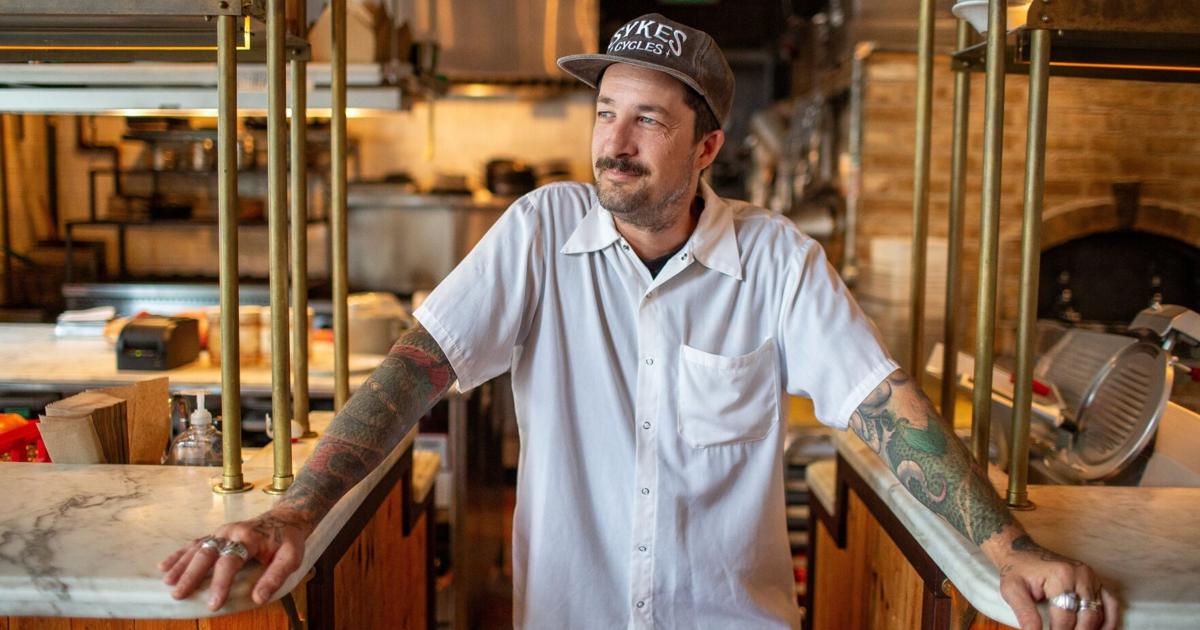
Van Gameren doesn’t look like the usual head of a culinary empire. Standing outside Casa Rubia bright and early one recent Friday, his faded Sikes Cycles T-shirt had holes in it, his old Choppers Only cap was pulled low over sleepy blue eyes. A lot of tattoos. It was 9:30 in the morning and he was smoking, candid and friendly. But underneath the laidback vibe thrums an engine, as strong and unstoppable as the 1930s and 1940s Harley Knuckleheads he loves so much.
After we settle at a table on the second floor, he tells me cooking has always just been a job. “Never a passion,” van Gameren says. “I think that’s what’s helped me do what I do…(with) that drive of execution and excellence and a methodical framework way of thinking versus ‘I grew up with these family memories of food, and now I’m showing it off to these people and telling a story.’ No — I’m like a chameleon when it comes to the restaurants.”
He doesn’t talk to restaurant people. He doesn’t follow trends or chefs, his feed instead filled with pitbull memes and vintage motorcycles. He rarely dines out, let alone eat at his own restaurants. van Gameren can’t stand the idea that even one person might be sitting there, just hating their meal. “I feel like if I come up with it in my head and someone down the street is doing it, I don’t really care. This came from the fabric from my head, and we’re just gonna do it the best we can. It’s about looking forward, not looking sideways or backwards.” Some balked at his proposed name for his County place — there’s already a famous restaurant in Mexico called that. He named it Rosetta, anyway.
Vibes on vibes on vibes
There is one van Gamerenian constant: an obsession with how a restaurant makes you feel. “It’s about understanding there’s an emotional connection from the minute you walk in to the minute you leave: we want people to feel like they’ve left something behind. They’ve lost something, and they need to come back to find it.”
His design quests come up over and over. He fell for the patchwork of ancient tiles at a little absinthe bar in Spain, which led to trucking 15 tons of handmade tiles up from the Texas-Mexico border for Bar Isabel. Many of them are loose and wobbly now, but van Gameren is determined to restore them instead of just taking the faster, cheaper route and re-tiling. (Some people like walking on them and hearing the clickety-clack of the loose tiles, van Gameren says, and that might bring them back. It’s the little things.) He drove down to Buffalo to salvage a 30-foot, 19th-century wood-and-marble bar for the Tennessee, pulling it out of the building just one hour before the structure was torn down. He changed the design for Quetzal three times before opening, losing $400,000 in rent over several years.
The Jen Agg collab that never was
And something, he says, not many people know: back in the Black Hoof days, he says, he was going through a foraging phase, and he and co-owner Jen Agg decided to convert breakfast spot the Hoof Café into BH & Co. and do a 14-course tasting menu featuring foraged items, plated on rocks, a few days a week. A week before opening, they were fully staffed and ready to go. van Gameren woke up one day and wondered what the hell he was doing. “Like, ‘This just not me. This is not the food I like to cook. This is not the food I like to eat.’ And I just pulled the plug.” He never made that mistake again, he says: “I’m a firm believer people have to cook the food they enjoy eating.”
And that’s how we get to Casa Rubia. A delivery man appeared, carting in $4,000 worth of beef. “People don’t remember the food they ate. You can only take on so much information and memory,” van Gameren says. “But the feeling will stay with you forever. And if it’s a good feeling, they’ll be back.” Casa Rubia feels like a day at your abuela’s house, a comforting plate of chorizo and giant beans served up on her worn wooden table, or a really sexy date in a little café by the Mediterranean Sea, huddled over a gigantic bone marrow. Simple.
As van Gameren flicks through the eye-watering meat bill, I ask what his knuckle tattoos say. HOME SICK. He yearns for his wife and two boys, the peace that comes over him when he turns down his crunchy country driveway. “This is my last restaurant,” he says. “I’ve given enough to the city.”
It’s not the first time he’s said this; van Gameren remembers swearing the same thing three restaurants ago. But here he is, sleeping on his friend’s couch six nights a week in the final stretch to open the alleged final restaurant. Just cooking and getting everything set up, no calls about plumbing problems or broken refrigerators — it feels like a vacation, he says, even with the 16-hour days. His kids, however, have been a bit miffed, with one crying, “Dad, whyyyyy do you have to open another restaurant?”
“Why?” van Gameren asked. He looks at me, shrugs. “Why snakes?”
Correction — Oct. 17: A previous version of this story incorrectly included Grand Electric among the restaurants opened by Grant van Gameren.