

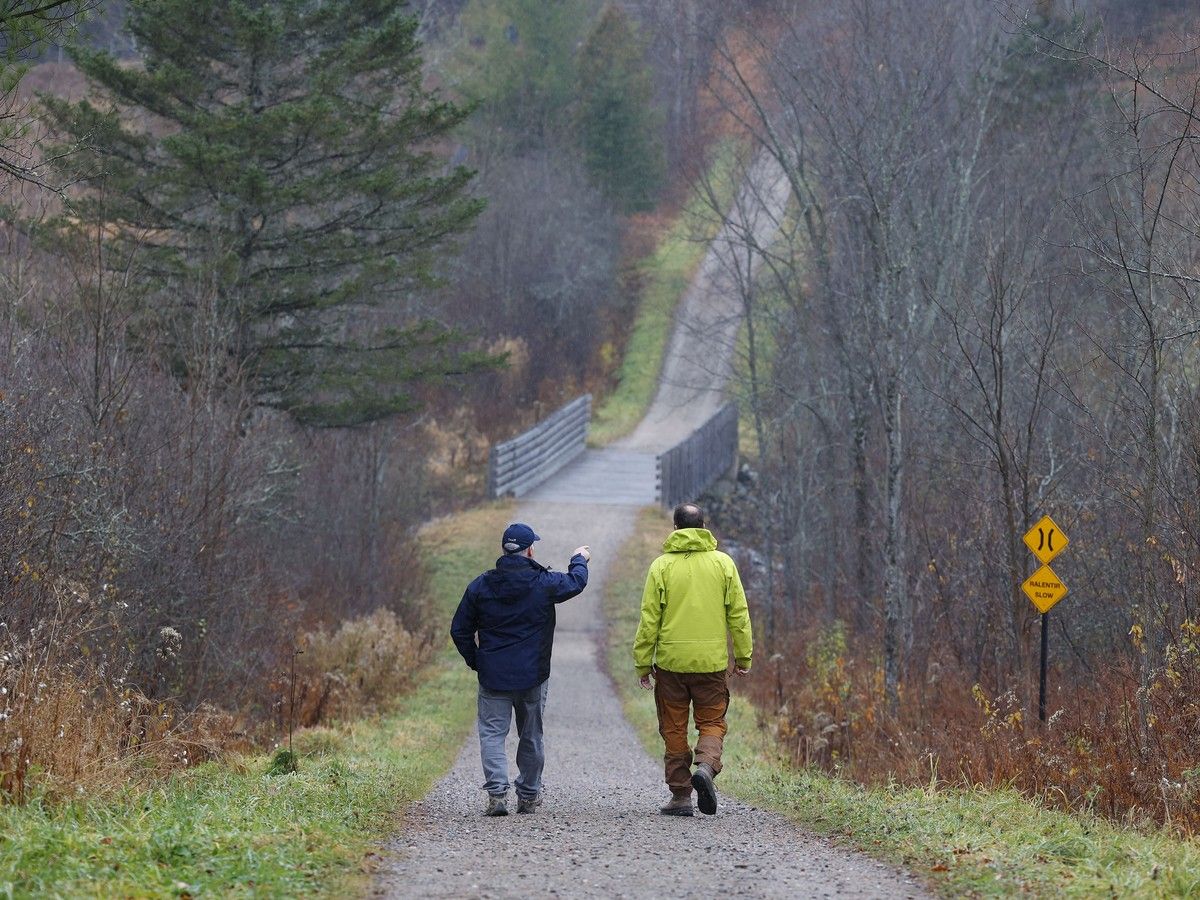
On a rainy November morning, Jean-François Gobeil gestured at a field of tree saplings he hopes will one day be a nesting site for golden-winged warblers.
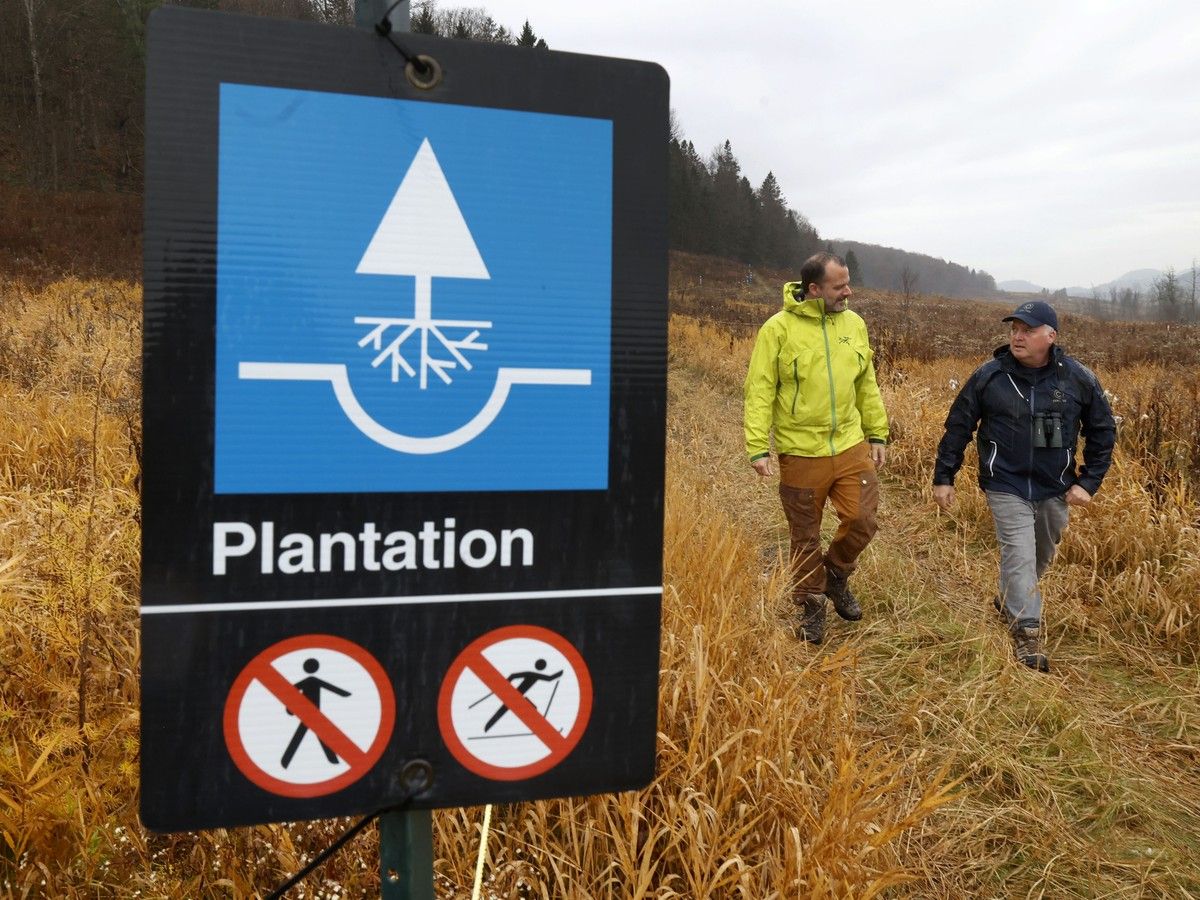
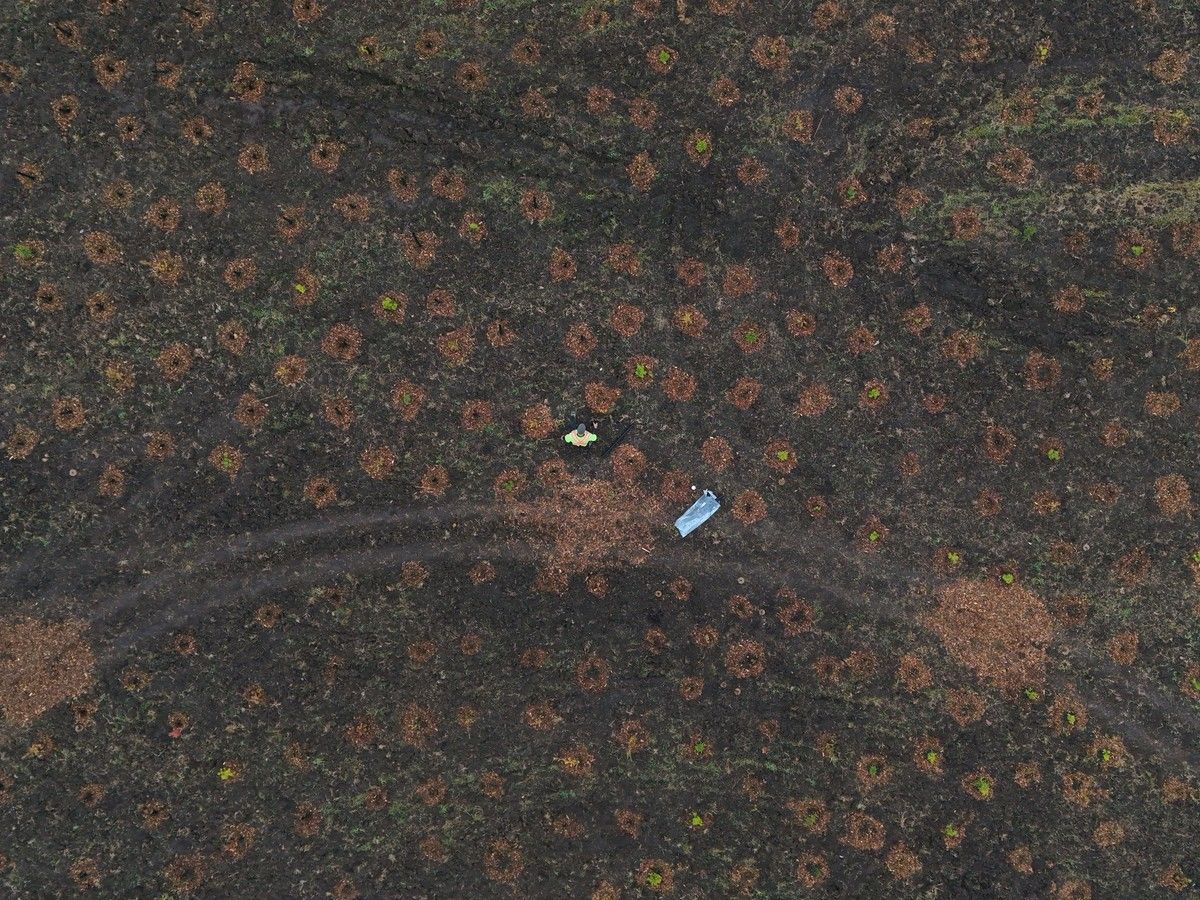
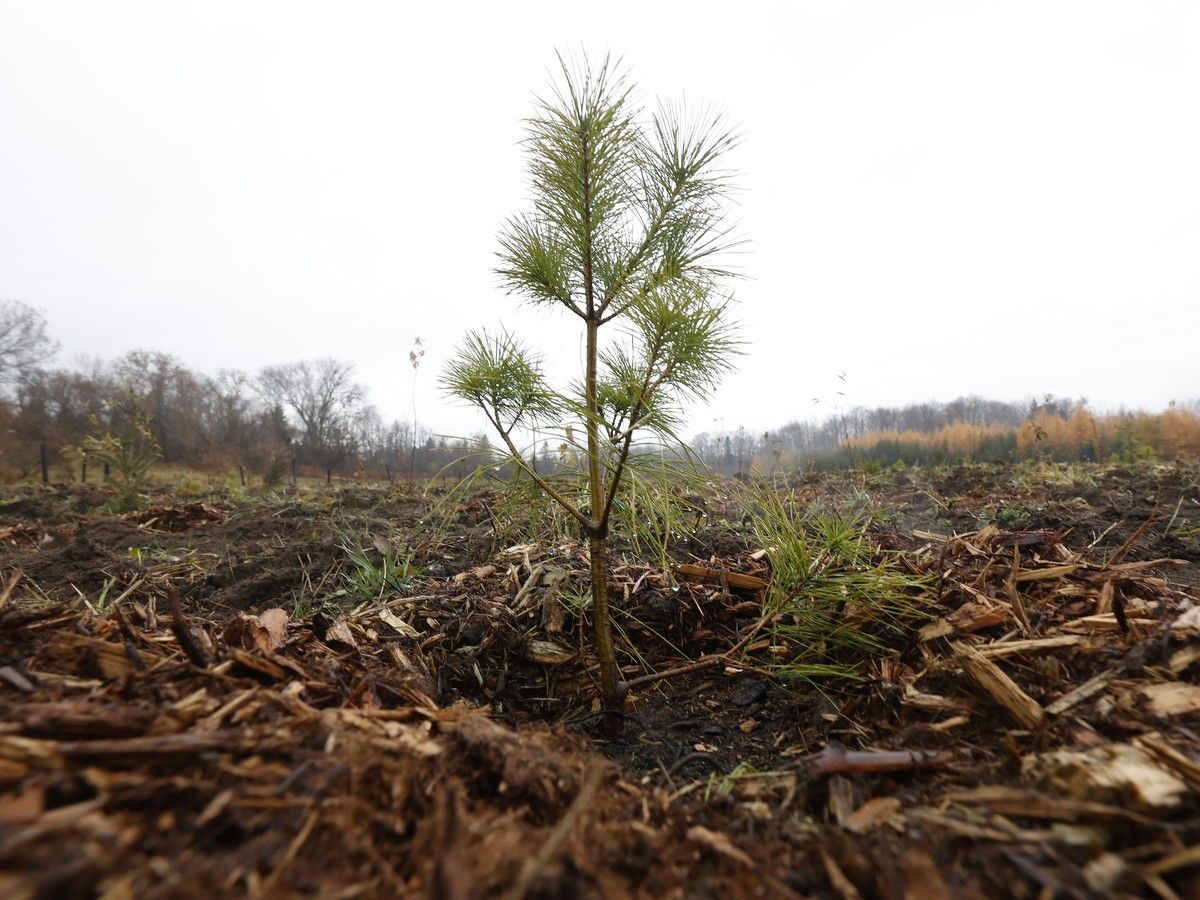
The saplings — each individually marked with a ribbon — are part of a 20,000-tree plantation in Gatineau Park’s Meech Creek Valley.
Gobeil, a senior biologist with the National Capital Commission (NCC), guesses the birds likely won’t move in for another five to six years, depending how fast the trees grow.
The hard work of planting so many trees — an eclectic mix of species including oak, alder and white pine — was shouldered by volunteers, birding clubs and NCC staff. The effort aimed to rewild a picturesque sliver of Gatineau Park, stabilize the eroded banks of Meech Creek and lure back the warbler, one of the 150 or so at-risk species that call the park home.
It was this plantation that NCC CEO Tobi Nussbaum highlighted in a recent appearance at a Senate committee studying the latest in a long line of failed attempts to protect Gatineau Park in law.
Unlike national parks, Gatineau Park has no statutory protections, leaving it vulnerable to development. Its boundaries have shrunk over time, putting increasing strain on the more than 5,000 plant and animal species that live there.
Bill S-229, sponsored by Independent Senator Rosa Galvez, seeks to etch the current boundaries into law. It aims to prohibit the sale of public lands within the park and prioritize “ecological integrity” in how the park is managed.
Speaking to senators, Nussbaum stressed that ecological integrity is already at the centre of the NCC’s approach, pointing to the Meech Creek plantation, part of a larger commitment to planting 100,000 trees in the National Capital Region, a target the organization said earlier this week it had achieved.
Environmental groups want more binding reassurance.
Earlier attempts thwarted
Nikita Lopoukhine, a former director general at Parks Canada, has long called for Gatineau Park to become “a real park,” with clear legal protections.
He watched as, between 2005 and 2013, 13 bills were introduced in Parliament to amend the National Capital Act — the law that established the NCC — with the specific aim of protecting Gatineau Park.
None were successful.
Most were private member’s bills brought by NDP legislators, though the Conservative government under former prime minister Stephen Harper also tried unsuccessfully in 2014.
That Harper-era bill forms the basis of the current attempt, co-authored by Independent Senator Rosa Galvez and Liberal MP Sophie Chatel.
Bill S-229 is the second go-around for the duo, after a previous effort died on the order paper ahead of the 2025 federal election.
Chatel said the work sprung from deep community consultations and the final product boasts the backing of everyone from local municipalities to First Nations to Public Works Minister Joël Lightbound.
If it all goes to plan, she’s hopeful the bill will be passed by the summer.
Such a clear signal of political support, Lopoukhine said, is “the furthest we’ve come” in decades of advocacy.
Plenty of factors are conspiring in the bill’s favour. Lopoukhine highlighted a few: strong support from the National Capital Region caucus, a stable majority government and a prime minister who holds a local seat.
A rare early appearance at a Senate hearing by the minister in charge should also help grease the wheels. Lightbound has pledged his support, pending certain amendments he laid out for Senators.
Among other “technical” changes, he said, the bill should apply only to federal lands within the park (amounting to about 86 per cent of the park’s total area), while excluding provincial, municipal and private property.
He also proposed a “no net loss principle,” rather than an outright prohibition on the sale of public lands.
Such a principle would ensure that any land removed from the park would be replaced by a parcel of equal or greater size.
Nussbaum told Senators the change would allow the NCC to “transact with a partner” to acquire a larger or different parcel of land in exchange for a portion of the park, should the need arise.
The goal, according to Lightbound, is “flexibility.”
Could ‘no net less’ mean ‘no national park’?
Environmental groups are broadly supportive — but Lopoukhine and others remain skeptical of several “sticky issues,” especially the government’s attempt to carve out private properties and allow land swaps.
John McDonnell, executive director of the Ottawa Valley chapter of the Canadian Parks and Wilderness Society (CPAWS), said the bill is “good” overall, but the “no net loss” concept could “be quite problematic.”
Allowing the NCC to “tweak” the boundaries “here and there” makes some sense, he said, but the risk of abuse could be significant.
“What you could eventually see is the park migrating north and west from the city, where those urban lands in Hull are swapped out for lands elsewhere,” he said.
“We need to make sure that doesn’t happen.”
In a letter to the Senate, Lopoukhine echoed those concerns, saying he viewed “hectare-for-hectare” transfers as “problematic.”
“The location, ecological function, connectivity and biodiversity value of land matter enormously,” he wrote.
As a result, he doesn’t want the NCC granted the power to decide which park lands it exchanges or transfers. Instead, he argued, any future changes to the boundaries should go before Parliament for approval.
The current draft of the bill, Chatel said, puts cabinet in charge of approving future land swaps and adds a requirement that any deal must improve the ecological integrity of the park.
Even with the amendments, Lopoukhine said the bill would be a net benefit.
“But I’m suggesting that they’re missing the opportunity to do the right job, rather than just a partial job,” he said.
Other advocates are more dogmatic in their opposition.
The Gatineau Park Protection Committee, a local advocacy group, has said the government amendments amount to gutting the original bill.
Ken Rubin, a frequent political commentator and government transparency advocate, said he can “smell a rat.”
Rubin, who farmed for years on a property located just outside the park boundary near the Eardley Plateau, doesn’t buy the NCC’s public justification for including the “no net loss” principle.
“‘Hey, friendly developer, you give us part of your crap land, and we’ll give you some sensitive good land by the park’ — that’s what this is all about,” he said.
Rubin would like to see every amendment stripped from the text, but isn’t hopeful he’ll get his way.
“It will go through because it’s in the interest of developers,” he said. “This ‘no net loss’ principle is a ‘no national park’ principle.”
NCC senior manager Stéphane Wojciechowski said any trade that altered the boundary of the park would need to be debated in Parliament.
“If the trades are happening inside the boundaries — if we’re letting go of a smaller piece of land that has less ecological value for larger piece of land that has greater ecological value, then I think that flexibility is something that we’re open to having,” he said.
Kitigan Zibi Anishinabeg expressed support for the ecological protections afforded by the bill, but band councillor Gilbert Whiteduck testified in the Senate that the government appears to be relegating the Algonquins to the role of mere “stakeholders.”
He’s calling for the nation to be included as co-managers, alongside the NCC.
“Words matter,” he said. “If this bill truly recognizes the territory is unceded, there needs to be a clear articulation of the nation-to-nation relationship and the shared stewardship of Gatineau Park as a building block for reconciliation.”
Not perfect — but badly needed
Galvez said she considers the bill “low-hanging fruit” for the government.
Polling by CPAWS indicates the idea of legal protection for the park is widely popular in the region — currently a Liberal stronghold. Legislation aimed at protecting the park may also bolster the green bona fides of a government that has routinely run afoul of environmentalists.
For its part, the NCC welcomes the bill, saying updating the law will grant it more tools to address longstanding conservation issues, such as the disruption of wildlife.
Across the board, Galvez said, the political will is in place.
“We cannot allow perfection to be the enemy of progress,” she said. “If we wait, (the park) just gets degraded, and we are losing already.”
Galvez pointed to Canada’s international commitment to protect 30 per cent of the country’s land and waters by 2030. So far, Canada is nowhere close.
(Although Gatineau Park currently counts toward the country’s stock of protected lands, any international audit would likely exclude the park, leaving Canada even further from the goal than it is today.)
“We are late,” Galvez said. “We lose credibility when we say we are going to do something, and we don’t do it.”
McDonnell has a similar view. He hopes any changes to the bill are reasonable, but doesn’t foresee a situation where he pulls his support altogether.
“It’s not perfect,” he said. “But it goes a long way in addressing a lot of threats that Gatineau Park is facing.”
Don’t let algorithms hide the follow-up. If you are tracking this story, make the Ottawa Citizen a preferred source so you get our live updates the next time you search.