Ottawa’s mayoral hopefuls have been gradually rolling out their platforms, knocking on doors and placing their election signs across the city as we get ever closer to election day on Oct. 26.
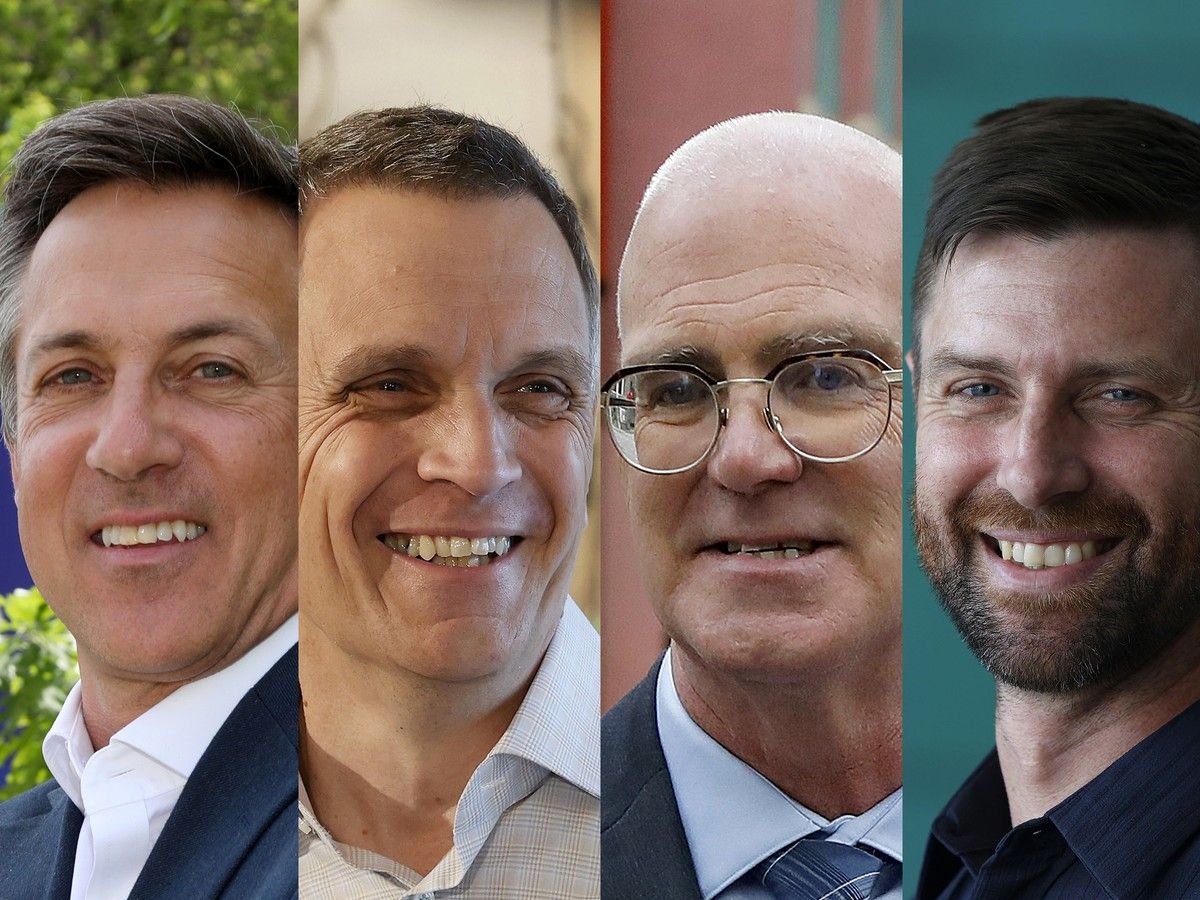
It can be hard to keep up with campaign promises for all candidates. The Ottawa Citizen wants to help readers make an informed decision on voting day. Here is a roundup of the promises made in the past week by the four leading mayoral candidates: Neil Saravanamuttoo, Mark Sutcliffe, Jeff Leiper and Alex Lawson.
Neil Saravanamuttoo
RTO congestion plan, unveiled Sept. 11:
Saravanamuttoo says he “strongly” opposes the federal return to office (RTO) mandate, arguing the capital lacks a road network capable of managing an inflow of additional commuters. He promises to ask the federal government to re-evaluate the mandate and establish park-and-shuttle facilities at locations with underused parking near locations like Confederation Heights.
As part of his RTO traffic congestion plan, Saravanamuttoo pledges to create a People’s Office for Better Construction, which he envisions as being a small team at city hall that would be laser focused on co-ordinating construction and minimizing the effect on residents.
“Before construction season begins, this team will co-ordinate projects involving the city, the National Capital Commission, the province, utility companies, developers and contractors to avoid unnecessary overlap and road closures.”
Saravanamuttoo says the office would oversee stricter rules governing lane closures, but would also ensure Ottawa roads are not opened, upgraded and restored more than once a year.
Fiscal plan, unveiled Sept. 16:
On Wednesday, Sept. 16, Saravanamuttoo unveiled his fiscal strategy, promising to “open the books” at city hall and take a closer look at Ottawa’s spending in his first 100 days in office, if elected. Saravanamuttoo promised to identify “wasteful” spending and make spending transparent to residents.
At a press conference, Saravanamuttoo said he won’t commit to a property tax hike target before taking a closer look at the city’s spending. Saravanamuttoo argues that Ottawa has not done a comprehensive spending review since the 2004 Universal Program Review.
He pledged, if elected, to introduce a dedicated office of experts in finance and data analytics (separate from city staff) to find savings.
The economist says his expertise in public finance, with his work within the federal finance department and the G20’s Global Infrastructure Hub, positions him as the right candidate to take on the task. “I’ll first scrutinize how we spend the 100 per cent of our existing budget,” he said.
When asked what is off limits when it comes to spending cuts, Saravanamuttoo said front line workers are a priority in the campaign.
Mark Sutcliffe
Affordability plan, unveiled Sept. 16:
Sutcliffe committed to increase property tax between two to 2.5 per cent for 2027 and 2028, if re-elected. This mirrored his commitment from 2022, when he similarly pledged to keep property tax increases between two and 2.5 per cent for his first two budgets as mayor.
Sutcliffe’s plan also pledges to find another $250 million in savings in the city’s budget in his second term.
His plan includes an expanded review of city programs and spending where he will benchmark costs against other municipalities.
Sutcliffe says he will be maintaining a hiring freeze for non-front line and non-priority positions, and freezing general operating spending. If elected, Sutcliffe says he will provide a property tax relief for small businesses, which he says will save them approximately $3,700 a year.
The plan also introduces a property tax deferral of one year for residents and businesses when they experience a major disruptive change, including death in a family or a job loss.
Sutcliffe’s plan includes a previously announced commitment to lower the monthly price of adult transit passes 30 per cent from $138.50 to $95 a month.
Jeff Leiper
Infrastructure levy, unveiled Sept. 15:
Leiper says he wants to maintain what Ottawa already owns by adding a one per cent levy to address Ottawa’s “crumbling” infrastructure. At its core, Leiper’s one per cent infrastructure levy wants to address Ottawa’s infrastructure funding gap.
If he’s elected, homeowners should expect an average increase of $28 per year (or $2.33 per month), though Leiper says the amount paid by an individual property owner would vary based on assessed value, property class and applicable tax components.
He argues the $25.5 million generated from the levy annually would help the city maintain infrastructure like roads and bridges as well as lessening the impact of extreme weather like the torrential downpours like the city experienced on Canada Day.
The increase would keep property tax increases predictable and affordable, he argued.
Housing plan, unveiled Sept. 17:
On Sept. 17, Leiper and his campaign supporters stood in front of Beaver Barracks — a mixed-income housing complex — in Centretown as he traced the steps he would take to build more homes and make housing affordable in Ottawa.
If elected mayor, Leiper promises to build 1,500 affordable homes every year.
He also pledges to create a municipal acquisition fund to prevent the erosion of affordable housing in Ottawa. A municipal acquisition fund is a dedicated pool of money the city uses to purchase existing at-risk rental buildings. Leiper says the fund is important because it would prevent homes from being sold off to developers for parking lots or luxury condos and would help non-profits or co-operative housing providers buy those buildings instead.
Leiper’s plan also includes a crackdown bad-faith landlords, who he says will be held accountable, and preventing renovictions.
Leiper said Beaver Barracks offered a model of mixed-income and subsidized housing would work.
Alex Lawson
Garbage plan, unveiled Sept. 10:
Lawson promises that, in his first 100 days in office, he would bring back the six-item garbage limit, scrapping the current three-item limit, which has been in place sine 2024.
He says the decision was made by council in June 2023 because the city’s only landfill was running out of room. But now that the city purchased a landfill with a price tag of $95 million in January 2026, he says the limit should be restored to what it was before 2024.
Lawson wants to build a waste-to-energy plant on already-existing land in the city. The plant would burn residual waste and turn it into electricity for the Ontario grid.
“What comes out the bottom is ash, about a fifth of the weight that went in,” his plan reads.
Traffic plan, unveiled Sept. 16:
Lawson promises that, in his first 100 days in office, he would apply to Google’s Project Green Light.
Every phone running Google Maps in a vehicle is already reporting where it is and how fast it’s moving. Google takes that driving data, in aggregate, and can see where traffic stops and starts at every signalled intersection in the city.
From that, it works out where the timing is wrong and sends the city a recommendation on how to change the pattern at different times of day to better move traffic.
City engineers check it and, if they agree, change the timing plan in the signal controller that is already there.