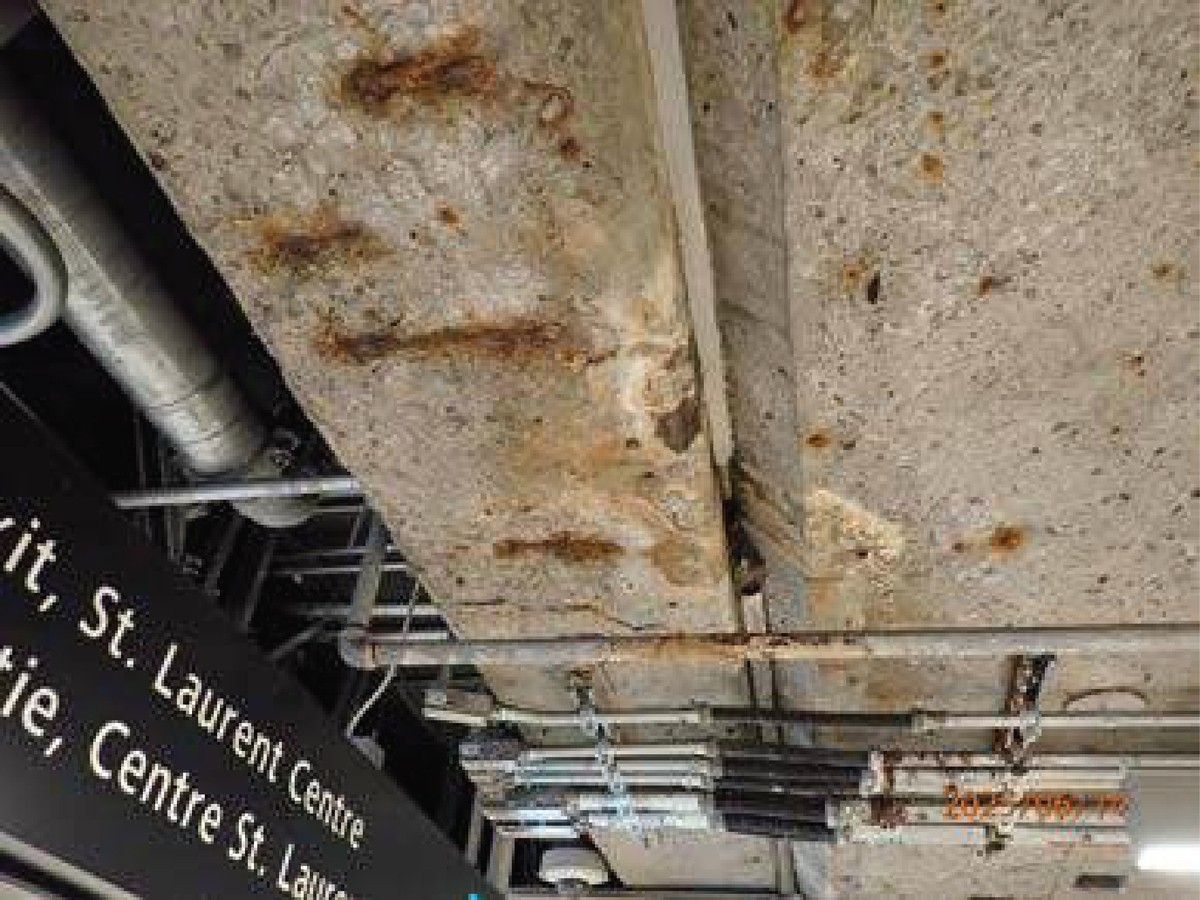
A major rehabilitation project at St-Laurent Station will require the O-Train to shut down tracks in both directions at the station for several weeks as crews work to mitigate the “serious risk” of deteriorating concrete falling from the ceiling.
A report from the Stantec engineering firm estimates the total project cost at $7.9 million, including construction, design, contract administration and internal costs to the City of Ottawa .
The rehabilitation work is expected to take 11 to 13 months, the report says, and would require several stages of track closures at the busy LRT station to facilitate the work while maintaining safety for the public and for maintenance workers.
“It is estimated that single-track closures under the proposed staging sequence would be required for a duration of nine to 10 weeks for each track, platform closures would be required for four to five weeks per platform, and full closure (both tracks) would be required for a duration of five to six weeks,” the report states.
Those details are contained within an engineering report attached to a City of Ottawa request for construction tenders that was posted to the MERX website, a subscription-only platform managing contract tenders for the construction industry.
The report has not yet been released to the general public through the city’s Engage Ottawa website and was instead flagged for the media by councillor and mayoral candidate Jeff Leiper.
Leiper said the details, contained within a 590-page technical report from Stantec, point to a “broader issue” of transparency at City Hall.
“The City of Ottawa has had this engineering report since April 24, 2026, recommending major rehabilitation work at St. Laurent Station that would require months of service disruptions,” Leiper said in a statement through his campaign team. “Despite having the report for more than three months, the city has not publicly communicated these expected service impacts or indicated when the work is anticipated to begin.
“This comes as governments continue to move ahead with return-to-office policies that are increasing demand on Ottawa’s transit system. If the city is anticipating months of reduced rail service and even a temporary station closure, riders deserve to know what is being planned.”
The timeline for the project is not laid out in Stantec’s report. According to the city’s request for proposal, the design phase for the renewal project is to be completed in 2027 and the construction is estimated to be completed by the end of 2029.
The Stantec report identifies water leakage as a “historic concern” at the station, notably at several expansion joints, junction boxes and drain pipes carrying water from the roof.
The structure was originally constructed around 1985 and comprises a series of concrete rigid frames cast sequentially end-to-end, along with two adjacent steel truss pedestrian bridges.
The report outlines renewal work recommended on the upper-level platform, the lower-level platform and an intermediate concourse level providing connections between the lower-level LRT system, the upper-level bus system and the St. Laurent shopping centre.
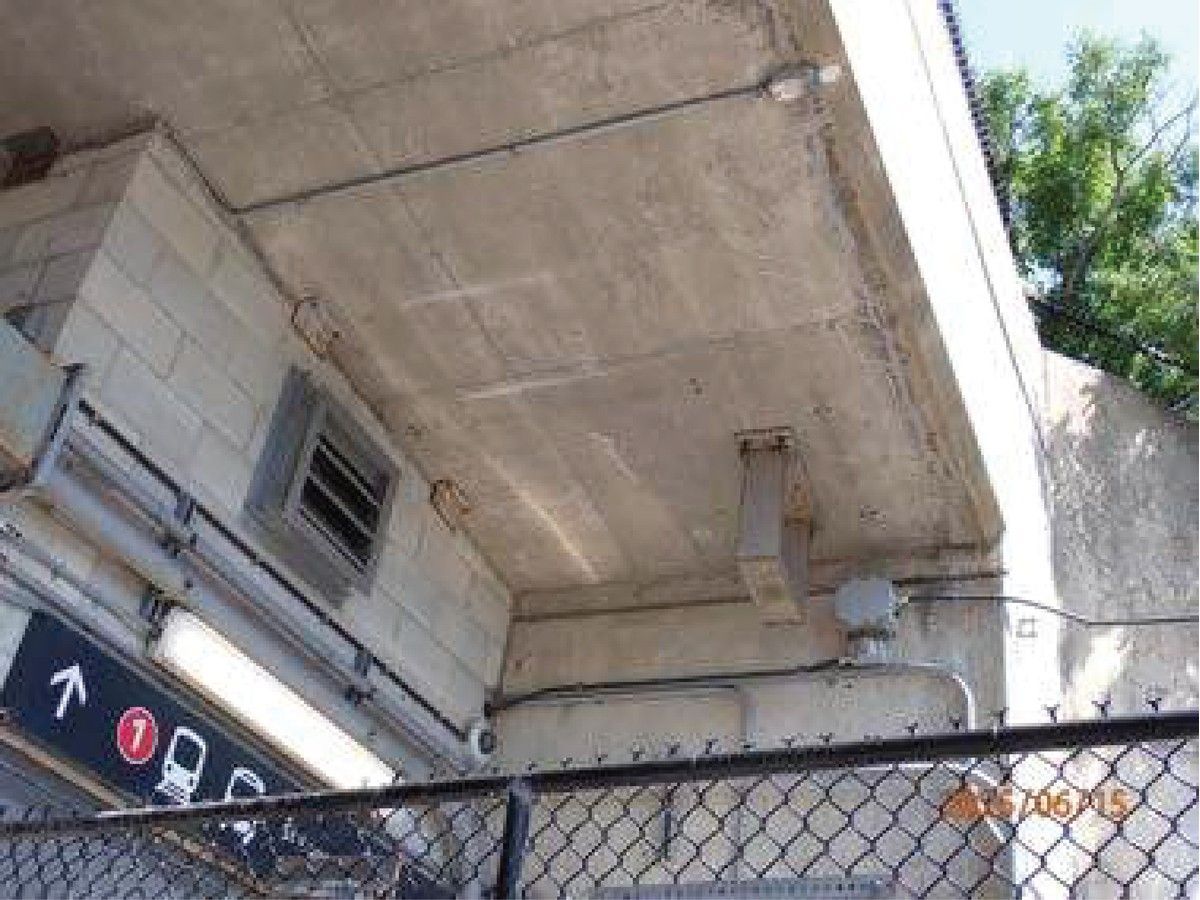
The renewal on the upper level would apply polymer membrane waterproofing to areas of the tunnel deck top that are not currently waterproofed, along with “leakage mitigation measures” in areas with ongoing leaks, the report states.
That work would be completed in three stages to avoid closing the station during the construction period. The upper-level construction costs are estimated at $1.6 million and would take about 12 weeks.
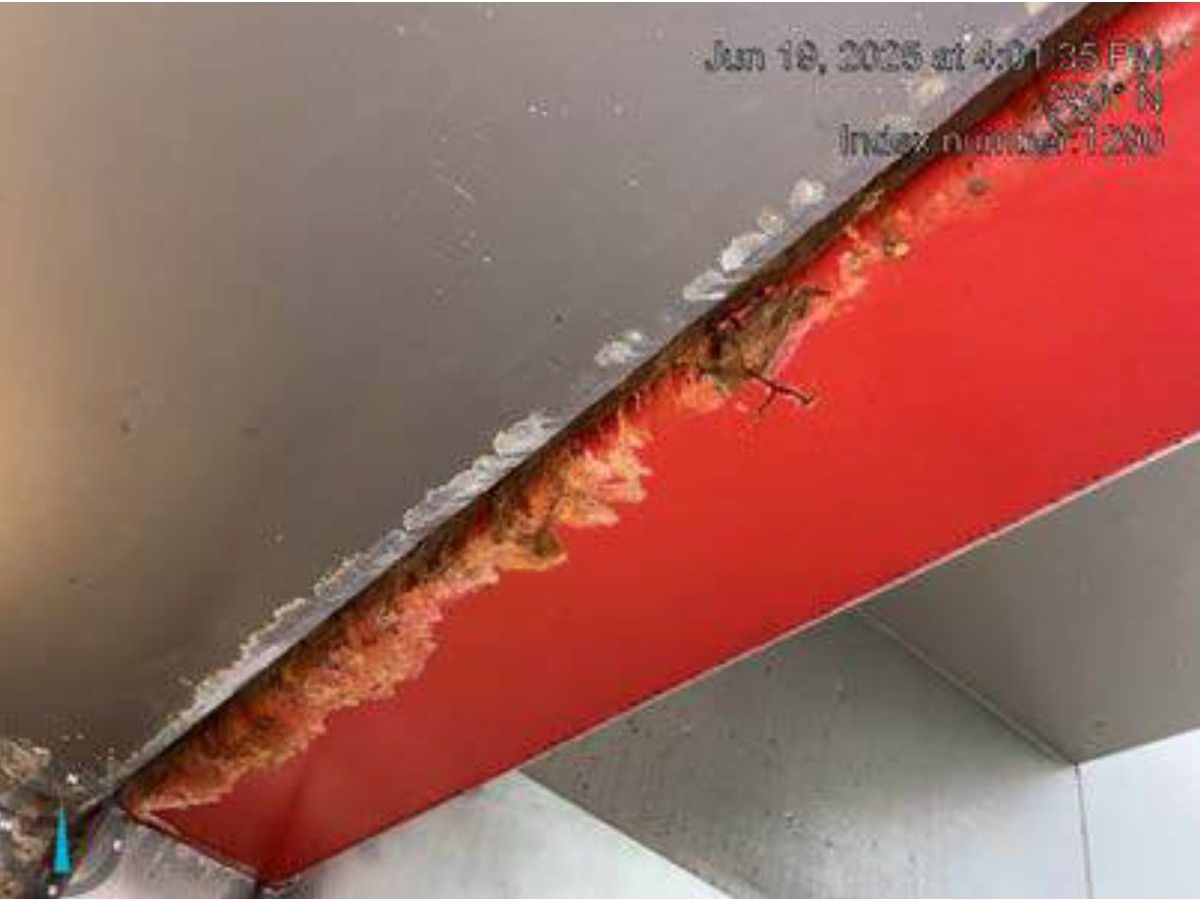
The renewal of the pedestrian bridge would involve re-coating the accessible truss components, jacking of the superstructure and replacement of the bearings, replacement of the wearing surface membrane on the stairs, repair of the membrane on the deck, concrete patch repairs and other miscellaneous repairs.
Work on the lower level would focus on replacing deteriorated concrete in the ceiling that has been reinforced by wire mesh after an inspection in 2024 found heavy corrosion in the ceiling tiles , likely caused by water leakage.
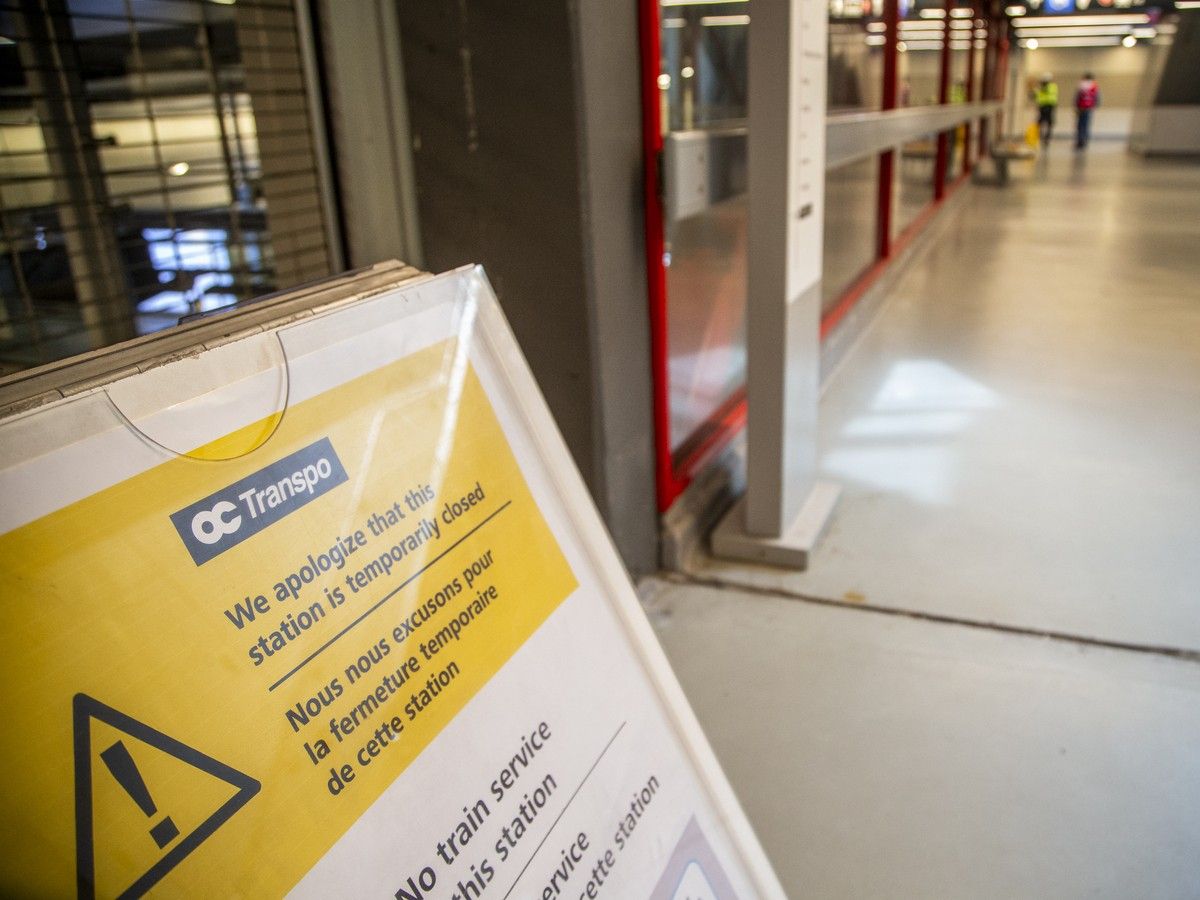
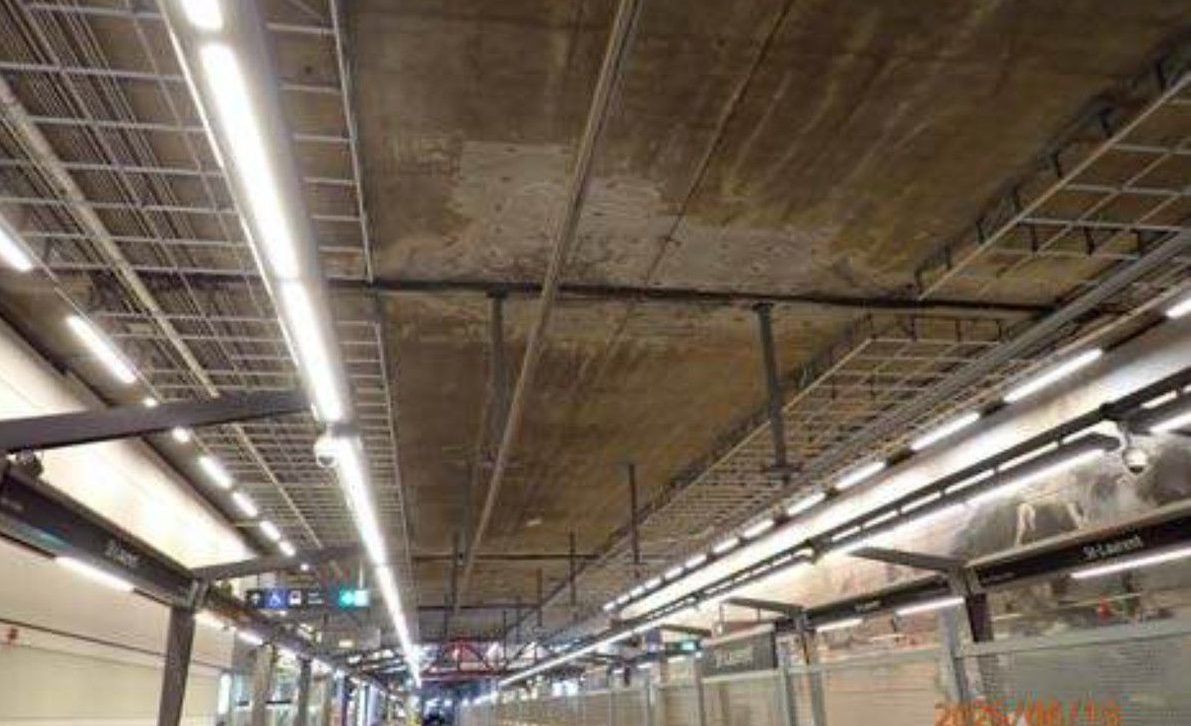
The 2024 inspection found concrete “delamination” over the tracks that required minor chipping to remove loose concrete , officials said at the time. St. Laurent Station was closed for five days in 2024 to patch the ceiling and to install wire mesh.
Leakage has been an ongoing issue at several locations, according to the Stantec report, with water pooling in publicly accessible areas. Repairs would involve crews accessing the ceiling above the overhead catenary system (OCS) powering the trains.
“Within the tunnel, there are several large areas of delamination and spalling in the soffit, particularly along the expansion joints where water has leaked,” the report states. “Deteriorated concrete falling from the soffit onto the LRT station platform poses a serious and ongoing risk to the travelling public. Concrete falling where maintenance staff may be present and onto the rail lines is also a significant concern.”
The majority of soffit repairs are near the OCS “and will require track closures … Accessing the soffit, which is more than seven metres above track level, to complete the rehabilitation work is both challenging and costly,” the report states.
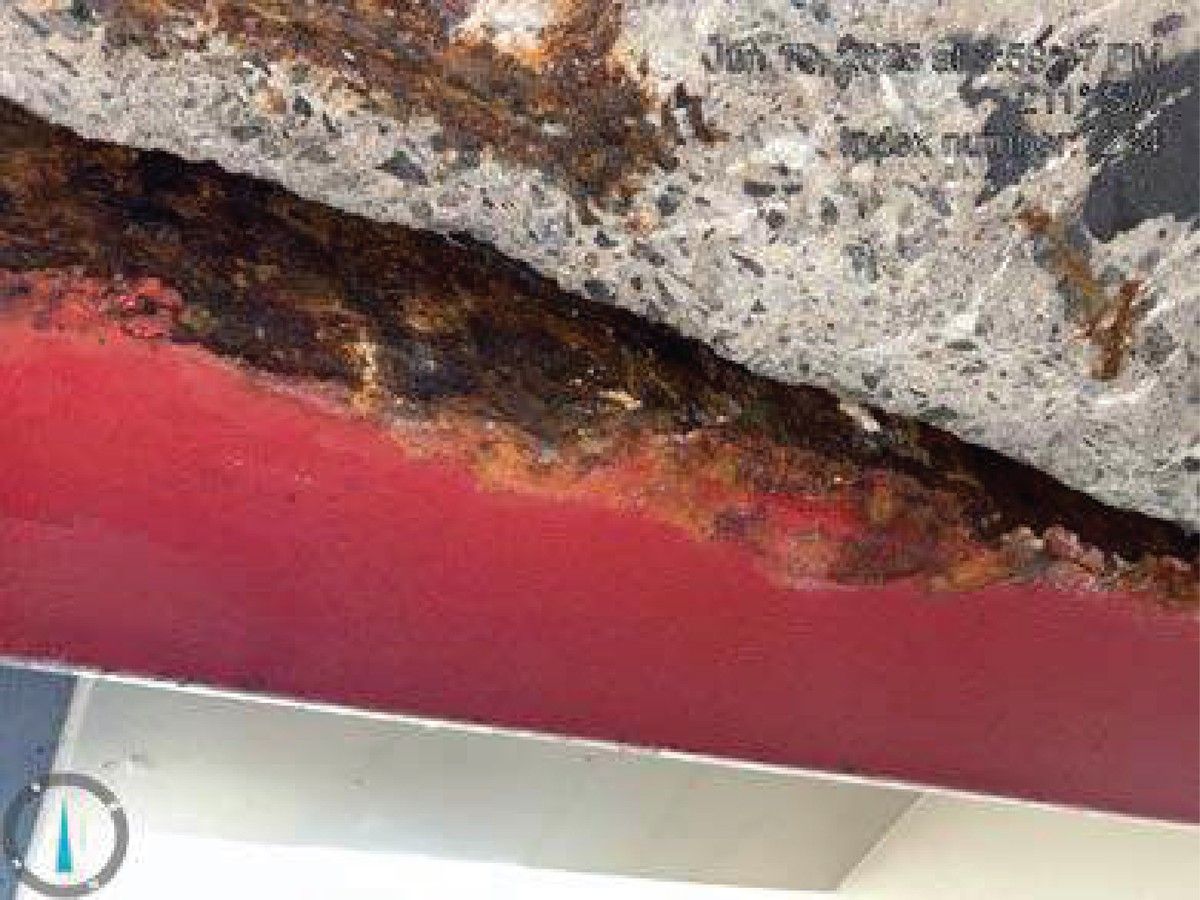
The report cites the temporary concrete scaling and meshing installation in recent years to mitigate the risk.
“The City wishes to develop a comprehensive soffit rehabilitation strategy, as well as rehabilitation measures for the other tunnel elements and the pedestrian bridges,” the report states. “Given the ongoing safety risks associated with deteriorating soffit concrete, the challenges and frequency of temporary repairs that have been completed in recent years, and the significant disruptions to LRT service that are required to complete comprehensive soffit repair works, the City wishes to develop a rehabilitation strategy with a service life of 15 years, during which minimal repairs are required.”
Related
Take control of your search results. Make the Ottawa Citizen a preferred source on Google and see verified local reporting first.