Credit is due to the Carney government for the most comprehensive plan in modern times to increase Canadian food production, reduce Canada’s reliance on imported food by growing more food at home, and to create a lower-cost food distribution system for independent grocers.
The government’s $3-billion-plus National Food Security Strategy, budgeted over 10 years, does not promise to lower food prices, however.
Achieving substantial reductions in prices for food, whose high cost might be the biggest source of Canadians’ discontent, forcing approximately 2.8 million people to use a food bank at least once a month, would require drastic steps the government is not prepared to take.
More on that later.
First, a look at some overdue changes the strategy does make.
It invests $1 billion to create and expand food terminals and hubs. These are wholesale marketplaces like the Ontario Food Terminal that enable independent grocers to bypass the distributors owned by the large retailers and purchase fresh food at lower prices.
That could eventually trim prices at corner stores.
The strategy makes another $1 billion available to enable small and medium-sized food processors to expand their businesses and boost domestic food processing. That would enable Canada to cut back on costly imported food.
And the strategy invests $750 million to expand year-round Canadian fruit and vegetable production with new greenhouses, vertical farms and other enclosed growing spaces.
“Too many Canadians still rely on imported food at higher prices,” Prime Minister Mark Carney said in unveiling the strategy on June 11.
The strategy aims to build a Canadian “food system that is more resilient, more competitive, and more our own,” Carney said.
Those measures hold long-term promise of greater food sovereignty and affordability.
But Ottawa has not embraced the admittedly wrenching reforms by which food affordability could be more quickly achieved.
It has not adopted price controls, for which there is a precedent in the wage and price controls of the high-inflation era in the 1970s. Price controls needn’t be permanent. They can be in place only until increased local fruit and vegetable production lowers prices.
Meaningful reforms include using antitrust laws to break up the oligopoly of five giant grocery retailers that, by Ottawa’s calculation, together control about 75 per cent of the market. Genuine competition would lower prices.
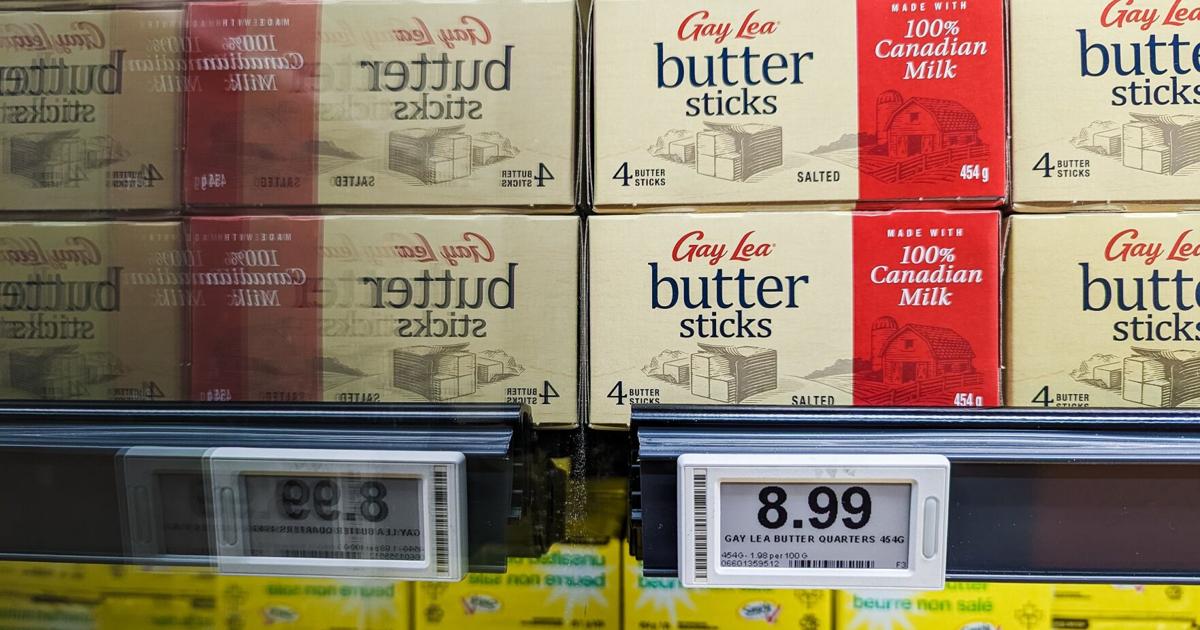
Serious reforms include scrapping a Canadian supply management system in agriculture that inflates prices of dairy, eggs and poultry.
That system has long been recognized as harmful to consumers. It is also a political “third rail” that threatens the viability of any government intent on dismantling it. Which isn’t reason to avoid at least discussing reforms to a system many farmers find cumbersome or worse.
The strategy pledges to crack down on “surveillance pricing.”
But it is silent on the property controls that the large supermarket chains use to limit competition.
Supermarkets can negotiate terms with landlords to restrict who else can open a business on the same property, and what they can sell.
Depending on the lease arrangement, a supermarket can demand, for instance, that other merchants in the same mall or strip plaza be forbidden from marking down national brands like Coca-Cola and Pampers as “loss leaders” to draw customers into their stores.
A prohibition of surveillance pricing is welcome. It would put a stop to retailers using consumers’ personal data to set prices.
But the nearly 35 per cent increase in Canadian food inflation since 2019 was underway long before the advent of surveillance pricing.
By contrast, manipulation of food prices by property controls has been a silent enemy of consumers for years.
Manitoba is the one jurisdiction that has taken steps to end that anti-consumer practice. Loblaw, for one, has said it will end the practice if the other grocers do.
And the strategy’s $12.9-million increase in the budget of the Competition Bureau and the Competition Tribunal is a welcome initiative to better enable those watchdogs to identify and put an end to anti-competitive food industry conduct.
But that is the same Competition Tribunal that has blithely overseen the plethora of grocery mergers and acquisitions by which the industry has consolidated into a handful of players. They control not only most grocery retailing in Canada but some of the biggest food distributors supplying thousands of independent merchants.
A truly “strategic” approach to food affordability would see the Canadian food industry rebuilt to serve consumers, who will not gain significant price relief from this initiative.