Mayor Olivia Chow is accusing the Toronto Port Authority of hiding initial plans for a $5-billion Billy Bishop airport expansion from the city, even though the authority says it has shared “preliminary” work with provincial and federal officials.
Last month, the head of the port authority indicated the city would soon see early plans around the expansion, however the Star has learned a pair of meetings with the city have come and gone with no plans shared.
The port authority has also asked city staff and the mayor’s office to sign a nondisclosure agreement over the discussions; Chow said she refused.
Meanwhile, a city spokesperson said the confidentiality agreement that the municipal public service signed “is not specific to any one meeting,” but did not offer details about its scope, including whether it covers future meetings.
“I know there’s a consultant report. Make it public,” Chow told reporters Tuesday morning, alongside Deputy Mayor Ausma Malik, shortly after the Star revealed the meetings took place. “Why are they trying to hide it?”
She continued: “And what’s in it? Who knows. And who has seen it? It’s not clear.”
Deborah Wilson, TPA’s vice-president of communications and public affairs, said in a statement the meetings “did not delve into the expansion plan itself, as that plan is still being developed.”
The TPA has promised that all of its stakeholders will be consulted before a final version of the plan is made public.
The confidentiality agreement is “a standard business document,” Wilson said, adding that signing it was not mandatory.
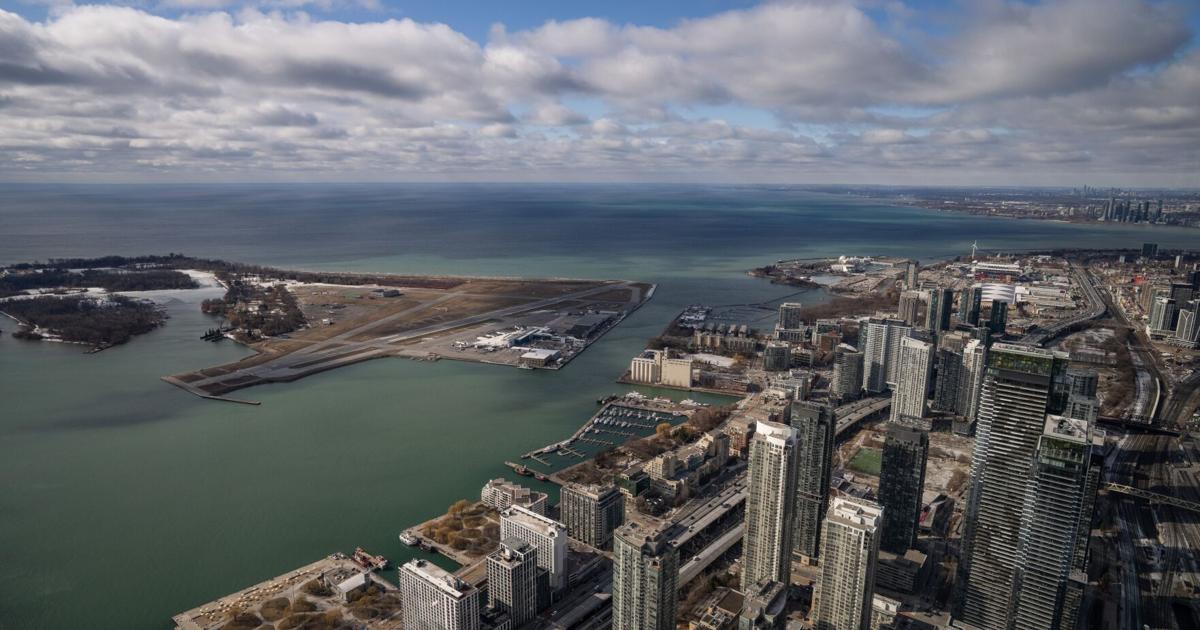
The federally mandated TPA is responsible for managing Toronto’s port and owns and operates the island airport.
The Ontario government-championed expansion of the Billy Bishop airport to accommodate jets has become a point of tension between the city and the province.
The Ford government has said the expansion will create more jobs and make travel easier for tourists and businesspeople.
At the municipal level, concerns have been raised about the impact of the expansion on the waterfront, housing and traffic.
TPA has shared ‘preliminary’ work with province, feds
At a May 19 meeting of Queen’s Park’s heritage, infrastructure and cultural policy committee, TPA president and CEO Roelof-Jan (RJ) Steenstra said the provincial government has seen “preliminary work” of the expansion plans and the federal government has seen “some of these plans.”
“There are multiple elements of this plan, right?” Steenstra said, responding to NDP MPP Jessica Bell’s questions. “So we’re doing the work to ensure that when it’s ready to come public, there will be robust public consultation. There will be engagement with all our stakeholders. There will be engagement with the city, because they are a key part of what we need to deliver going forward.”
The TPA said last month it will take six to 12 months before the final plans are made public.
Bell asked Steenstra if the city, including the waterfront secretariat, which is overseeing the costly redevelopment of Toronto’s waterfront through tripartite funding, had seen any plans.
“The city has not seen, but meetings have been scheduled,” Steenstra responded.
“OK, so the provincial government has seen these plans, but the waterfront secretariat of the city hasn’t,” Bell clarified.
“Yeah, it’s just a scheduling issue,” Steenstra replied.
Wilson said the port authority would be “furthering discussion in due course” with the city. “A firm timeline for formal consultation with the City has not yet been established as we are still in the engagement phase to inform a draft plan,” she added.
Steenstra’s May 19 comments, where he also revealed the potential price tag, came just weeks before the federal government launched its seven-week-long consultation process, which received immediate backlash. At the TPA’s recent annual general meeting, representatives told the public they won’t be releasing any more details in an effort to “respect” the consultations, a message also echoed to media.
“No decisions have been made about (the airport’s) future,” said a statement from federal Minister of Transport Steven MacKinnon’s office. The feedback received through the public consultations “will play an important role in informing the Government of Canada’s decision-making on the way forward.”
Mayor’s deputy slams ‘unacceptable’ secrecy
Chow’s spokesperson Shirven Rezvany told the Star that staff from his office met with TPA employees on June 3 along with staff from the offices of MacKinnon and provincial Minister of Transportation Prabmeet Sarkaria. Wilson said city staff attended this meeting.
Then, on June 11, Chow met with Steenstra and other representatives from the TPA, and federal and provincial ministers’ offices. At this second meeting, Rezvany said, Chow asked for the business and expansion plans, which TPA did not provide.
“I haven’t seen any budget projection as to how much revenue it would take to pay for this four to five billion dollars, even just the interest,” said Chow, whose spokesperson said she was “astounded” during the meeting.
Chow also said she challenged the TPA’s claims the number of passengers to the airport would quintuple to 10 million with an expansion.
“This continued approach that is clouded in secrecy and in obfuscation is really unacceptable,” Malik said.
Downtown Coun. Paula Fletcher, who has also championed the billion-dollar Port Lands redevelopment on the eastern waterfront, pointed to the TPA’s history of “secrets” during the last major push for jets in 2013 before the federal government killed the idea.
“Secrets should not be the norm on our waterfront,” said Fletcher, addressing Toronto’s MPs in Ottawa. “Stop the secret deals, speak up for our city, save our waterfront.”
Rezvany said there are currently no other scheduled meetings.
Expansion impact predicted to be significant
Last week, council’s planning and housing committee received a report from city staff that suggested allowing jets at the island airport could restrict building heights, diminish the livability of thousands of homes and affect tens of thousands of new housing units.
The city’s chief planner, Jason Thorne, expressed to reporters after the meeting that there could be risks with the city not yet being in the loop, even in the early stages. He noted city hall has “a lot of good information and insight and analysis” around the area’s housing potential, development, application activity and work it has done on transportation and traffic planning plus the public realm.
“I think a plan done without that information … would be a significant weakness in any sort of plan that came forward,” Thorne said.
At the committee meeting, for example, city staff noted the 240-metre-long Eireann Quay — a narrow access road to the Billy Bishop ferry terminal that also connects to Toronto’s main streets downtown — would need to expand to the equivalent of Lake Shore Boulevard, which has six lanes.
“That’s not saying that’s something we would support,” said James Perttula, the city’s director of transportation planning. “There’s already huge congestion at Lake Shore and Bathurst. That would be amplified … Any improvements to the infrastructure would not be able to address all the (traffic and passenger) flows.”