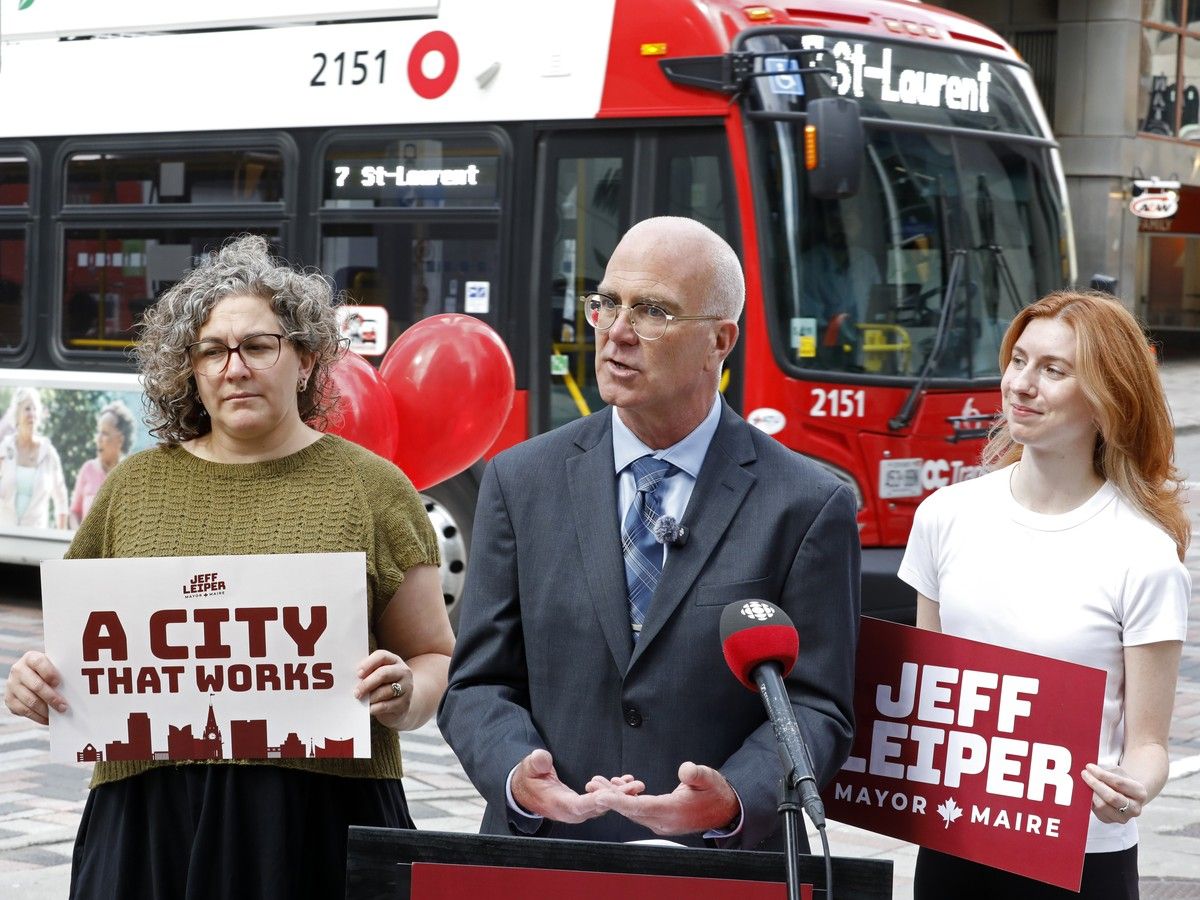
Mayoral candidate Jeff Leiper promised to reverse the city’s five-day return-to-office mandate and “push back” against the federal government’s return-to-office policy if elected mayor.
At a campaign announcement at Parliament Station on Monday, Aug. 24, Leiper said his proposal would give municipal employees “maximum” flexibility to choose the working arrangements that benefit their families, if operational requirements allow.
He also pledged to call on the federal government to base its workplace decisions on “operational needs, employee performance, and the services Canadians deserve.”
“This is about our time, our money and our quality of life,” he said.
Asked whether reversing the city’s in-office policy would mean a return to a pandemic-era hybrid work arrangement, Leiper reiterated his commitment to “maximum” flexibility.
“If workers can, we want them to be able to work from home,” he said.
Council blocked previous Leiper motion on return-to-office
Last August, city manager Wendy Stephanson issued a five-day return-to-office mandate for all city workers effective Jan. 1. The decision came shortly after the Ontario government ordered provincial public servants back into the office five days a week on a similar timeline.
At the time, Stephanson said more than 85 per cent of city staff were already on-site or in the workplace each day.
Leiper expressed his “ profound disappointment” in a social media post and later introduced a motion at council calling on Stephanson to “rescind” the five-day standard.
Stephanson has described the city’s mandate as a starting point, adding that flexibility and manager discretion would be maintained. Last week, she said the city’s approach to the issue is based on “ultimate flexibility between employer and employees.”
Leiper put the blame on Sutcliffe.
Although staffing decisions at the city fall under Stephanson’s purview, Sutcliffe did vote yes on a motion that reaffirmed her authority on the issue. That motion overrode Leiper’s attempt to have council direct Stephanson to walk back the policy.
If elected, Leiper said he would try again with “the full expectation” that he would be supported by council.
“The buck stops here,” he said. “Absolutely, the city manager has a lot of operational responsibilities, but ultimately the mayor of the city is the CEO, and I believe the mayor has an obligation to ensure that they are working in the best interests of Ottawa residents and in the best interests of Ottawa workers.”
In an email, the Sutcliffe campaign said the management of municipal employees is the responsibility of the city manager, not the mayor.
“Playing politics with human resources is counterproductive and performative, especially since the city’s current policy already provides flexibility for alternative work arrangements,” the statement read.
“Ottawa needs leadership focused on delivering on real priorities — like improving transit, building housing, strengthening the local economy, and making communities safer. Rather than overstepping roles, our focus should be on working constructively with partners on our areas of responsibility, such as co-ordinating with the federal government on their return-to-office plans to ensure reliable transit and transportation.”
Other candidates agree with reversal
Mayoral candidate Alex Lawson said he was glad to see Leiper agreed with a position his own campaign announced earlier this month.
“I am against a federal RTO. The city can’t handle it,” Lawson wrote in an email.
“For city staff, I think managers know better than politicians whether employees need to be in the office to do their job. They’re the ones who should decide. As mayor I would reverse the blanket five-day mandate for city staff.”
Mayoral candidate Neil Saravanamuttoo said in an email that Leiper’s pledge to provide more flexibility to city workers is “worthwhile,” but added Leiper’s calls on the federal government to reverse its return-to-office decisions amounted to “theatrics.”
As mayor, Saravanamuttoo said he would have asked the federal government to delay its plans to bring workers back into the office more often.
“We’re not ready as a city,” he wrote in an email. “ We don’t have the transit system. We don’t have the parking. We don’t have the road capacity.”
Support for satellite offices
Leiper also said Ottawa needs more satellite office spaces for federal government workers and pledged to work with the feds to bring more workplaces closer to where people live.
The federal government has been running the “GCcoworking” pilot project in the National Capital Region since 2019, offering flexible workspaces for public servants from more than 50 government organizations.
The five remaining offices in Ottawa-Gatineau are set to close on Sept. 30, with the government planning to allocate the offices to federal organizations to help meet the space needs of the four-day return-to-office mandate.
Leiper said the city could play a role in facilitating the return of satellite offices through zoning rules and ensuring public transit can serve the locations.
Don’t let algorithms hide the follow-up. If you are tracking this story, make the Ottawa Citizen a preferred source so you get our live updates the next time you search.