As candidates running in Ontario’s municipal election in October have begun campaigning, voters have the opportunity to assess nominees’ housing policy and perspectives.
As always, before municipal elections, I like to take the opportunity to profile issues that impact the type, supply and affordability of new homes.
An important topic to assess is whether candidates favour only specific housing types or do they recognize the need to enhance the supply of all types of homes, increasing choice and allowing buyers and renters to decide for themselves what they want.
Over the past few decades, municipalities have become increasingly interventionist in housing policy to try to achieve societal, economic or ecological objectives.
These interventions can range from increasing, decreasing or excluding density, providing incentives for rental buildings but not condominium developments, or trying to find ways to make ‘missing middle housing’ more economically viable.
Missing middle housing is categorized as midrise buildings and gentle density buildings like fourplexes, and is particularly challenging from a building economics perspective because of the lack of scale.
Municipal decisions can distort the housing market
These decisions — new housing type, availability, location — can distort markets.
In essence, it is municipalities deciding for new renters, homeowners and those looking to move, what housing they think is suitable, not the residents choosing for themselves with their rent or purchasing dollars.
While it is understandable from a planning and development perspective to try and estimate the needs of new homebuyers and provide the best product in the most accurate quantity, what has ended up happening is that the perceived demand for certain housing has distorted the housing market.
As municipal programs, rules and policies pile up over the years, so doreports and studies, and with that, slower approvals, more costs and less supply — the exact opposite of the policies’ goals.
Let me offer a different vision of what could be:
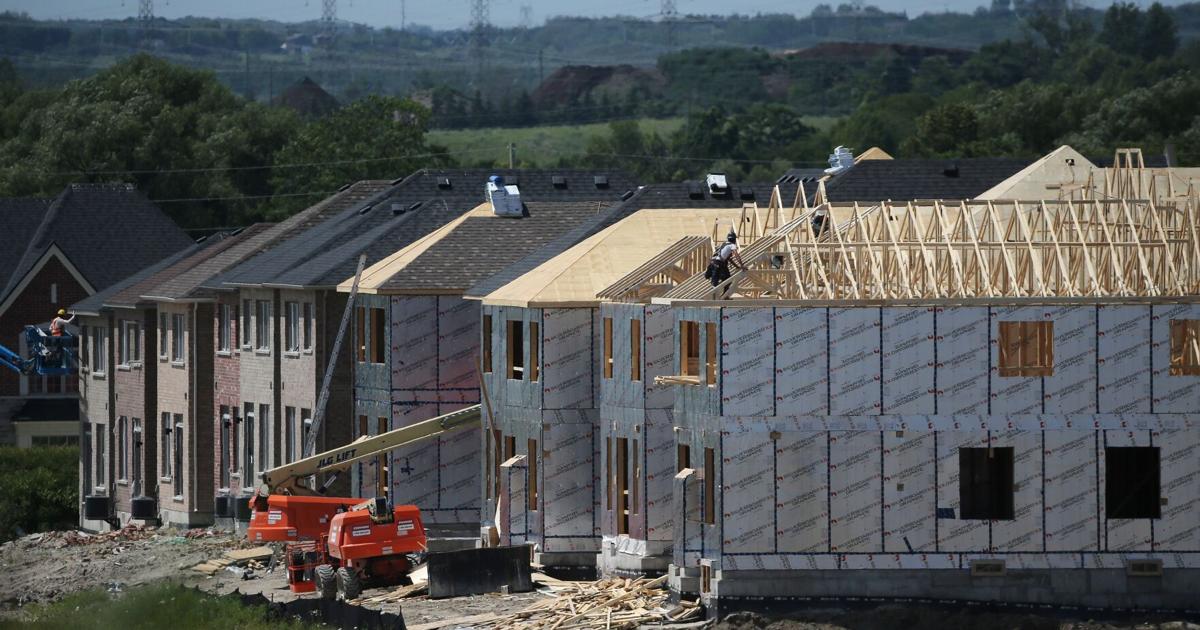
1) Over the last few decades, the Greater Toronto Area and Canada as a whole, has not producedenough housing to meet demand.This has resulted in Canada having the lowest level of homes per 1,000 in population among G7 nations and has contributed to the supply and affordability crisis. The bottom line: we need more housing of all types, not just more of one type.
2) Present market conditions excluded, thanks to programs by the provincial and federal governments, markets will stabilize and demand for new housing will reassert itself.
Residents deserve to have choice in housing
3) Residents deserve the ability to choose housing that meets their needs, and municipalities should strive for programs and policies that provide a mix and choice of housing to allow the buyers and renters to determine which type suits them — this means more housing.
4) The notable exception is that of affordable, below-market housing which is a necessity. Governments have a definite role to play here, but it should be done so that it doesn’t distort the housing market or add costs to market-rate housing.
5) There are already geographic, demographic, infrastructure, land availability and cost to build constraints that dictate fundamental housing project economics and viability. This means municipalities should not be adding hurdles, but striving to knock down barriers to creating more housing.
This is not to say that all types of housing will be available in every neighbourhood and every region — that, too, would lead to fundamental mismatches.
However, letting the market and homeowner decide, rather than increasing interventions, is a good place to start.
For voters assessing a nominee’s housing policy, or for candidates looking at the GTA housing landscape, it is time we refocus and prioritize building all types of homes, not just a chosen few.
More choice means everyone wins.