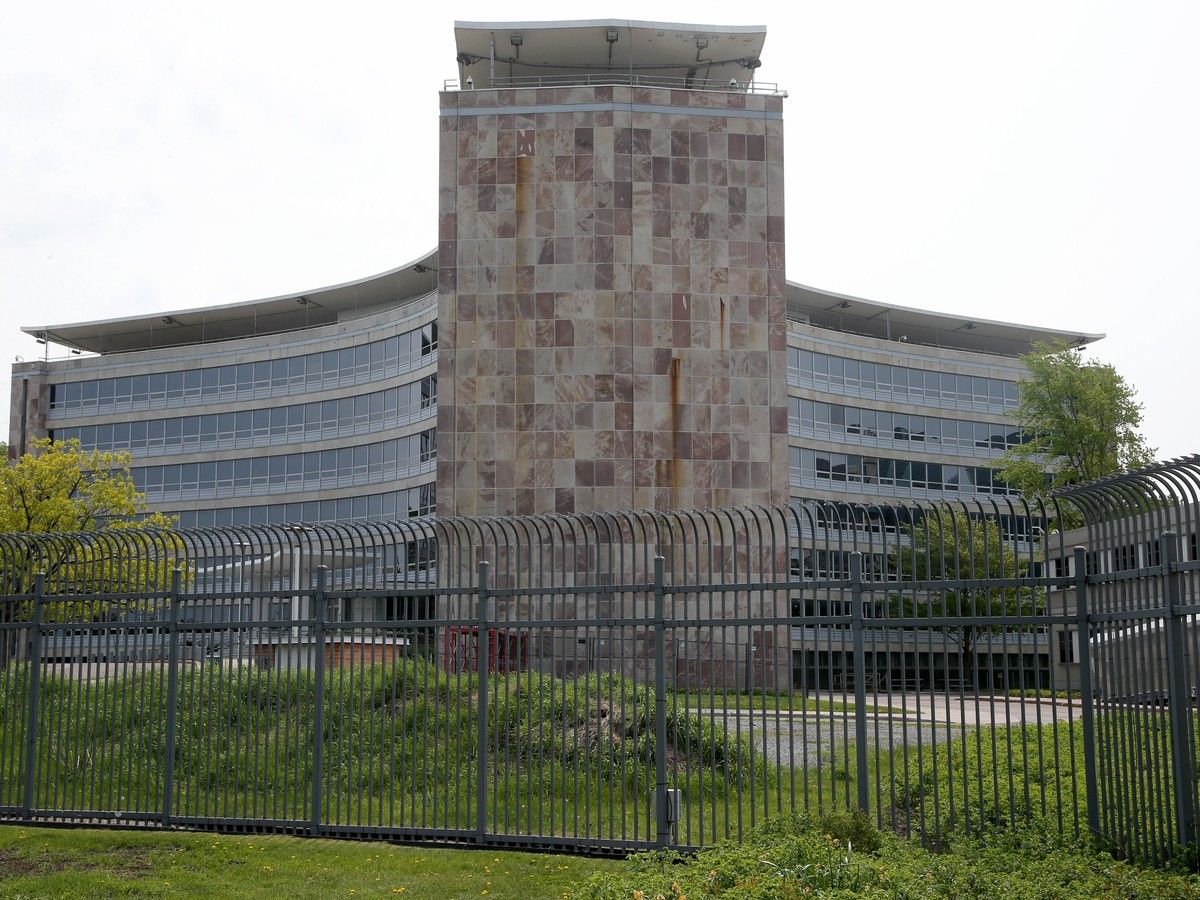
The National Capital Commission has approved the disposal of seven federal properties, including two heritage office buildings.
At a meeting on Tuesday, June 23, NCC board members greenlit the disposal (or offloading) of the lands and approved a master plan to guide the redevelopment of Confederation Heights, the federal office campus in which the properties are located.
Currently, the “underutilized” area near Hog’s Back Park is a mix of federal office buildings, large parking lots, highway-style ramps and “low quality” green space, NCC senior planner Marion Gale said.
“Proposals for a new master plan and disposal of surplus federal property have the goal of redeveloping the site into a thriving, connected and sustainable mixed-use community,” Gale said.
Public Services and Procurement Canada (PSPC), the government department that manages federal property, has been aiming to sell or transfer several surplus buildings in the National Capital Region as part of its effort to trim the federal office portfolio.
PSPC is not on track to meet its goal of shedding half its office portfolio over the course of a decade, and the department said in March it was “adjusting” those plans due to the looming four-day return-to-office mandate for most public servants.
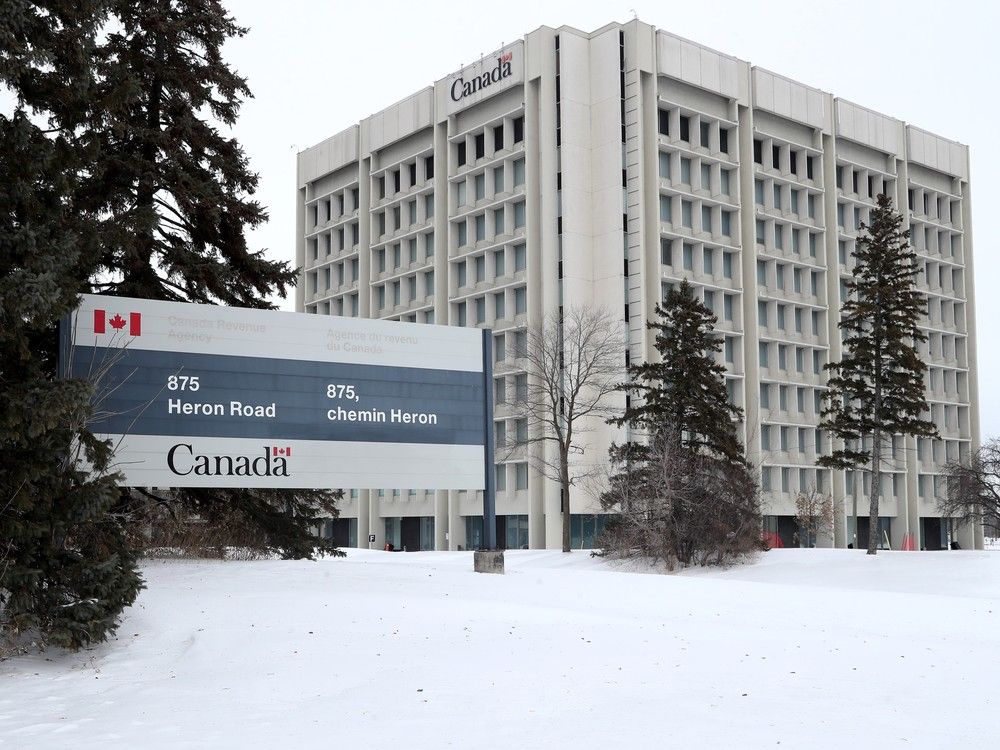
But, with the NCC allowing disposal of the buildings to the Canada Lands Company, PSPC can now check two items off its list: the former CBC building at 1500 Bronson Ave. and the Taxation Data Centre at 875 Heron Rd.
Both are included on the Canada Public Land Bank, a list of federal properties the government has identified for their potential to support housing development.
A third heritage building in the area, the Sir Charles Tupper Building at 2720 Riverside Dr., was approved for disposal by the NCC last fall.
1500 Bronson ‘one of the best’ examples of Canadian modern architecture
Gale referred to the former CBC building, also known as the Edward Drake Building, as the “jewel” of Confederation Heights. According to Gale, the building earned a heritage designation due in part to its status as “one of the best examples of Canadian modern architecture.”
The Taxation Data Centre, an 11-storey office building that houses Canada Revenue Agency workers, is considered a heritage asset due to its architectural value and “its historic association with the growth of the public service,” she added.
Both are in “critical condition,” according to the Treasury Board’s property directory, which rates government buildings on a four-point scale ranging from “critical” to “good.”
The master plan for the area lays out minimum requirements for density and a range of allowable building heights. It calls for at least 150 housing units for each hectare slated for development (totaling about 49 hectares) and allows buildings of between three and 40 storeys.
It also lays out a vision for interconnected greenspace and an extensive trail network for pedestrians and cyclists.
The plan includes the possibility of “adaptive reuse” of all three heritage buildings “or a portion thereof,” Gale said.
Three parcels of land at Confederation Heights — the Canada Post Headquarters, a Health Canada facility and the Sir Leonard Tilley Building — are expected to be retained for long-term use by the federal government.
Master plan may entice some developers, turn others away
Jason Burggraaf, executive director of the Greater Ottawa Home Builders’ Association, said the master plan for the area would attract some developers and turn others away.
A master plan, such as the one developed for Confederation Heights by the Canada Lands Company, removes uncertainty and risk for developers by taking care of entitlements, permissions and zoning, Burggraaf said.
“With elevated construction costs and financing challenges and approval timelines, all that certainty is probably more valuable to developers than it was years or a decade ago,” he said.
On the other hand, developers who earn their money through the zoning process (by, for example, obtaining added permissions for a given property) are unlikely to be interested.
Burggraaf previously told the Ottawa Citizen some of the properties on the Canada Land Bank had been slow to generate interest because they just weren’t especially appealing.
Many of the properties listed on the bank have been up for sale in some form or fashion in the past, he said, and the same deterrents, ranging from location to soil quality, could be turning developers away this time.
As for the heritage buildings, Burggraaf said only a “handful” of Ottawa developers had the capacity and knowledge to tackle an office-to-residential conversion.
“It’s not typically a cheaper proposition,” he said. “It usually costs about the same.”
The timeline is not yet confirmed, but the NCC is expecting the PSPC land transactions to take place this fall.
Related
Our website is your destination for up-to-the-minute news, so make sure to bookmark our homepage and sign up for our newsletters so we can keep you informed.