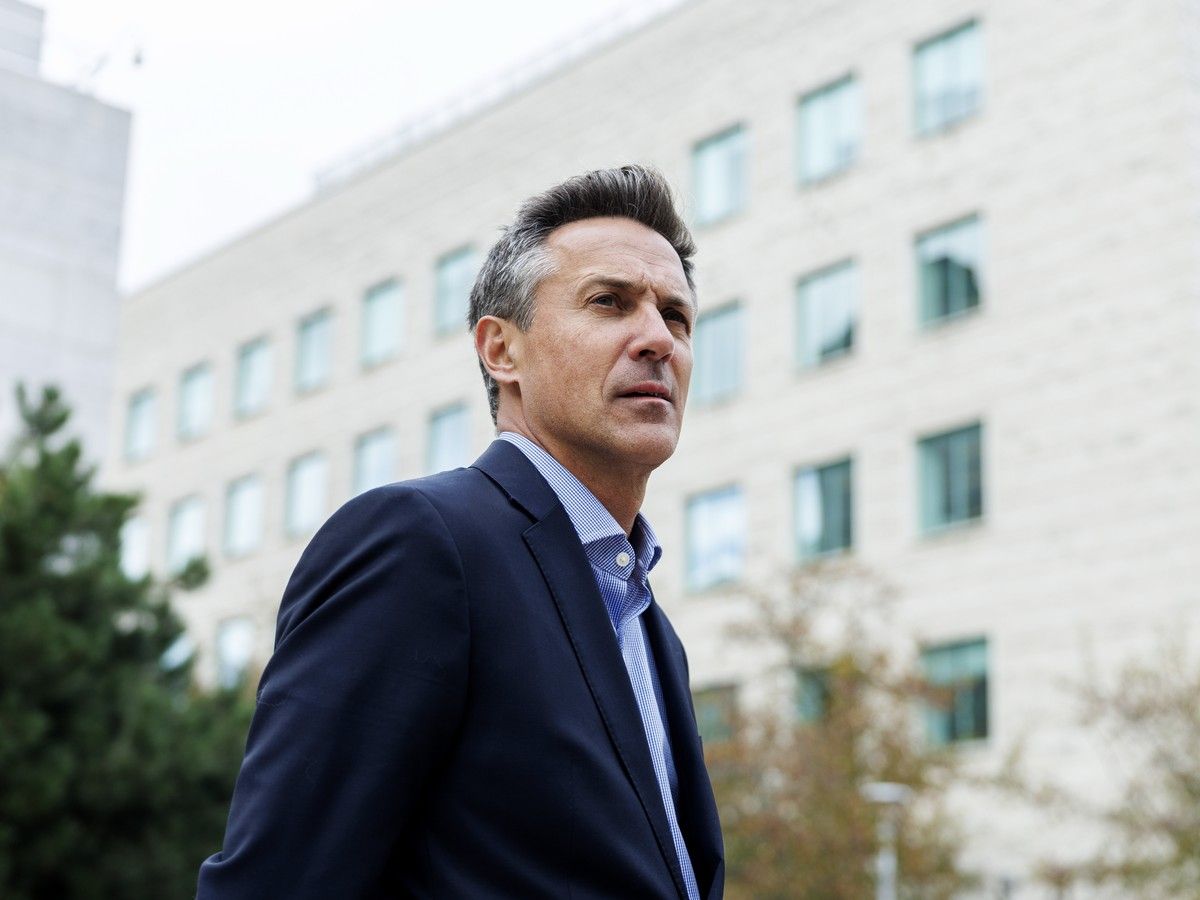
Neil Saravanamuttoo strides across the freshly polished floors of the National Arts Centre lobby on a sunny September morning, leans into a handshake, then drains his coffee and pops a throat lozenge into his mouth.
“I have to apologize in advance, my voice is a little hoarse,” he says as we sit for an interview on the NAC’s autumn-coloured couches overlooking the Château Laurier and Ottawa Convention Centre.
Saravanamuttoo has a lot to say about the way things should be done at City Hall, and the more opportunities he has to share his ideas, the more people, he finds, are starting to listen.
“The response has been exceptional. The message is really resonating and it connects with people on a number of different levels,” he says.
Fresh off a series of mayoral debates — the televised Rogers TV mayoral debate on Sept. 15 and a student-led debate hosted at Carleton University later that same day, followed by an environmental policy debate on Sept. 17 — Saravanamuttoo’s vocal cords may be strained but his message is crystal clear.
“People have lost faith in City Hall,” he says. “The people of Ottawa do not believe that City Hall can fix the problems ahead of them, the big problems or the small problems, and that’s a real challenge.”
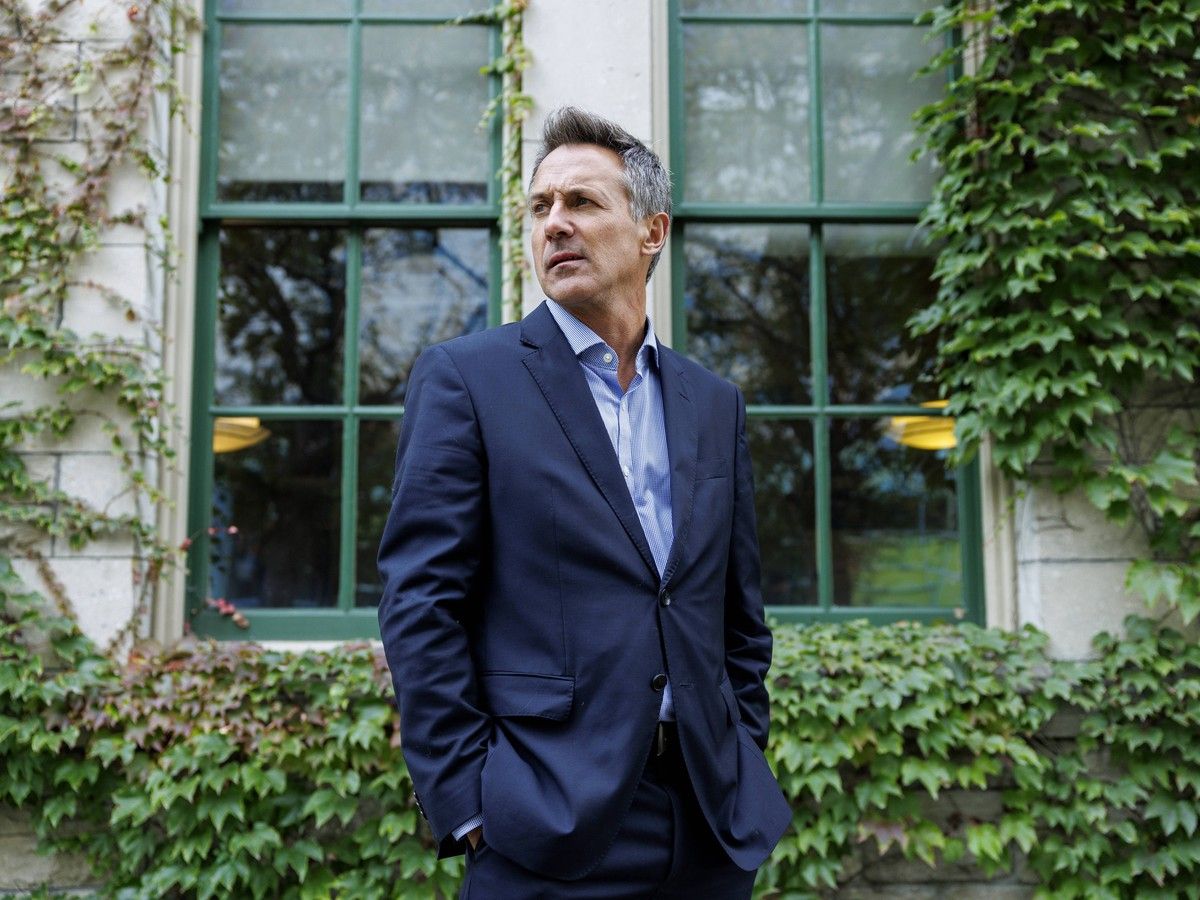
The 58-year old Saravanamuttoo views that challenge through the analytical eyes of a career economist.
He studied first at Carleton University, then at the London School of Economics and built a career in federal and international commerce, managing large investments and structuring complex deals with the Department of Finance. He later served as chief economist at the G20 Global Infrastructure Hub.
“I’ve seen how budgeting works. I’ve seen how it works properly. I’ve seen how spending reviews work properly, and that’s not what I’ve seen at the City of Ottawa in the last number of years,” he says. “And that’s where we have a big opportunity.”
While some have labelled him a fiscal conservative, his policies on addressing homelessness and the city’s affordability crisis have his political alignment leaning further to the left.
“My economic plan is what I think we could call fiscally conservative, or at least fiscally prudent,” he says. “I would call myself a pragmatic progressive.”
But outside his economic expertise, there are many sides to Neil Saravanamuttoo.
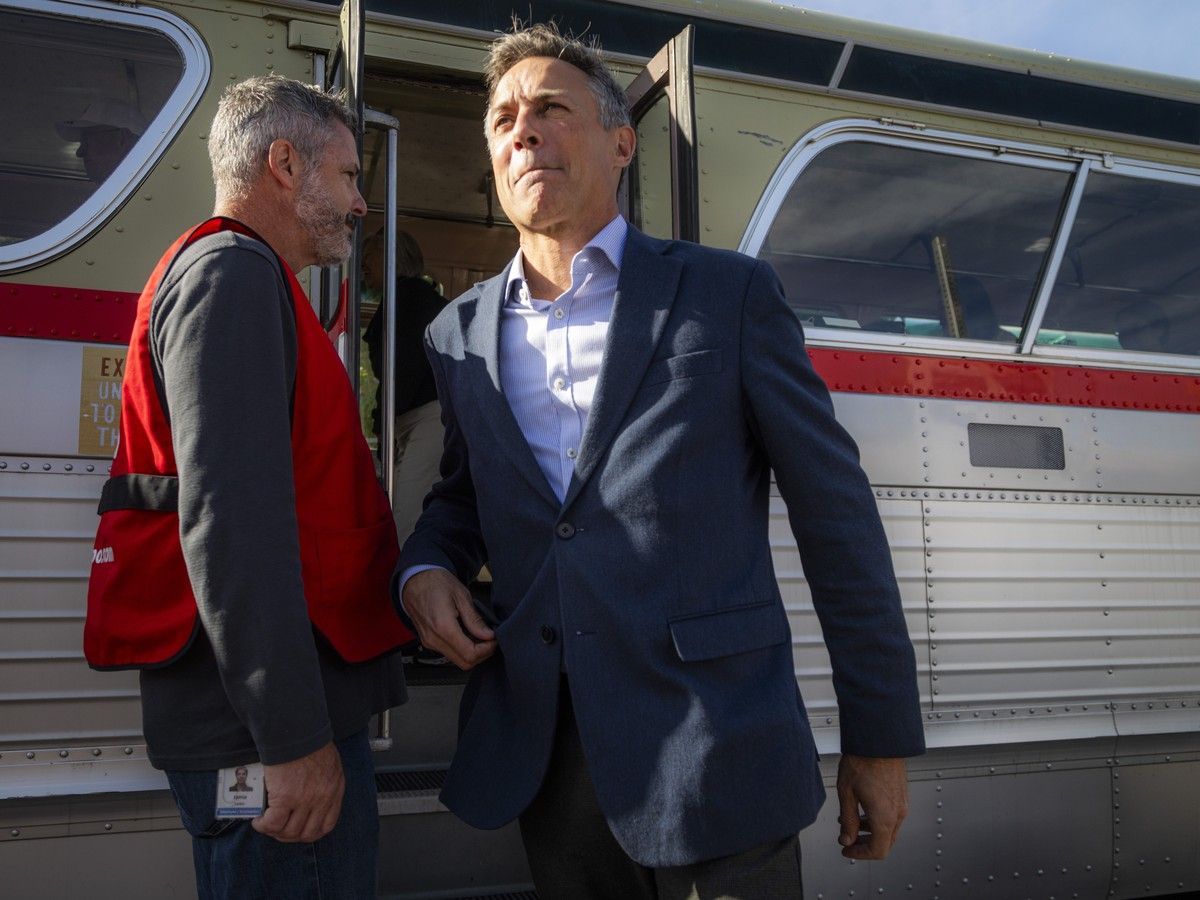
That much is evident from the first meeting. On this day, he’s dressed in a crisply-pressed white shirt under a smart blazer paired with blue jeans, crow’s feet forming around his eyes every time he flashes a winning smile.
Raised in Ottawa’s Glabar Park neighbourhood near Carlingwood, the youngest of three brothers, Saravanamuttoo attended D. Roy Kennedy Public School and Nepean High School.
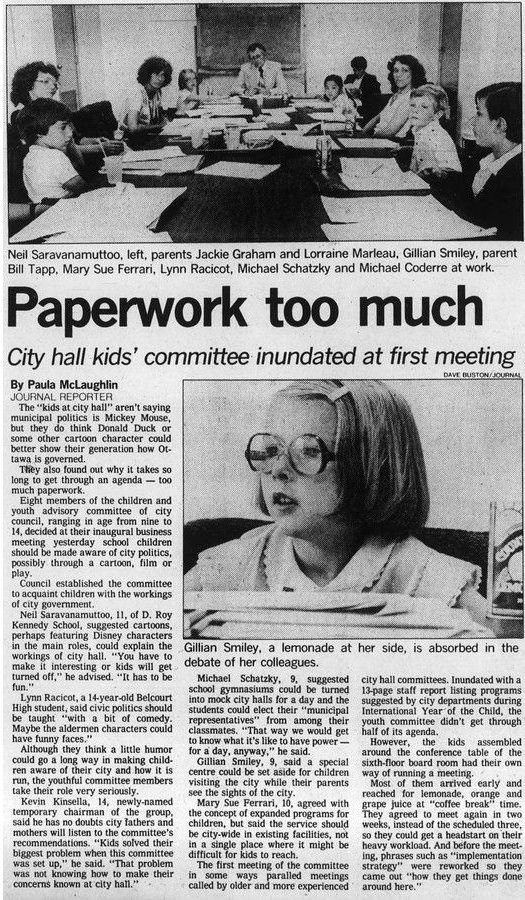
His interest in politics was sparked at a young age. He was featured in an Ottawa Journal article in July 1980 as a member of Ottawa city council’s children and youth advisory committee, which was established to acquaint students with the workings of municipal government, according to the article.
At age 11, Saravanamuttoo was quoted in the article suggesting cartoons or popular Disney characters could help explain to kids the main roles and inner workings of City Hall.
“You have to make it interesting or kids will get turned off,” he was quoted as saying. “It has to be fun.”

All these years later, Saravanamuttoo credits his parents for sparking his passion for politics.
His mother, Helen, was a social worker who was awarded the Marion Dewar Defender of the Public Good Award for her dedication to the community.
“She was a real community activist, and that’s where, quite frankly, I got a lot of what’s in me,” he says.
His father Herb was an aerospace engineer who became a much-loved professor at Carleton University, where he taught for 50 years.
“It’s not uncommon that people will come up to us and say, ‘I had your father as a professor and just loved him.’ But then people will say, ‘I had your father as a professor, but so did my dad,’” he beams.
As an aerospace engineer, Herb Saravanamuttoo worked on the Concorde supersonic jet and had a hand in the famed and ill-fated Avro Arrow — before plans for the legendary military interceptor aircraft were scrapped by the Diefenbaker administration.
“He got fired over the PA system, along with 10,000 other people. They were told to destroy everything. But he managed to smuggle out a set of the plans for the engine,” Saravanamuttoo recalls with a proud grin.
His parents have since passed away and he keeps their memory close to his heart. He has two daughters with his wife, Kimberley, a schoolteacher and a military reservist.
“A year ago with all of Trump’s rumblings of the 51st state, that was a source of concern that Kimberley would get called up,” he says, half-jokingly. “But now that it’s a trade war I’m the one that might get that call.”
His family lives in Ottawa’s Glebe neighbourhood. When asked whether he takes public transit, Saravanamuttoo says his bike is his preferred method of transportation.
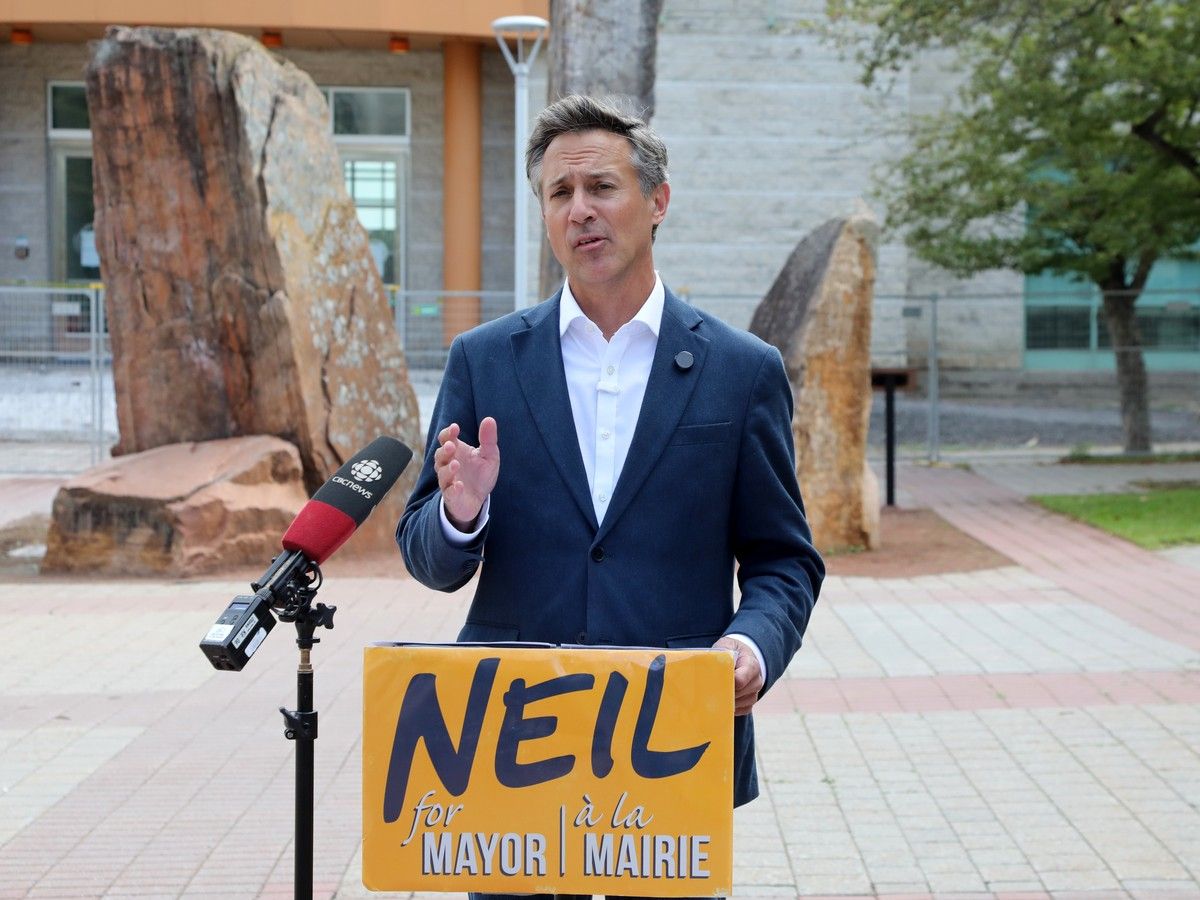
Saravanamuttoo cut his political teeth as an economic adviser to Catherine McKenney in the 2022 mayoral campaign, where the popular Somerset ward councillor led many of the opinion polls, but ultimately lost the race to Mark Sutcliffe.
“That was my first foray into getting involved in political campaign, and so I saw some of what worked and what didn’t work, and I’ve been able to take some of those lessons into this campaign,” he says.
“I thought the personal connection of that (McKenney) campaign worked well, and really trying to make it into more of a movement as opposed to just your everyday campaign. That was very effective.”
He’s been building that movement for years as an outside critic of municipal affairs, holding regular town hall meetings with his CitySHAPES organization and hosting a roundtable podcast with former City Hall journalists Jon Willing and Joanne Chianello.
Saravanamuttoo suspended the Better Ottawa podcast after he registered to run for mayor and with Chianello running for the Kitchissippi council seat vacated by Jeff Leiper for his own mayoral run.
Keen observers of the city’s many committee meetings would recognize Saravanamuttoo from his numerous public delegations, where he’s used his allotted five-minute timeslot to speak out against everything from the controversial Tewin development in the city’s rural east to the fierce public debate over the Lansdowne 2.0 redevelopment, where he took a central role.
“I’ve delegated on a whole range of other issues, transportation issues, environmental issues, and I became what many people at council would call one of the frequent flyers,” he says.
“But I stopped delegating, because as we saw with the Lansdowne experience, you could have dozens and dozens of community members come out and say this is a terrible idea, and council just wasn’t listening. They just went ahead with it anyway.”
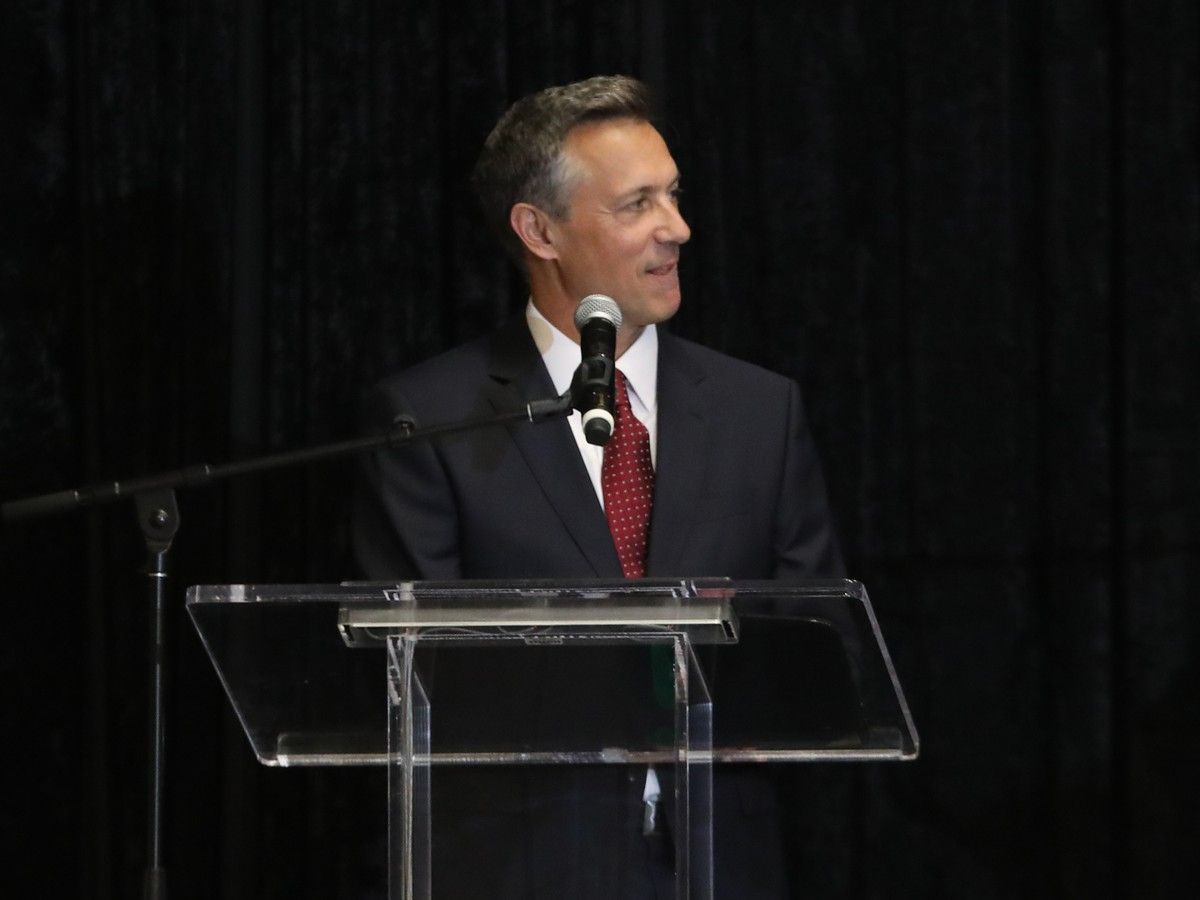
He had never aspired to run for public office, but, as often says, he “reached the limit of what can be achieved from outside of City Hall.”
Saravanamuttoo distances himself from Leiper, known as one of Ottawa’s most progressive councillors over his 12 years representing Kitchissippi ward, and says his own “pragmatic progressive” appeal extends far beyond the city’s urban core.
“We have to understand that Ottawa is not the city it was 20 years ago. And we need to make sure that we’re representing everyone throughout the city,” he says. “I’m ready to be mayor of all of Ottawa, not just downtown Ottawa.”
Saravanamuttoo has been knocking on doors across the city, while also holding “ask me anything” town halls where he’s heard a range of concerns and differing citywide priorities.
The city’s ailing transit network was singled out as a prime election issue from the campaign’s earliest days.
Saravanamuttoo has already touted his “buck-a-ride” transit pledge, but says the issues go much deeper than discounted fares.
“If you ask people in the suburbs, a big priority is just getting around town, the congestion and the frustration with that. And there’s a lot of people that would love to take transit, but it’s just become untenable. They’ve given up on transit,” he says.
“And so for them, the issue is not about how you improve transit. It’s how do we better manage the congestion on the streets?”
Saravanamuttoo has outlined a plan to co-ordinate schedules between the various levels of government undertaking major construction projects around the city — including the city, the province and the National Capital Commission — to avoid having multiple projects compounding each other and creating chaos on the roadways.
He’s also promised to “push back” on the federal government’s return-to-office mandate. He’s asking federal counterparts to either “reconsider their decisions” or better adapt to increased traffic congestion and strain on Ottawa’s transit system by offering shuttle services to and from the office.

But his primary platforms relate to the questions he’s most often asked by residents — and the main reason he threw his hat into the mayoral ring on the opening day of the nomination period on May 1.
“At the door and elsewhere, a lot of people ask me, ‘Why do property taxes have to just go up and up and up?’
“We’ve got a $5-billion budget, and I wonder how much of that is overspending,” he says.
Saravanamuttoo points to one small example of the City of Ottawa paying as much as $15,000 to install speed humps, when those traffic-calming measures cost a fraction of that in other municipalities.
“If we’re overpaying for the small stuff, what are we overpaying for the big stuff?” he asks. “We spend about $10 million a kilometre digging up roads to replace the sewers. Well, we’ve got 6,000 kilometres of road in this city, and they’re all going to have to be dug up at some point, so we have to make sure that we’re paying the appropriate cost.”
Saravanamuttoo is promising a thorough review of city spending and will open the books to public scrutiny.
“I have concerns that we are overspending on a lot of items, and the only way to find out is by opening the books so that people can see exactly how we’re spending our money,” he says.
He would then benchmark that spending against other municipalities and would employ pattern recognition software to detect any irregularities.
“The City of Ottawa has not done a proper comprehensive spending review since 2004,” he says. “We’re going to do a line-by-line review. And we’re going to make it open to the public too, so the public can see what’s going on.”
He refuses to accept a dollar in donations from developers and says that any councillor who does should be recused from all committee decisions that could be perceived as a conflict of interest,
Restoring transparency and public trust is one of Saravanamuttoo’s key campaign promises. He’s pledging to hold regular “ask me anything” town halls and to “open City Hall to the community.”
His voice cracks a bit as he outlines his plans. He might just need a four-year supply of throat lozenges.
The Ottawa Citizen is running long reads of all the mayoral candidates this week. You can read about Alex Lawson here, and other candidates later this week.