

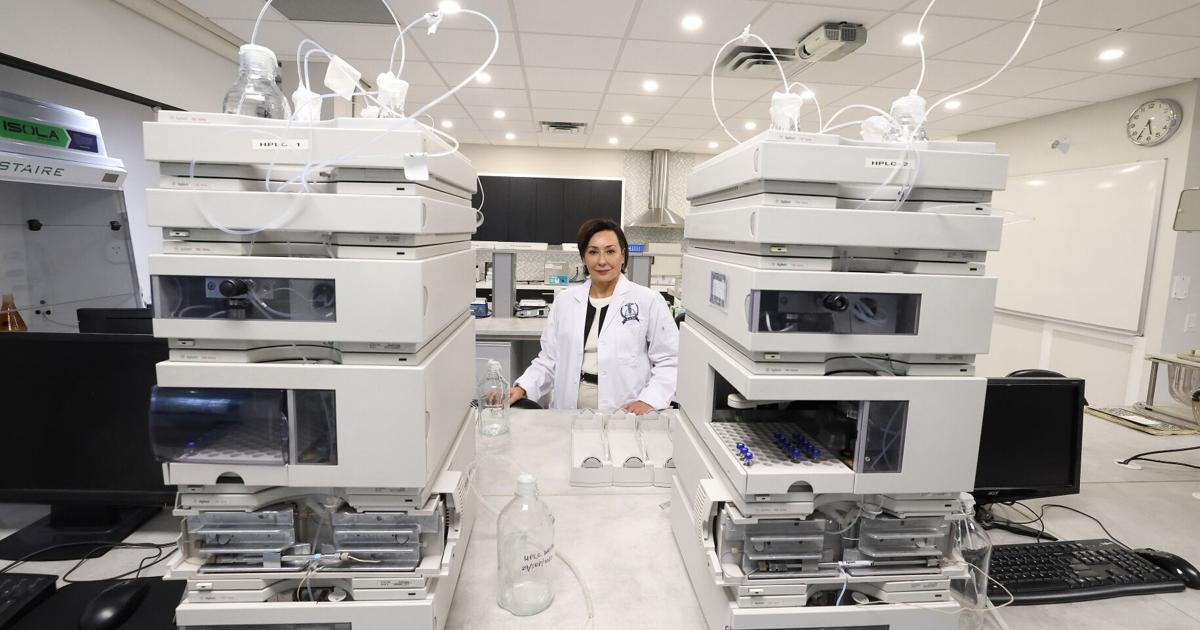
Laleh Bighash says she supports the Ontario government’s move to root out student aid fraud in private career colleges. But she says temporarily banning them all from accessing student aid payments unfairly penalizes everyone because of a few bad actors.
Bighash, who left Iran in the late 1980s and later founded AAPS College of Health, Science and Technology for post-graduates after noticing gaps in the system — particularly for newcomers — called Tuesday’s surprise news “disheartening.”
“We have been in operation for 24 years,” said Bighash, who earned an undergraduate degree in pharmacology and toxicology at the University of Toronto and an MBA at York. “We are brick and mortar. We train for the pharmaceutical industry, and we do have a track record.
“At the same time, I do understand that we need to get rid of these actors … but you can’t just throw the baby out with the bathwater. There are five or seven colleges who are doing fraudulent activities and breaking people’s trust, and they have to be dealt with, and I am supportive of that.”
Colleges and Universities Minister Nolan Quinn announced the measures Tuesday afternoon, saying they were a result of “increased complaints related to the growing volume of OSAP claims at private career colleges,” and they came after an independent auditor “identified serious concerns about the integrity of the OSAP system across private post-secondary institutions that requires further investigation.”
For that reason, the government “paused all OSAP payments associated with private post-secondary institutions while the audit proceeds,” notified the auditor general and asked Ontario Provincial Police to investigate “criminal allegations,” including alleged co-ownership of private colleges and immigration firms, and clusters of OSAP applications from the same locations.
“I wholly recognize the impact this OSAP pause has on hard-working students who attend private institutions,” Quinn said, adding “the government is working on options to provide low-interest third-party loans for students” with banks.
OSAP eligibility will be tightened in the coming days, he added, and private institutions will need to reapply. However, online-only schools will be ineligible given the volume of concerns.
“While this may seem like a drastic measure, let me be very clear: It is an entirely necessary one,” he said.
The government’s crackdown is expected to cause a number of schools significant financial hardship — with critics warning some might have to close — and students now left in limbo after starting programs with already approved OSAP student loans.
OSAP funds can go directly to schools to cover tuition and fees.
The post-secondary ministry had previously banned private career colleges from accessing OSAP grants — which are non-repayable — and then in May initially suspended six schools from accessing OSAP loans.
The problem of increased OSAP usage among some private colleges was identified around 2023 or earlier, and in 2025 Career Colleges Ontario, which represents 280-plus private colleges, also flagged concerns. The federal government has also investigated and found irregularities.
“The Ford government’s failure to properly manage OSAP should not fall on the backs of students,” said New Democrat MPP Peggy Sattler, her party’s post-secondary critic, in a written statement.
Liberal MPP Tyler Watt, his party’s colleges and universities critic, said the government knew something was wrong and failed to act quickly.
“The numbers are staggering,” he said in a written statement. “In 2024-25, nearly $1 billion in Ontario grants went to students at private career colleges. Just seven schools received $385 million, as much as all 24 public colleges combined.
“And when OSAP grant spending increased by $465 million in a single year, 95 cents of every new dollar went to private career college students.”
(Citing ballooning costs, the government recently reformed the overall OSAP student aid system to make it loan-heavy instead of mostly non-repayable grants.)
Bighash estimates about 400 of her college’s 500 students rely on some form of financial aid, and she worried about the impact on the sector.
Career colleges “are part of the puzzle of the training and education system,” she added. “We have 40,000 students (in the province), and we have been part of the Ontario economy for as long as I remember. There are human stories behind us. There are owners, there are students, there are faculty members.”
Error! Sorry, there was an error processing your request.
There was a problem with the recaptcha. Please try again.
You may unsubscribe at any time. By signing up, you agree to our terms of use and privacy policy. This site is protected by reCAPTCHA and the Google privacy policy and terms of service apply.
Want more of the latest from us? Sign up for more at our newsletter page.

