

Tamara Taub has crossed the pathway near Ogilvie Road and Quincy Avenue countless times.
In the near two decades she has lived in her Beacon Hill-Cyrville neighbourhood, she has often walked there with her dog, although sometimes she is alone.
For the most part, Taub has felt safe. That changed, though, when Taub learned of another daylight sexual assault in the area.
It happened just five minutes away from Taub’s home and on the same pathway she frequents. It has made her question her illusion of safety.
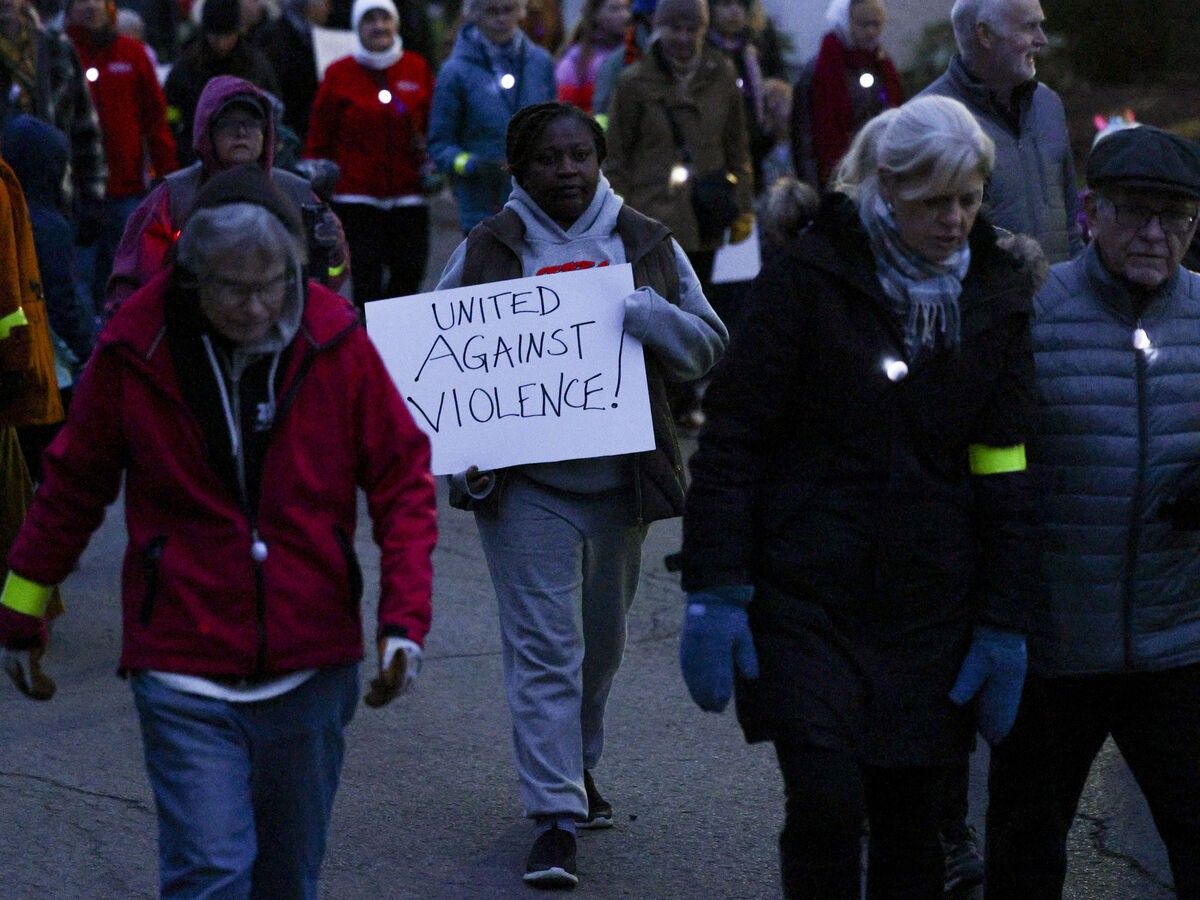
On Friday, Nov. 13, Taub was among an estimated 130 to 150 community members who attended a unity walk organized by Beacon Hill-Cyrville Coun. Tim Tierney .
“The assault isn’t late at night. It is in the middle of the day on a public pathway,” Tierney said.
By 5 p.m. on Friday it was already dark, and the timing of the unity walk was by design, Tierney explained.
At about 11:50 a.m. on Nov. 8, a woman walking on the pathway was approached by an unknown man and sexually assaulted, according to police, who issued a news release on Nov. 10 with a grainy image and description of the suspect.
The Ottawa Paramedic Service took a call at 11:56 a.m. and transported an adult female to the hospital in stable condition, a spokesperson said.
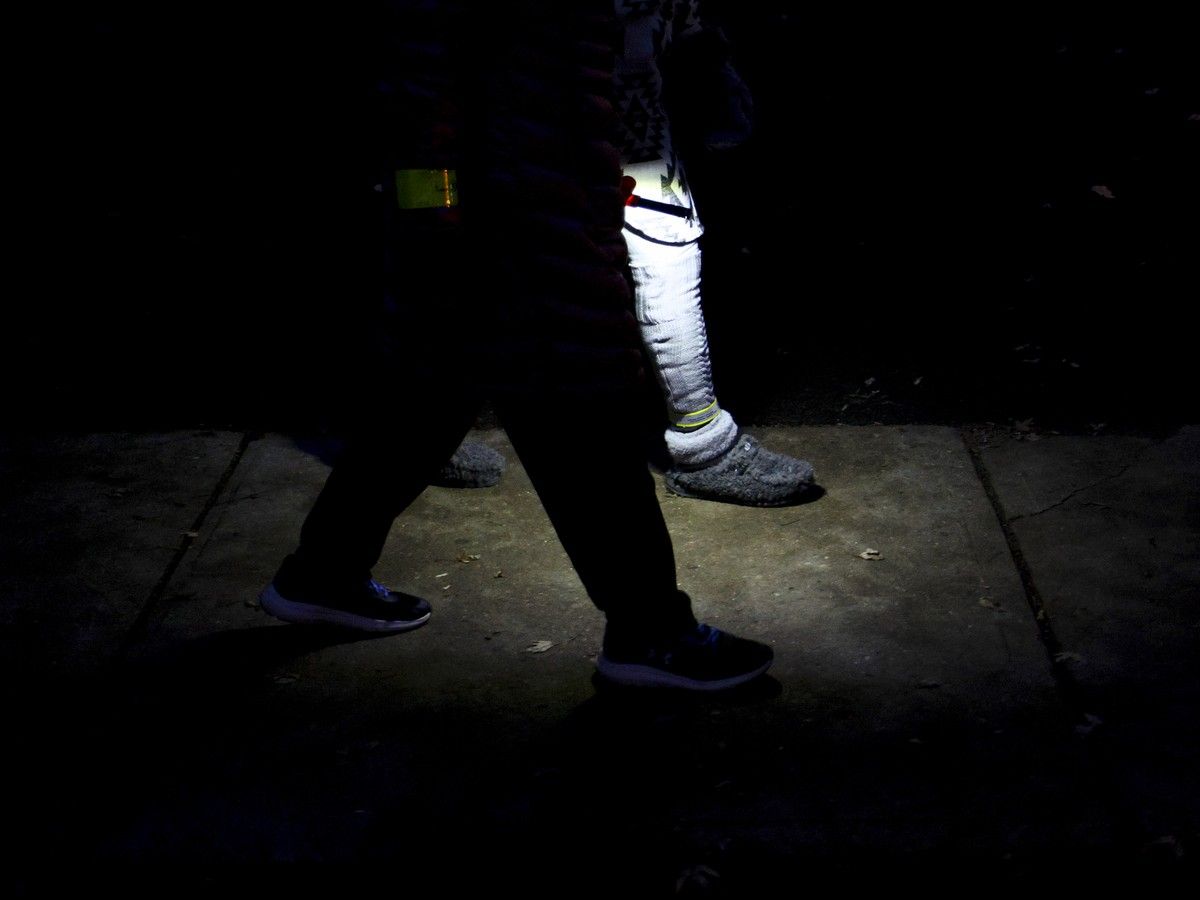
On Friday, Tierney and the community members showed up with 500 purple glow sticks — representing the colour of the fight against abuse of women — and more than 100 personal-safety alarms.
By the end of the march, Tierney said, they had run out of the lights and alarms.
‘Still on edge’
Taub’s 15-year-old daughter also attended the march. Shortly after her family heard about the Nov. 8 incident, Taub ordered personal-alarm gadgets that emit high-pitched sirens.
“She’s a little anxious now when she walks to school or walks to her friend’s household in the neighbourhood,” Taub said of her daughter, who despite preparing to test for a black belt in martial arts, was “still on edge.”
As the board chair of Harmony Health Shelter — a second-stage shelter for abused women and children — over the past five years, Taub said the news about the Nov. 8 assault did not shock her.
“Unfortunately, violence against women is not surprising,” Taub said.
While violence against women has traditionally transpired behind closed doors, Taub says the Nov. 8 incident suggests that it may not be the case anymore.
“When you have a brazen attack in the daylight, there are now people who feel emboldened that they can do it any time,” she said.
Onus not on women, expert says
Counselling and Family Service Ottawa executive director Erin Leigh says the onus of safety is often put on women and girls.
Leigh, who has been working in anti-violence against women for the past two decades, including almost 10 years with the Ottawa Coalition to End Violence Against Women, says women should not have to change the way they live to stay safe.
Instead, she says, leaders should come together in a shared effort to create a society where women can feel safe by focusing on prevention through education.
Friday’s community walk was a great example, she said, because it helped challenge the attitudes and behaviours that lead to violence against women.
“Prevention work includes working with children and raising our boys and our girls to learn that violence isn’t okay, to always seek consent, to recognize the value of different people,” Leigh said.
Street harassment ‘not new’
Various forms of violence against women in public spaces are not new, Leigh says. The difference in modern day iterations of gender-based violence lies in the polarization of ideologies, especially online.
“We’ve heard of the increases in sort of far-right digital discourses and the manosphere,” she said.
In a 40-page study released on Nov. 2, Health Canada f ound that online and social pressures could cause psychological harm in men, who were pressured to meet narrow expectations of what it meant to be a man. The What We Heard Report surveyed 5,246 people aged 16 and older living in Canada through an online questionnaire.
Leigh says misogyny and violence against women is often rooted in the need for power, control and the maintenance of dominance.
“If people have other ways to connect and feel better about themselves, then they don’t have to rely on violence to feel like they have power,” she said, adding that it was important to create spaces where men and boys could also feel safe.
‘This is everyone’s issue’
In a city where women and girls make up about 51 per cent of the population, according to a 2023 Ottawa Public Health report, Taub said she was disappointed that issues affecting women were not taken more seriously.
“More than half of your society and the city who are walking around are not necessarily feeling safe all the time,” she said. “And to me that seems absurd.”
Taub said she hoped the woman who survived Sunday’s assault was able to see that the community was showing up to back her, “that we are coming together and saying that we just don’t accept this,” she said.
“And, yes, we need men. This is not a women’s issue. This is everyone’s issue because violence against women is not acceptable.”
What is the city doing?
The City of Ottawa’s Community Safety and Well-Being Plan (2021-2031) has a pillar called Gender-Based Violence and Violence Against Women.
Leigh, who is on the advisory group, says the city has done a good job at creating a framework to address the safety issues that women face, but more can be done.
“I would say that the mayor and city councillors can be very proactive in making communities safer by making clear that they denounce violence, by making clear that there are things that communities can do to make their places safer,” she said.
Taub said she wished that her daughter didn’t feel the need to protect herself.
“I’m very proud of her, but on the other hand is the other part of me is I wish we didn’t have to worry about this.”
Karine Halle, who has lived in the Beacon Hill-Cyrville neighbourhood for the past five years, also came out to support the march.
Halle said she had seen a few alarming instances in the city over the past year. She pointed to a July 2026 sexual assault against a woman pushing a stroller.
“It is that eerie sense lingering in the back of (women’s) minds when they’re walking to and from work or from the bus stop home or walking the dog late at night,” Halle said.
The sense of constantly needing to remain alert is felt regardless of the time of day, said Halle, whose daughter and son were also at the march.
“My first reaction was I was not surprised,” she said. “It’s shocking, it’s jarring, but it’s honestly not surprising. We have way too many catch-and-releases going on with predators.”
Ultimately, Halle said, the goal with the march was to create a sense of unity and solidarity in the community.
“It encourages women to know that they’re not alone in the way that they feeling. I’m hoping that men also stand up and join to make women feel like they can be safe in our community,” she said.
Anyone with information about the suspect in the Nov. 8 assault, including dash cam or surveillance video, was asked by police to contact the Ottawa Police Service Sexual Assault and Child Abuse Unit at 613-236-1222, ext. 5944, or by email at [email protected].

