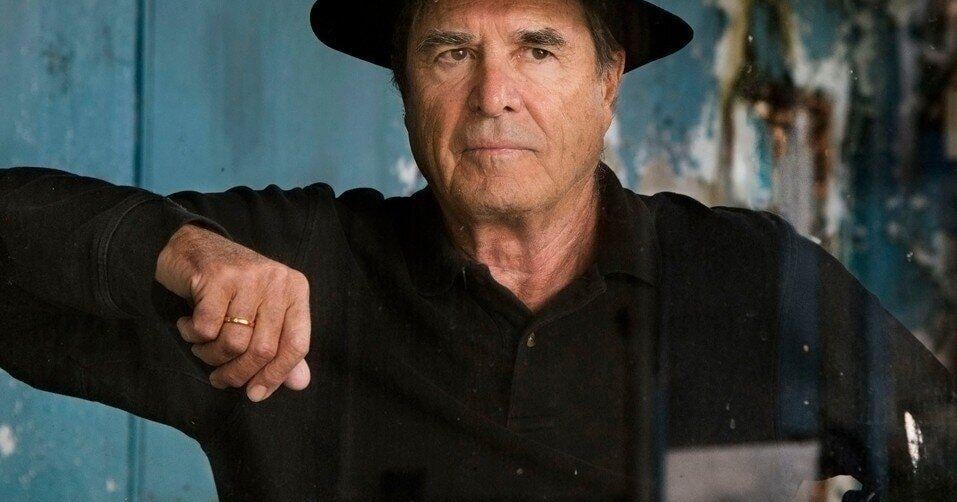
For his new book, “True North: On the Road in Canada,” inveterate traveller and bestselling author Paul Theroux (“The Mosquito Coast,” “The Great Railway Bazaar”) spent several years road-tripping across the country. The 85-year-old writer, who has French Canadian roots, wrote to the Star about his journeys from his home on Cape Cod in Massachusetts.
When did you begin travelling across Canada and when did you finish?
My first trip to Canada in 1952 when I was 11 was with my family, spending time with relatives in Montreal. I have been many times, but around 2020 I paid a formal visit to Yamaska, and decided I wanted to write about Canada. I kept travelling, taking notes. All the while I was writing other books — “Burma Sahib,” “The Vanishing Point” — and reading Canadian fiction.
Late February 2022, I was on a beach near my home in Hawaii when I read about the truckers’ protest. So, I flew to Cape Cod, got in my car and drove to Ottawa in a snowstorm. No U.S. paper or magazine was interested in commissioning a piece, so this was self-financed, as most of my travel is. The protest was amazing and helpful to me.
You were here when Mark Carney was elected prime minister in March 2025?
Yes. I made a point of travelling throughout the election, watching the debates, talking to voters — and of course this was during the “51st state” business. Nothing is more revealing than travelling in a country during a crisis — election, war or Trump disparagement.
I’m interested in the paradox of writers as both members of a community and as outsiders. How do you see yourself and why?
I am in a large sense a member of a community, like a Masonic order: writers. It amazes me when I ask a favour from a writer and am turned down — this happened with “True North” — especially from a person who wrote a book set in Canada, and he said no to my three easy questions. But he was an American.
I am also an outsider, I feel, not part of any movement or clique, or academic institution. I hate living in cities, where cliques flourish and writers meet. I hardly ever associate socially with writers — none in Hawaii, few on the Cape — but know many hunters, kayakers, hikers and tattoo artists.
Connected, perhaps, is the desire to travel and to reconcile yourself to the idea of being an alien or trespasser. In “Travels with Myself and Another,” Martha Gellhorn wrote, “My heart rose like a bird at once. It always did incurably, except in rain, as soon as I had fallen off the map.” Do you feel the same?
Yes, I feel that way, but unlike Martha, who I knew, I have a spouse I love, many children and grandchildren, and I also love to be home, either on the Cape or Hawaii — bliss in both places. I love cooking and gardening. I love sleeping in my own bed. Is this a guilty secret? Maybe, but I am a better traveller for having a happy home life.
Other than the risks of driving in bad weather — especially on the Trans-Canada Highway in remote communities — do you feel deterred by weather?
On the contrary. I am invigorated by dramatic weather. Lashing rain, falling snow, great heat, huge waves — see my surfing novel, “Under the Wave at Waimea.” Canada has some serious heavy weather.
In tracing your Québécois roots — and being able to research your distant forebear Antoine who arrived in the 17th century — what fascinated you most?
Antoine was so young when he left his French village to travel across the world — he had previously been nowhere. Couldn’t read or write. That he rose to the occasion, had a really challenging life as a traveller and mariner — imagine the difficulties, up and down rivers — and became a householder, a patriarch — and lived a long life — 83 years, pretty good, given the circumstances. Like a fictional character in an 18th-century novel — brave, hardy, self-sufficient.
On getting to know locals in Yamaska, how did it feel to be given the nickname “Paul le Ratoureux” — the cunning, mischief-maker — and to be celebrated by the community and given a certificat honorifique by the mayor?
This was such an unusual aspect of my Canada travel: being among friends and family, feeling connected and welcomed, not at all like being threatened with spears in the Trobriand Islands or insulted and abused in Africa or India, or feeling so guilty in Vietnam. I think I deserve the nickname “ratoureux.” Probably most writers and travellers do.
It seems that you established ongoing relationships with previous strangers on this journey. Who did you encounter who made an indelible impression?
A woman named Samantha begging by the side of the road in Winnipeg made the deepest impression — standing upright, looking me in the eye, not old, rather attractive, even dignified, Cree and homeless. Also, fishermen and women, farmers, working people, like Willard and Boyd in Port au Choix, N.L. — people with deep roots and long memories. Dutch Thompson in P.E.I., who has recorded people’s stories over decades, the hard-working and enduring Canadians who have to cope with radical change.
I often heard “This is not the country I grew up in” — yet they rub along without complaint. I was lucky in the people I met — friendly, candid, trusting, funny, most of them well-read. I met more readers in Canada than I’d met in any of my 11 other travel book journeys.
Of the startling aspects of Canadian history that you learned about, what has affected you most?
Most startling? This very moment in history — after years and years of Canada as a great neighbour, generous, hospitable, comrades in war, fair traders, intimately acquainted with American life to the point where Canadians are part of the very fabric of American popular culture, enriching us, and as workers helping us prosper — this insult and disparagement from the U.S. president seems to be about as low, as sad and depressing as it’s possible to be.
Carney’s right: this is the end of an era of trust, a huge transition — being told “You’re not wanted — losers, cheats …” It will take a long time before the U.S. can be considered a trusted partner. I think Canadians will rightly resist any overtures — and that if American booze reappears in Canadian stores, no one will buy it.
This interview has been condensed and edited for clarity.
Error! Sorry, there was an error processing your request.
There was a problem with the recaptcha. Please try again.
You may unsubscribe at any time. By signing up, you agree to our terms of use and privacy policy. This site is protected by reCAPTCHA and the Google privacy policy and terms of service apply.
Want more of the latest from us? Sign up for more at our newsletter page.