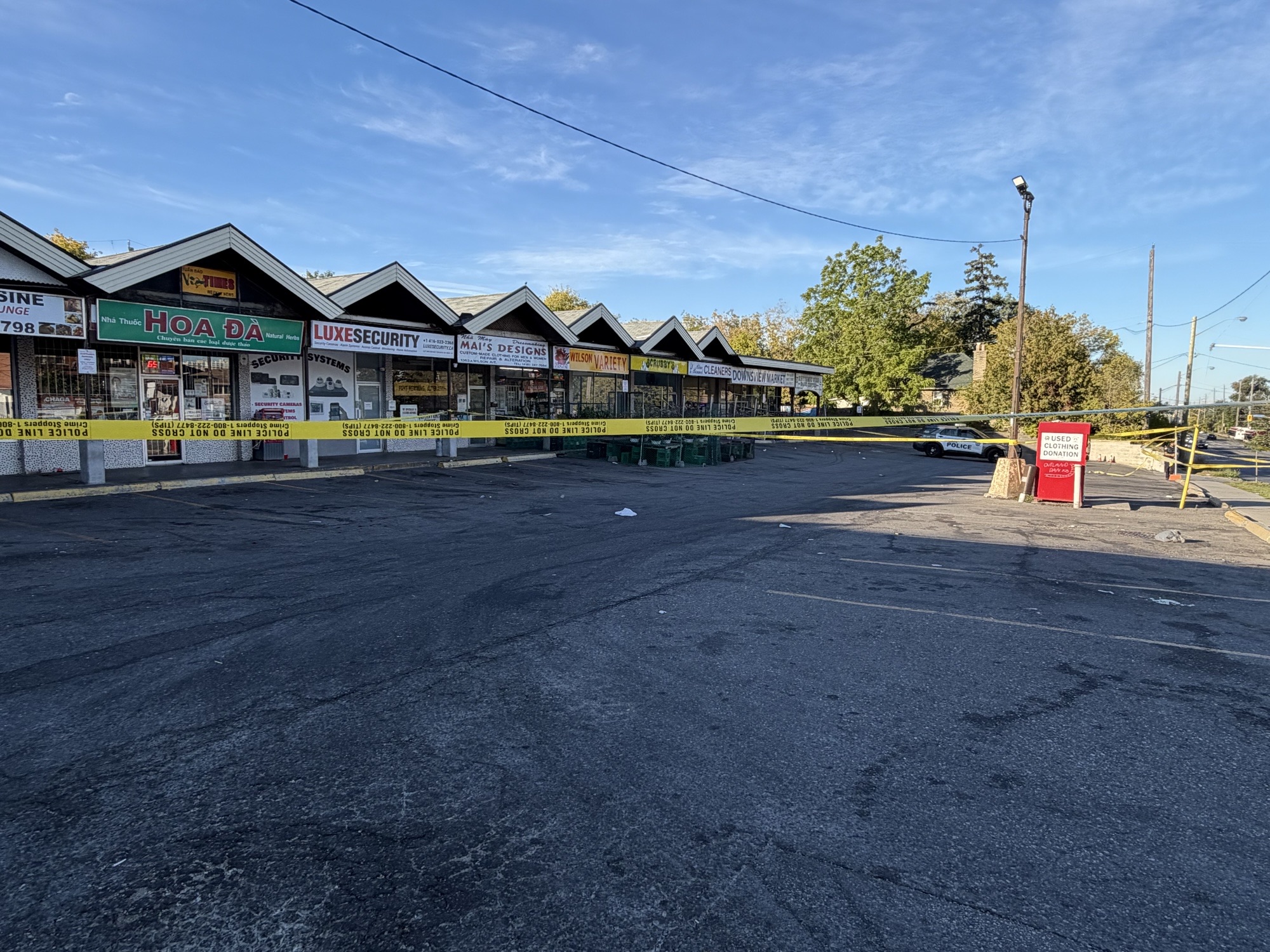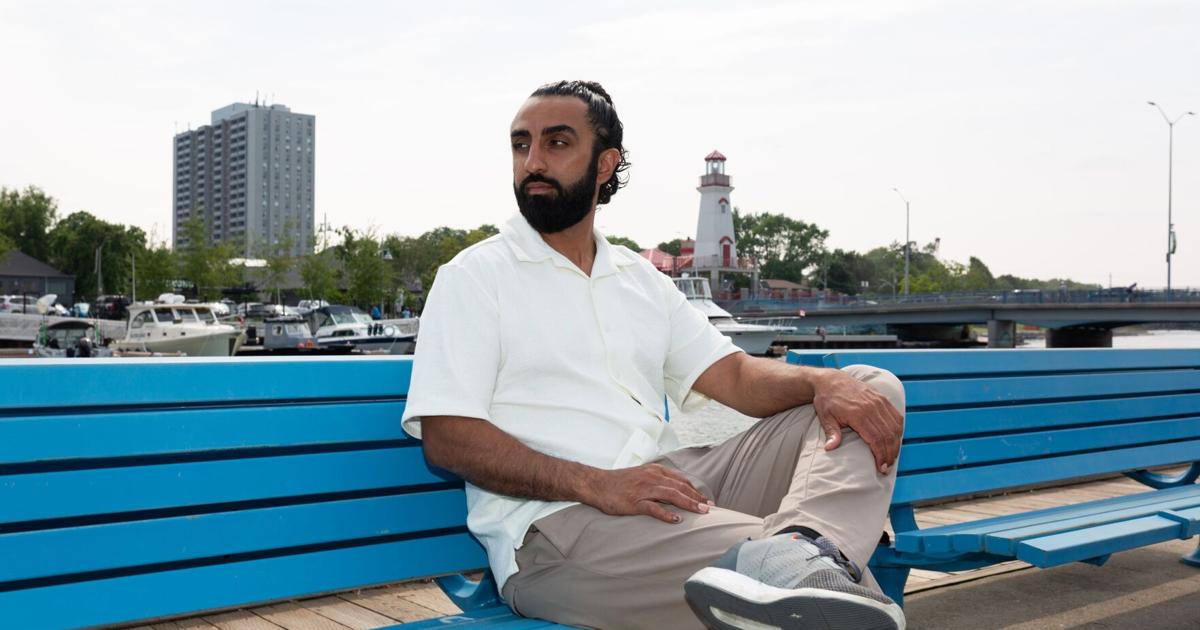
Even the captains on the party boat were drinking.
Passenger Elyin Rodrigues approached them: “Hey, you shouldn’t be drinking, you’re supposed to be looking out for us,” he told them, as the boat they were on motored through Toronto Harbour, with 12 paying passengers, on a Saturday night in July.
Rodrigues and the others had hired the vessel through an ad on Instagram.
They didn’t know they had boarded a yacht being used illegally as a commercial vessel. Their ride was about to end badly.
That night, as the party was disembarking at a closed pier at the foot of Yonge Street, the men acting as captains began aggressively demanding cash from the passengers, according to Rodrigues. The group had paid in advance, he said.
During the confrontation, a female passenger fell into the water between the dock wall and the pier. Instead of trying to help, the captains gunned it out of the bay, said Rodrigues.
Witness Mani Saba, who runs Toronto Yachts, a licensed yacht charter service with a location at the foot of Yonge St., witnessed the accident, and confirmed that the boat took off after the woman fell.
Saba has been a vocal critic of illegal charters.
“She could have gotten stuck under the dock and drowned,” said Saba, who founded the Safety Awareness Boating Alliance (S.A.B.A.).
Rodrigues said he and his friends pulled the woman from the water. She had been drinking and didn’t want to call an ambulance. She was bruised and had strained her neck.
Reached by the Star, she declined to be interviewed.
Under Transport Canada rules, charging each passenger a fee to party on a private yacht is strictly prohibited, and yet it happens almost every summer day in Toronto.
Dock owners and marinas won’t let illegal charters use their facilities, so instead they routinely board and disembark passengers from areas not designed for that purpose, risking serious injury or even death by drowning.
Rental yacht operators say Transport Canada rules that are keeping them from operating legally were drafted for ferries and the kind of large tour boats that offer sunset tours of the harbour to hundreds of passengers at a time.
They say regulators did not foresee boat owners renting out their own vessels for commercial purposes. They compare yacht rentals, which can be conducted through apps, to Uber and Airbnb, which have given private citizens a way to use their own assets to generate income.
“You know how Uber first came into play and all the taxi drivers were really upset,” said Binamin Shah, co-founder with Sergio Ponce-de-Leon Torres of the Great Lakes Boaters Association (GLBA). “You know how Airbnb created a whole mess of everything? We’re kind of in the same position now, with these boat rentals.”
Shah said he does not know the owner of the boat involved in the accident on July 4.
Shah and Ponce-de-Leon Torres, a yacht salesman, said regulators need to catch up with the times.
They’re facing an uphill battle.
For Saba and others, the incident in July is evidence that members of the yacht rental industry recklessly endanger the lives of passengers, by overloading boats that don’t have proper safety equipment, and aren’t safely operated, docking at closed piers or embankments or boardwalks.
In a submission to council in April, the Passenger and Commercial Vessel Association (PCVA) said unlicensed charter boats are creating escalating safety risks in Toronto Harbour.
“These operators undermine safety, evade taxes and regulation, and create direct risk to human life,” according to the PCVA submission.
The PCVA document points to a “multi-jurisdictional enforcement gap,” between the city, the Toronto Police Marine Unit, Transport Canada and the Toronto Port Authority.
Rental yacht operators, trying to distance themselves from incidents like the one on July 4 in which the woman fell off a pier, and from incidents that have resulted in deaths in the harbour, say they are trying to grow the industry in Toronto, but feel thwarted at every turn.
They say the yacht rental business is thriving in other waterfront cities, such as Chicago, Miami and Los Angeles, where regulations have been adopted to make it easier for private charter rentals to operate.
“This is happening everywhere in the world,” said Shah, co-founder of Luxury Yachts Co.
If they could dock legally, passengers wouldn’t be put at risk, Shah said. They’re lobbying authorities for a designated marine access point.
But docking isn’t the only safety issue, say critics.
Calls for a new system for private yachts
Shah and his organization say that despite global growth in charter markets, by their count, the number of rental yachts operating in Toronto harbour, listed on websites and apps, has declined to 65 vessels from 160 pre-COVID, as operators, frustrated by what they see as barriers to conducting business, head elsewhere.
In comparison, there are more than 200 charter vessels operating in Chicago, similar in population to Toronto, according to the Great Lakes Boaters Association.
They estimate the current size of the industry in Toronto at $4.9 million a year in direct revenue to charter boat operators, based on the number of boats in service in Toronto and the prices charged for those services. That doesn’t include the supporting economic activity generated by demand for catering and event services, marine services and hotel and restaurant services.
The association wants to see centralized passenger loading docks and a new framework that makes it easier for rental yachts to operate legally. They said they have been trying diligently to work with authorities on the issue.
Saba dismisses the idea of creating a new framework. He says the regulations exist for a reason. Operating a yacht for your family is one thing; operating it commercially on a daily basis presents a safety risk to everyone — the boats simply aren’t constructed to be safe in those conditions.
“That’s like a doctor saying, ‘Oh, going to school for six years to do surgery is too difficult. Let me do it after a year,’ which is a joke,” said Saba, whose boats are built to meet Transport Canada safety requirements.
Transport Canada agrees with Saba.
“Pleasure craft are designed, constructed, equipped and operated based on their intended use,” according to a Transport Canada statement in response to questions from the Star.
“Requirements related to construction, stability, fire protection, machinery safety equipment, and number of crew and their qualifications are established accordingly. When a vessel is placed into commercial service, the nature of the operation changes. Commercial operations involve additional responsibilities and liabilities, including factors like the duty of care for paying passengers who are unfamiliar with the vessel and its safety equipment. As a result, commercial vessels are subject to safety requirements that reflect the increased risks.
“Amending existing regulations or developing new regulatory frameworks requires a thorough review and consultation process. Transport Canada continues to monitor industry developments and assess regulatory frameworks to ensure they effectively support marine safety.”
Drownings have drawn attention to illegal charters
From the window of her office overlooking Sugar Beach on Queens Quay East, Janis Parmar has seen numerous illegal boat pickups and drop-offs this summer, sometimes as many as five lining up one behind the other in the narrow strait between Sugar Beach and Redpath Sugar on a Friday afternoon.
Only boats operating illegally would attempt to board or disembark passengers along the cement wall there.
“A few weeks ago, I saw two women very shakily try to get off a boat onto the bank and I was holding my breath hoping one of them wouldn’t fall,” said Parmar, adding that one of the women was wearing high heels.
Several high-profile incidents have given charter boats in Toronto a bad name, including two drowning deaths on party boats, in 2023 and 2025.
Rental yacht operators want to distance themselves from incidents like the one on Aug. 22, 2025, that resulted in the drowning death of Azaan Moosa, 27. A charge of criminal negligence causing death was laid against Nazme Saqqa of Mississauga, in connection with the incident. His next court date is Oct. 15.
Shah and Ponce-de-Leon Torres said they are angry at operators who try to save money by cutting back on supports that keep passengers safe — like not having enough crew on board, or by overloading their boats to increase profits.
“We want everybody to be safe. We do not want overloaded boats,” said Ponce-de-Leon Torres.
Howie Colt, vice-president and director of small vessel compliance for PCVA, says the problem of illegally operating charters is not confined to Toronto. He cites incidents in Vancouver and New York City this summer, in which people have drowned, that are currently under investigation.
While Saba says the number of illegal charters was down this summer, Colt, who operates Gone Sailing Adventures in the harbour, says he believes the number of illegal charters in the harbour has increased.
“We’re seeing new boats out there. And we’re seeing the same boats that have been there for the last five years,” said Colt, adding that he has brought his concerns to all the agencies on the waterfront that rent dock space or have oversight of the industry, including Harbourfront Centre, Waterfront Toronto, Transport Canada and the Toronto Port Authority. The agencies play varying enforcement roles — for example, police can lay criminal charges against the operator of a boat and Transport Canada can issue a detention order preventing a boat from operating, or even seize a boat.
Transport Canada said it is aware of interest in a new regulatory approach.
“Regulatory proposals must be carefully assessed to ensure they maintain safety, support the public interest, and appropriately consider economic, operational and environmental impacts,” according to the agency.
“Transport Canada continues to monitor industry developments and assess regulatory frameworks to ensure they effectively support marine safety.”
In 2025, the department issued 11 detention orders and more than $170,000 in administrative monetary penalties.
In May 2026, Transport Canada issued 17 notices of violation to one vessel operator.
Saba says owners sometimes walk away from their boats if the fines become excessive, and he has seen boats implicated in illegal activities simply carry on under new names.
“They don’t have any company name or anything, they’re just operating boats in the harbour.”