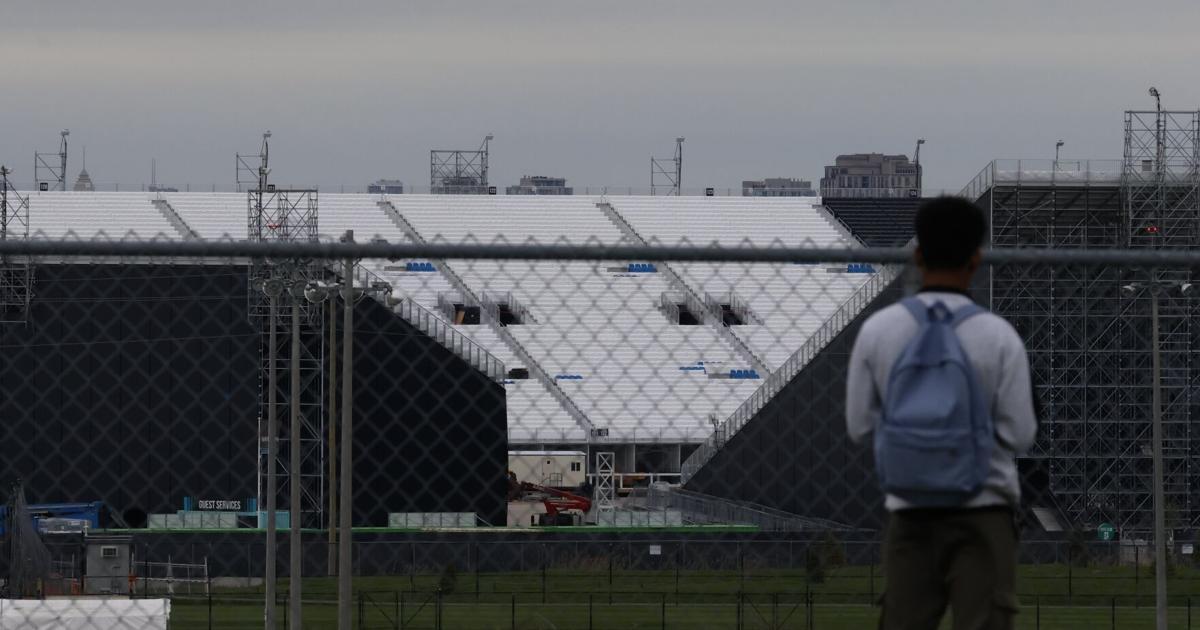
After a rocky launch plagued by crowd bottlenecks, traffic gridlock and noise complaints heard kilometres away, organizers at Rogers Stadium say they have made sweeping changes to ensure a smoother summer at the massive concert venue.
Erik Hoffman, president of music at Live Nation Canada, said he expects many of the troubles that defined last year will be long forgotten when the second season lineup kicks off with Bruno Mars on May 23.
“We feel much more confident,” Hoffman told the Star. “We all learned things from last year.”
The 50,000-seat temporary outdoor venue on the former Downsview Airport lands drew widespread criticism in its debut season, with concertgoers pointing to congested exits, long treks along gravel paths, and a shortage of water stations and washrooms, as some of their biggest complaints. Even Coldplay’s Chris Martin declared onstage that it was a “weird stadium in the middle of nowhere.”
Hoffman insists Martin was mostly joking with his remarks, but that Live Nation took concertgoer feedback seriously, making adjustments that his leadership hopes people will notice even before they arrive at the venue.
Last month, a report commissioned by Live Nation drew attention to the brighter points. The study touted $388-million in economic impact from the stadium’s first season, along with more than 3,000 full-time jobs tied to the project.
But the report didn’t address how Rogers Stadium might affect the surrounding community this year as it cranks up the number of shows. The venue is set to host 20 concerts this summer, up from 14 last year, including global superstar headliners Luke Combs, Post Malone, Karol G, Foo Fighters and BTS.
The expanded schedule is already raising concerns among local officials about whether the neighbourhood is built to handle the added pressure of a more active stadium.
Too many shows?
James Pasternak, the city councillor for York Centre where the stadium is located, said he feels Rogers Stadium “hit the sweet spot” last summer, and he warned that having more nights on the calendar could spark a backlash from locals who are already strained by the influx of fans.
“I thought that 14 was probably what the community will accept and there’s one group of people that will be totally be against (more),” he said.
Local officials have been meeting with Live Nation and property owner Northcrest Developments in the off-season to address concerns from people in the area who faced “total gridlock” on concert nights, Pasternak added.
“This was not a situation in which a stadium had been there for decades then people moved into the neighbourhood and started complaining,” he said.
“This was a situation in which established neighbourhoods had been there for decades.”
Getting in and out of Rogers Stadium
Some of the most significant changes this year are focused outside the venue, where congestion left concertgoers frustrated as they tried to leave shows last year.
A new paved walkway to Sheppard West Station will offer an alternate route to the venue, about a 10-minute walk, according to Live Nation Canada. The two other pathways leading to Downsview Park and Wilson stations have been widened to allow for more foot traffic.
Meanwhile, a second rideshare zone has been added on the north side of the venue near Downsview Park Station, aimed at easing some traffic congestion while giving concertgoers more options.
Pasternak is cautiously optimistic that the new options will ease the flow of people.
“Even if 90 per cent of concertgoers come by transit, and 10 per cent is still thousands of cars on an already congested roadway at rush hour,” he said.
Inside the venue, organizers say they added more washrooms and water stations, covered areas in the fan plaza, digital signage and free portable charging stations. There are also new reservable lockers and a Rogers Stadium app to help guide attendees through the site.
Noise remains a big challenge
Residents have raised concerns about hearing concerts as far as 15 kilometres away in Vaughan, said Pasternak, with sound carrying depending on wind and weather conditions.
In response, Live Nation installed black vinyl cladding around the back of the grandstands for its second season, replacing the more porous fabric used last year, in hopes of dampening sound travelling beyond the site.
The siding won’t change how the venue looks to most concertgoers, but organizers are confident it will improve the bleeding of noise into the nearby neighbourhoods.
“Our hope is that it’s going to block the sound, to a certain extent,” said Nathalie Burri, vice President of venues and operations at Live Nation Canada. She said the effectiveness won’t be fully clear until concert season begins.
Pasternak said municipal licensing officers — paid by Live Nation — will monitor sound levels at shows. Under city bylaws, noise cannot exceed 70 decibels between 7 a.m. and 11 p.m., and performances must end by 11 p.m. or risk fines under the venue’s noise exemption permit.
Last year, rock band System of a Down ran overtime for what organizers say was a postponed start time due to weather. Live Nation is appealing the $900 ticket in court, according to city officials.
Headed into its second year, Rogers Stadium still has a lot to prove, suggested David Roberts, an associate professor of urban studies at the University of Toronto. But he said its role in the community is far more than just a nuisance.
“Live music is part of what makes our city vibrant, cool and fun, and we should take that into consideration before we complain too loudly about noise,” he added.
“But at the same time, our concert hosts have to be good neighbours, so it’s a balancing act.”