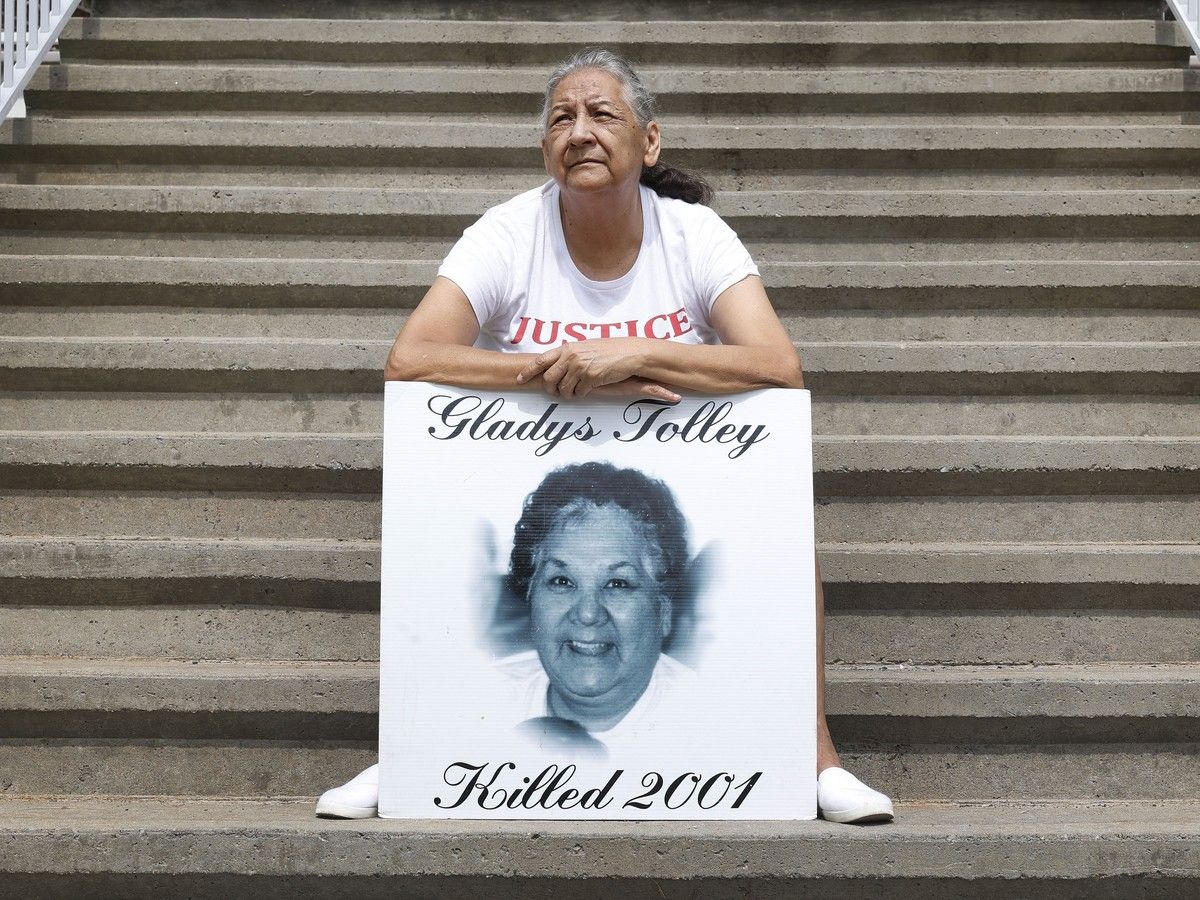
Bridget Tolley is five years older than her mother was when a Sûreté du Québec police car struck and killed her in October 2001.
She remembers rushing to see her, Gladys Tolley, shortly after she found out, along with her family and community members in the tight-knit Kitigan Zibi Anishinabeg reserve.
“But the police told me to go home. Nobody was able to see my mother except the police, and the police that killed her. So, the two forces, the SQ and the native force, had taken care of everything,” Tolley says.
They only stayed on the scene for two hours, she says, then took her mother to the morgue.
“Nobody really saw my mother. There was no coroner. It was very traumatizing for me when I found this all out in her report,” says Tolley, who is now well-known for her advocacy for missing and murdered Indigenous women and girls.
June 3 marked seven years since the Congress of Aboriginal Peoples’ final report of the National Inquiry into Missing and Murdered Indigenous Women and Girls, and five years since the launch of the National Action Plan.
But the Congress says now that progress on these calls is uneven and far too slow, as only two of the 231 Calls for Justice have been completed. Because of this, it is renewing its call for immediate, action to address the ongoing crisis facing Indigenous Women, Girls, and 2SLGBTQQIA+ Peoples across Canada.
“The need to renew the Calls for Justice is greater than ever because the crisis that prompted the Inquiry has not ended and meaningful implementation remains far too limited. The Calls for Justice were never meant to be a one-time commitment,” said the Congress’ National Chief Brendan Moore in an email.
Seven years, and not enough progress
According to the Assembly of the First Nations’, Indigenous women are four times more likely than non-Indigenous women to be victims of violence.
The AFN says 16 per cent of all female homicide victims are Indigenous, and 11 per cent of missing women in Canada are Indigenous, yet Indigenous people make up only 4.3 per cent of the population of Canada.
Renewing the Calls for Justice is about ensuring that the findings of the National Inquiry do not become another report sitting on a shelf, Moore said.
While the release urges the completion of all 231 calls, it also points to specific practices that it hopes federal, provincial, and territorial governments will prioritize.
Among this list is expanding access to safe, affordable, accessible and culturally relevant housing in urban, rural and remote Indigenous communities.
It also urges governments to establish a national Indigenous and human rights ombudsperson and tribunal to address complaints and monitor accountability.
Where the Calls for Justice started
The calls for action have been going on much longer than the national inquiry, says Cora McGuire-Cyrette, the CEO of the Ontario Native Women’s Association.
“It began at the grassroots level. It began through the Sisters in Spirit vigils (led by Tolley) that were happening all across Canada, and it began from Indigenous women wanting change and calling for an inquiry. So, this has been a longstanding issue,” she says.
In 2020, ONWA released a report detailing critical recommendations that were to be integrated into the national plan to address violence against Indigenous women and girls.
Among the many suggestions is placing the safety of Indigenous women at the centre of the action, addressing the many forms of violence that Indigenous women and girls disproportionately face, investing in education and accountability.
“What that looks like, is that we’re not included in decision making, we’re not included in public policy engagements. We know that good public policy comes from when everybody is included,” McGuire Cyrette says.
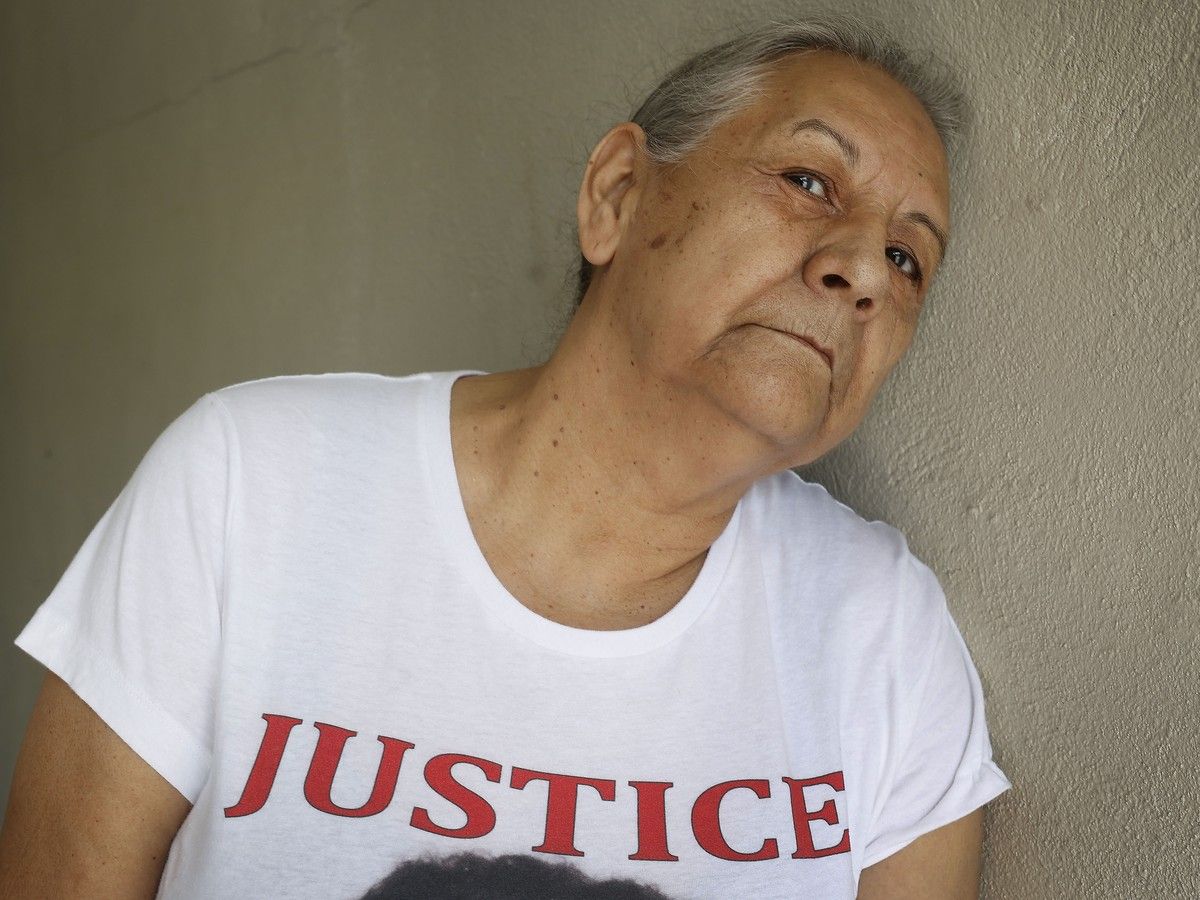
Tolley says accountability has been a struggle in every way, noting that it was especially difficult to obtain the report of her mother’s death. She finally got access in 2003 after paying a lawyer $1000.
It named alcohol as the first factor leading the death, and pedestrian negligence as the second.
The fact that her mother was struck by a moving vehicle on the highway was written much later, and much quieter in the report.
“My mother did drink. My mother lost her mother in 1998 and then she lost her baby sister a few months after, and then she lost her husband a year later, so she lost three of her family members within two years, and she was really hurt,” Tolley says.
But that’s not why she died, Tolley says. It didn’t seem to matter much, because the case was closed three months later.
Looking further into the report, Tolley noticed more issues.
“This is when I found out everything, I found out the brother of the cop that struck my mother was in charge of the case,” she says, adding that a coroner was never called to see her mother’s body.
“I believe this is why nobody wanted to contact me or let me know anything about it, and you only have three years to sue the police if anything like this happens, so this is what I figured, that they were trying to stall us, so we wouldn’t sue them. And I mean to never talk about this case for 20 years? Come on, there’s something very wrong,” Tolley says.
Audrey DeMarsico, a lawyer at Nelligan Law who specializes in local Indigenous communities, confirms that three years is the deadline to bring a lawsuit of this kind forward in Quebec.
Turning to advocacy
After seeing the mishandling of her mother’s death, Tolley says she became an advocate for the justice of missing and murdered Indigenous women and girls. But at first, she wasn’t sure she could do it.
“I only have a Grade 9 education, and I told that to everybody, but I know right and wrong, and I know common sense. I was very, very scared. I kept asking myself, ‘Are you crazy? You still want to do this?’ But I had to do it. I had to do it for true accountability and justice, for my mom, for all our other missing and murdered Indigenous women,” says Tolley.
In the decades that followed, as Tolley built her advocacy and founded a volunteer and support program, the Families of Sisters in Spirit, she noticed patterns. Investigations would close quickly and without seeking information from communities.
Tolley says that in the 20 years she’s been seeking justice on Parliament Hill, not much has changed, except for the number of missing and murdered Indigenous women.

“The lack of action we’re seeing is being called out by the international human rights mechanisms too, including recently through the UN Human Rights Committee’s Review of Canada, which calls for the immediate implementation of the calls for justice that keep indigenous women safe,” says McGuire-Cyrette, adding that it’s not a priority for the federal government right now.
She says that with Canada’s nation building projects , investing in Indigenous women should be a priority.
“What type of nation are we going to build that doesn’t have the most vulnerable people in our communities not being part of what we’re building? We cannot do this work on the backs of women and children, it’s just not acceptable anymore,” McGuire-Cyrette says.
McGuire-Cyrette is still waiting for justice in the 1994 murder of her cousin, Jamie McGuire, though she says her family doesn’t believe that they’ll get it.
“There is no justice within the justice system, and we have to come to terms with that as a family,” she says, noting how many Indigenous women who go missing, like her cousin, are mothers of young children.
Missing data makes accountability harder
Since data is no longer being collected, Tolley says, no one knows the exact number of missing and murdered indigenous women there are in Canada.
“Why can’t we look at (the cases)? I would be proud to show my case, the work I did, if I was a cop, and I did my things right. I would be happy to help in any way, but it seems like the police won’t help us in any way,” she says.
Though Tolley senses these conversations seem to have gone out of style, lately, she’s been trying to strike up conversations about unsolved cases with the Ottawa Police.
These conversations are essential for building trust between police and Indigenous communities, says Chabine Tucker, the acting staff sergeant of community safety services at the Ottawa Police.
“We’re trying to keep cases visible. Unsolved cases can fade from public attention over time. A regular communication keeps victims, names and stories in public consciousness. The hope is that it generates new tips, witnesses, and evidence. When this happens at the local level, it can reach the national level,” Tucker says.
This local communication starts with officers talking with Indigenous communities outside of uniform, says Tucker.
“The uniform can bring trauma, so this is one way to rebuild trust. We didn’t realize how much harm we were causing to a community by being in uniform,” he says, adding that once trust is built, his team might return to their uniforms.
Tucker also says trust is built by finding ways to get closer to communities who don’t feel safe telling the police their stories.
Tucker says that the Ottawa police have also recently hired a specialist in violence against Indigenous women.
“We want to build confidence,” he says.
Going beyond policing
DeMarsico, who helps Indigenous communities implement self-government, thinks building confidence goes beyond Ottawa’s police.
“The more we focus on facilitating self-government for Indigenous communities , and the more we make sure Indigenous communities have the resources and the jurisdiction to have their own police forces, then the better the relationship will be between Indigenous persons and the law. The more they’ll be able to trust the institutions that are supposed to be protecting them, says DeMarsico.
“We need these kinds of conversations, even if they’re hard. For truth, accountability, and justice. Nobody is above the law,” says Tolley.
In April 2022, Tolley says that the Quebec government, Montreal Police, and the Minister of Indian Affairs came to her reserve and apologized to her family for their treatment of her mother two decades prior.
“I was super happy they did that, because it was the first time they acknowledged my mother’s death. It was really something,” she says.
“But an apology is not accountability,” Tolley adds.
Our website is your destination for up-to-the-minute news, so make sure to bookmark our homepage and sign up for our newsletters so we can keep you informed.