

Local politicians are divided over whether Ottawa should put the brakes on new large-scale AI data centres amid growing pressure on the city’s electricity grid .
Data centres are buildings filled with computer servers that store and process huge amounts of information. They support everyday services like cloud storage and online banking. AI also relies on data centres, but it can require a lot of electricity both to run the computers and to keep them cool.
Cities across Ontario are wrestling with how to handle the growing industry. Oakville has imposed a one-year moratorium on new data centres, while Mississauga is moving toward a similar pause. Toronto is studying possible new rules, while Hamilton rejected a moratorium.
The province has also recently released a framework that would require data centres to pay dedicated electricity rates and to use closed-loop cooling systems. It would also favour projects that brought economic and community benefits.
Premier Doug Ford has already urged Ontario to embrace data centres, arguing they are important to keeping Canadians’ data in Canada.
Ottawa already has at least a half-dozen data centres operating across the city.
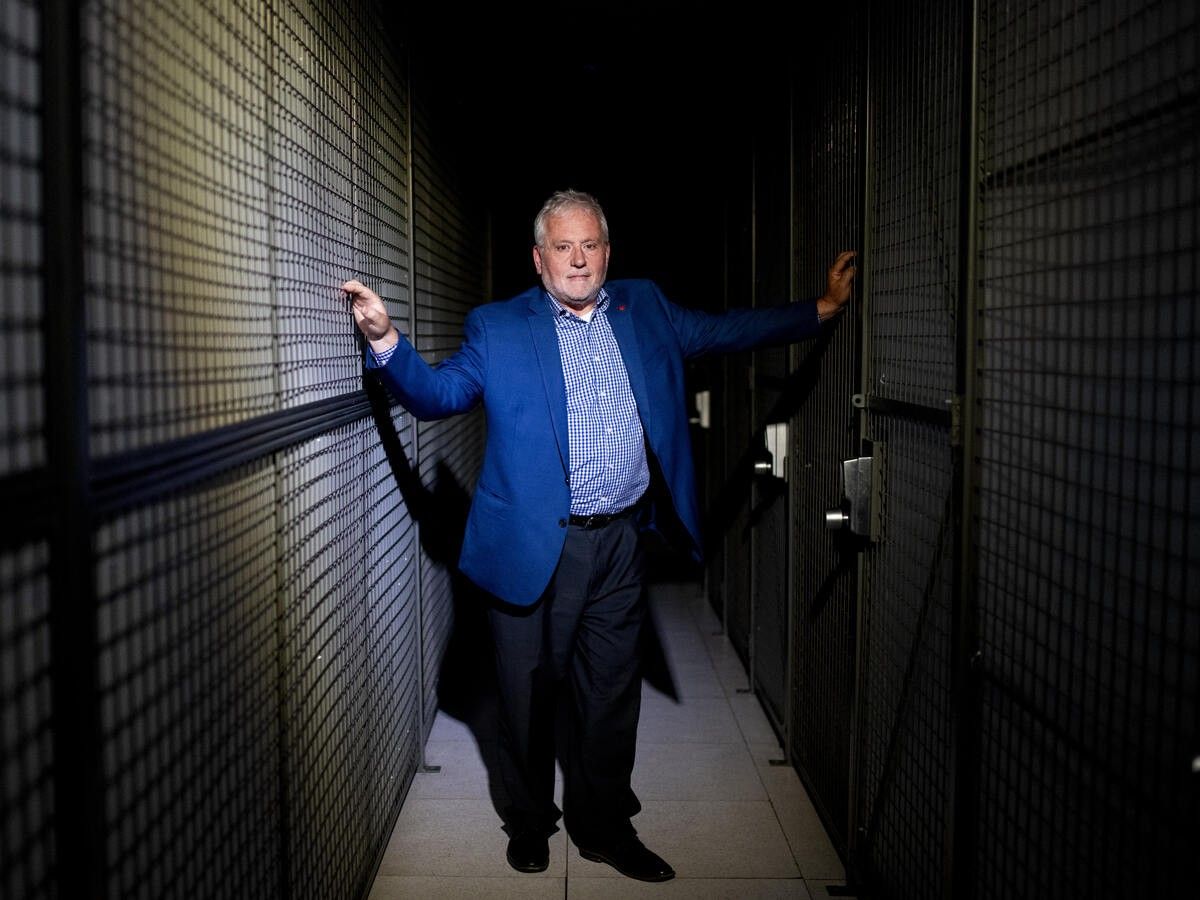
One of them is operated by Canadian cloud and data-storage company ThinkOn in Nepean. The facility is not dedicated solely to AI. The company says it handles a range of computing needs for government and commercial customers, including workloads that support AI.
ThinkOn CEO Craig McLellan says Ottawa will need more computing infrastructure as AI and other digital services grow , but acknowledges there are limits to how much electricity is available.
“There’s a finite amount of power available,” McLellan said.
Hydro Ottawa is already seeing that demand firsthand.
Hydro Ottawa CEO Bryce Conrad told city council in June that the utility was facing “extraordinary pressure” from large electricity users. Hydro Ottawa then had 34 large-load projects looking to connect to the grid. Together, they would require 1,075 megawatts of power, about 86 per cent of what Hydro Ottawa’s entire system used on average last year. Data centres accounted for about 60 per cent of that new demand.
“We are being asked to build and support in the next two to three years what has taken us more than the better part of 110 years to build,” Conrad told council.
But Conrad also stressed that the demand represented economic growth for Ottawa, calling it a “good problem” the utility needed to find a way to support.

Where council and mayoral candidates stand
The Ottawa Citizen asked every current member of council whether they would support a moratorium on new large-scale AI data centres.
Six said they would support a moratorium, two were opposed, eight responded without taking clear positions and nine did not respond.
Mayor Mark Sutcliffe was among those who did not take a clear position.
His mayoral campaign did not answer yes or no when asked whether Sutcliffe supported a moratorium, instead saying future large infrastructure projects should be considered individually.
“Decisions regarding potential future large infrastructure projects are best made on a case-by-case basis within the context of sound local planning and with a full consultation process,” Sutcliffe’s campaign said.
The mayor’s campaign also said Ottawa benefited from its technology sector and that the next update to the city’s official plan would give the next council an opportunity to consult residents and develop an approach to such projects.
His three main challengers for mayor offered clearer positions, although they were split themselves.
Mayoral candidate and Kitchissippi Coun. Jeff Leiper said he would support a moratorium.
“Ottawa should pause new large-scale data centres until we can show our power and water systems can carry them,” Leiper said.
Mayoral candidate Neil Saravanamuttoo said he would also support a moratorium, saying the city needed a better understanding of the potential impacts before allowing new facilities.
“As mayor, I would call on council to implement a moratorium on new data centres until we have a more comprehensive analysis of their potential impacts,” Saravanamuttoo said.
Mayoral candidate Alex Lawson took the opposite position. His campaign said data centres could expand Ottawa’s tax base if developers paid their own way and the city’s infrastructure could support them. Asked to clarify Lawson’s position, his campaign responded: “No moratorium.”
Councillors themselves were also divided.
Rideau-Vanier Coun. Stéphanie Plante said she supported a temporary moratorium and told the Ottawa Citizen her staff members were working on a motion related to the issue. She said any pause should have a clear deadline tied to provincial regulations or a city policy framework.
“A moratorium should not be about saying ‘no’ to data centres,” Plante said. “It should give us the time to establish clear rules so that, when we say ‘yes,’ we understand the impacts and know what we are asking residents and our infrastructure to absorb.”
Kanata North Coun. Cathy Curry strongly disagreed.
“A moratorium on data centres in Ottawa would be one of the most short-sighted economic decisions this city could make,” Curry said.
She argued a moratorium could send investment, jobs and tax revenue elsewhere.
Orléans East-Cumberland Coun. Matt Luloff also opposed a blanket moratorium, saying projects should be considered individually if the infrastructure could handle them and developers covered their share of the costs.
Industry wary of a moratorium
McLellan said he did not want Ottawa to shut the door on new data centres.
He said data centres were important to Canada’s digital economy and was concerned that a broad or indefinite moratorium could hold back investment. But he said a short pause could make sense if Ottawa used the time to develop clear rules and to better understand the impact of new projects.
“If the moratorium is about education and transparency, awesome,” McLellan said.
But he would be concerned about a “knee-jerk reaction” without a clear end date.
McLellan said Ottawa should consider each project’s electricity use and environmental impacts. He said his company’s approach was to build more modest-sized data centres that fit within the power available in a community, while maintaining the organization’s focus on reaching net-zero emissions.
McLellan also cautioned that many proposed data centres may never be built because developers still needed financing and enough electricity to move forward.
Still, he said Ottawa would need more computing infrastructure as AI and other digital services grew.
“We have to keep constructing infrastructure to satisfy the needs,” McLellan said, “and to give entrepreneurs and government agencies and, frankly, local successful companies opportunities to leverage this locally.”
Take control of your search results. Make the Ottawa Citizen a preferred source on Google and see verified local reporting first.

