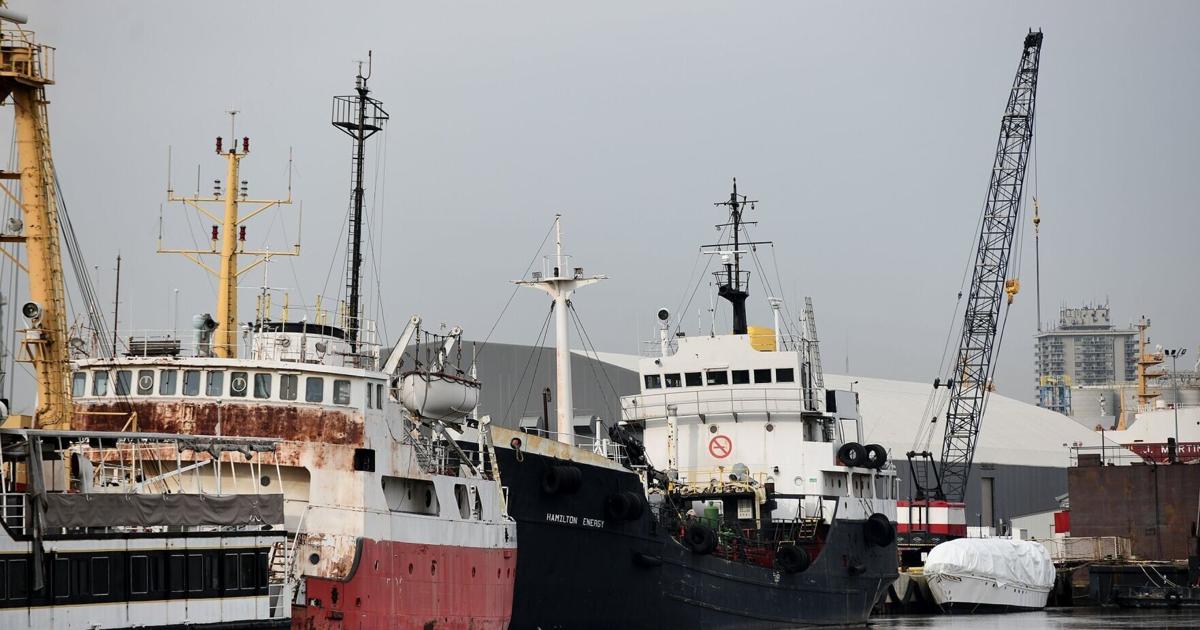
Construction on a new training vessel at Hamilton’s Ontario Shipyards will continue even without the support of a South Korean shipbuilding giant that just lost a bid to build Canadian submarines.
Assembly of the long-sought training ship at Pier 15 — which was expected to bring up to 100 new jobs over the next few months — was central to an agreement signed by Hamilton-based Ontario Shipyards with Hanwha Ocean back in February.
The partnership developed as Hanwha found itself in a tight competition with German-based firm TKMS for a federal contract to supply up to a dozen submarines for the Royal Canadian Navy, a bidding war that saw both companies make commitments to support Canadian businesses to sweeten their respective offers.
Prime Minister Mark Carney announced Monday that Canada had selected the Europeans as the preferred bidder.
Work on the training ship project continues and the project is “unaffected” by the announcement, Ontario Shipyards said in a statement, but other prospective projects linked to the South Korean partnership are now likely dead in the water.
“The news is fresh and we certainly have to circle back with Hanwha to determine how our relationship will evolve going forward,” said Shaun Padulo, Ontario Shipyards’ president and CEO, in an interview Tuesday. “But I suspect that there will be less engagement now that the award has been given to TKMS.”
In a statement to The Spectator, Hanwha Defence Canada CEO Glenn Copeland said the South Korean firm was “disappointed” to not be able to participate in the federal procurement project along with its various Canadian partners. “It was our sincere desire to fulfil our commitments and obligations that we diligently detailed within our proposal,” he wrote.
The company did not immediately reply to Spectator requests for clarity on the status of its Hamilton partnerships.
But a spokesperson separately told CBC that “all of it stops” when asked if the local agreements could continue or be renegotiated.
Along with building a new vessel to train recruits on the water, the Ontario Shipyards-Hanwha pact also included plans to develop an educational program for Mohawk College students.
That initiative will also move forward without the South Korean shipbuilder, with both Ontario Shipyards and Mohawk telling The Spectator Tuesday that the program doesn’t require Hanwha’s involvement.
German bidder eyes investments outside Ontario
Ontario Shipyards isn’t the only Ontario company to potentially lose out now that TKMS is the federal government’s preferred bidder.
Last month, Hanwha committed to building land defence vehicles in Canada using Algoma Steel metal. Now that plan is also in question.
“Unlike the South Korean deal,” said Colin Mang, an assistant professor of economics at McMaster University, “the German deal doesn’t seem, at least so far, to be directly impactful for our region.”
Instead, a successful TKMS bid could see greater investments in places like Manitoba or both of Canada’s coasts.
During Monday’s announcement, Carney noted that TKMS committed to manufacture torpedoes in the prairie province, while Nova Scotia Premier Tim Houston said in a statement that his province and B.C. will “play a central role” to support the submarines “over their full lifespan.”
This is certainly a letdown for Ontario Shipyards, Mang said, but Monday’s decision could signal Ottawa’s hopes of bringing an economic boom to other parts of Canada.
“Hamilton’s actually done pretty well,” he said, explaining the city has avoided some of the economic stagnation seen elsewhere. “So trying to use this as an opportunity for greater economic development in those regions can make sense from a policy perspective.”
Padulo added it’s still possible the TKMS deal could bring some sort of commitment or investment to Ontario Shipyards, noting that the local shipbuilder and Germans have had “conversations” previously.
The CEO also remains optimistic that this submarine contract will have trickle-down effects for Canada’s shipbuilding industry.
For years, Ontario Shipyards has sought out government deals to expand its production. This includes unsolicited proposals to build up to 12 navy corvettes in partnership with Algoma Steel and Italian giant Fincantieri that could create thousands of jobs in Hamilton and Niagara.
Richard Shimooka, a senior fellow at the Macdonald-Laurier Institute who writes on defence policy and procurement, also believes Ontario Shipyards could see more government work as Canada’s navy shifts toward a desire for smaller vessels.
“That kind of continual production bodes well for yards like Ontario Shipyards,” Shimooka said.