Like many Smiths Falls residents, Rob Carr is a member of a lively Facebook group focused on the homicide of Robbie Thomson and a string of other suspicious deaths in the area.
Called “ The Murdered Men of Smiths Falls and Other Ontario Cases ,” the group got started after Thomson, 34, and two more men — Robert Lambert, 75, and Lawrence Bertrim, 42 — went missing.
But over the past year or so, as Carr and others in the group continued following the cases, all three men turned up dead on the same property in Montague Township, outside of Smiths Falls.
Three people have been charged in Thomson’s homicide . No charges have been laid in the deaths of Lambert, who went missing in 2018, or Bertrim, who disappeared in 2022.
Being part of the Facebook group and learning about the men got Carr, who is 48, to thinking.
“I noticed a lot of people in Smiths Falls were concerned and heartbroken,” he says. “So I thought it’d be nice to do a tribute for them.”
Carr has resided in Smiths Falls for 15 years and makes his living running a cold saw at a metal works in nearby Brockville, Ont. One thing that he is not is a musician.
“I used to just do karaoke, basically,” he says.
Nevertheless, Carr recently posted a highly polished country-pop song in the Facebook group with lyrics recounting the lives of Thomson, Lambert and Bertrim.
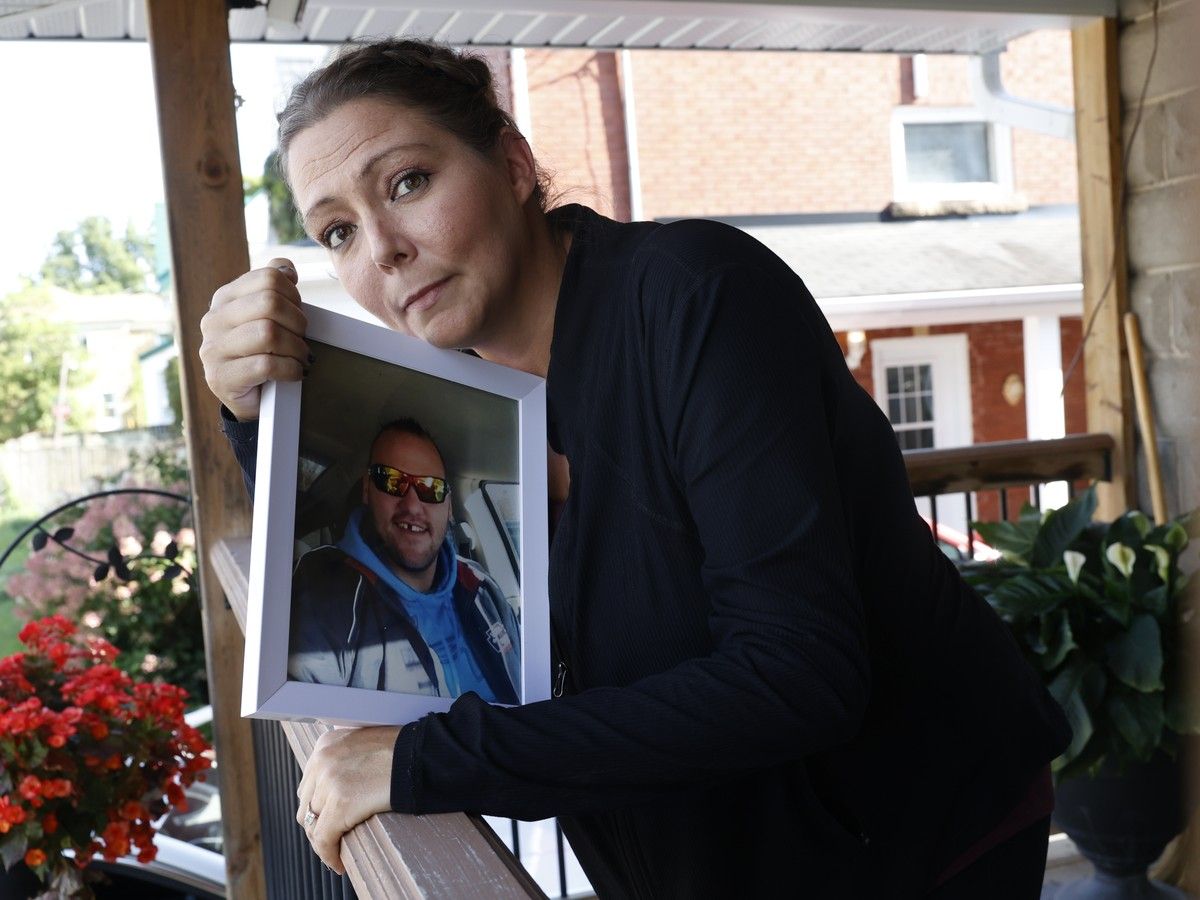
Called “ Kelly-Jordan Road ,” after the address of the property where police found their remains, the song created a stir among the group’s members, which include family of the deceased.
“This has touched many of us,” wrote Tabatha Thomson, Robbie’s sister, in one post, adding:
“[M]any tears have been shed over this beautiful tribute.”
Thanks to its professional-sounding production and the quality of the singer’s voice — a raspy, Nashville-style tenor — the track would not sound out of place on a local country radio station.
“Oh, Kelly-Jordan Road, where the tall grasses grow, you held on to the secrets that we didn’t know,” runs the rousing chorus.
“We remember the men of the Smiths Falls ground, oh they were lost — they are finally found.”
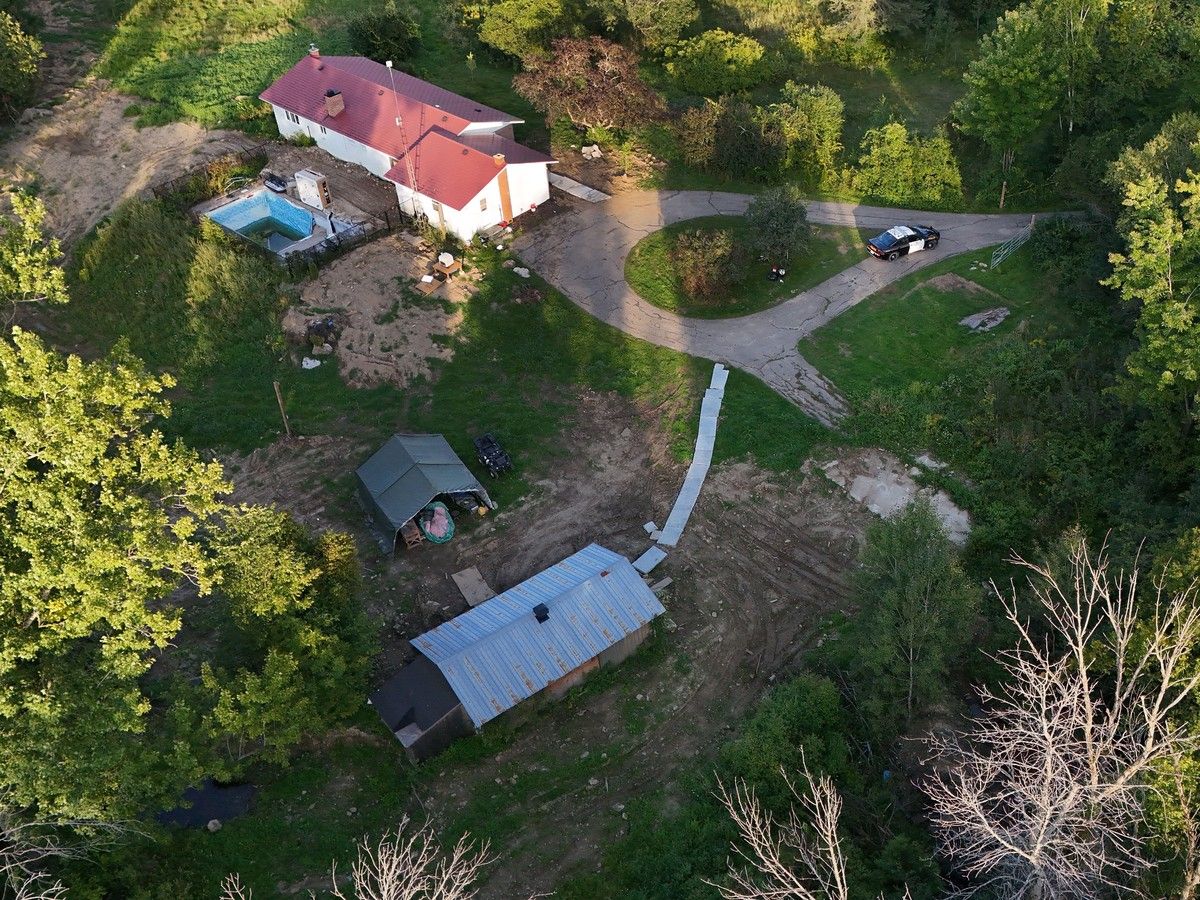
There is something uncanny about the track: how its lyrics refer to local place names — Lanark, Montague, Church Street, the Rideau River — and lean on torn-from-the-headlines details.
Carr has always been up front about how he created it:
“I made this AI song for the men of Smiths Falls,” he wrote when he first posted it in August.
The song’s origins — Carr created it using the popular web-based AI music generator Suno — have apparently made little difference in how it has been received or in its emotional impact.
Carr is aware some people are skeptical of artificial intelligence.
“I used to be the same way — I always thought it was kind of like a joke,” he says. “But then when I started using it, I was like — ‘You know, like, this can actually really benefit you.’ ”
He adds: “It’s actually a great way to do it — to open your heart up and write stuff.”
Carr describes the care he took in writing the lyrics to the song, making sure to omit rumour and to get the facts of the cases correct. He says he spent hours perfecting the track in Suno.
When members of the Facebook group said that “Kelly-Jordan Road” did not mention a fourth man who died under suspicious circumstances — 34-year-old Steven Tate, who police say was the victim of a hit and run not far away from Kelly-Jordan Road in 2023 — Carr created a new song that did.
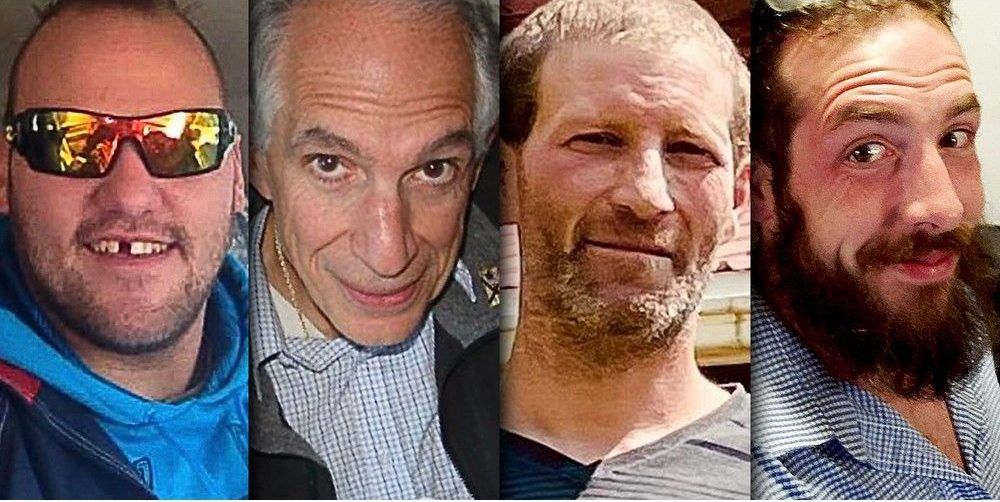
Police have said there is no evidence that Tate’s death is connected to the other three cases.
Moody and atmospheric, Carr’s new track includes references to Tate and his grieving mother:
“They say it’s a hit and run out on the line, that Donna is weeping and counting the time, beside Highway 15 where the tall grasses wave, they left Steven Tate in a ditch for a grave.”
Carr’s songs are two of a growing number of tracks created with AI to memorialize the victims of violent crime and other tragedies.
Web-based services such as Suno and Udio can now create tracks that bear many of the hallmarks of professional songwriting and studio production. The process can take seconds and can often be done for free. The songs that emerge often sound oddly perfect — and frequently reflect niche sensibilities.
Nowhere is this truer, perhaps, than in AI-generated memorial songs.
The first noted examples of this trend followed the shooting death of conservative activist Charlie Kirk during a university campus speaking event in Utah last September.
“ We Are Charlie Kirk ” by Spalexma, a band whose songs are reportedly AI-generated, was featured in many AI-generated videos depicting public figures like JD Vance singing the lyrics and weeping: “He stood unshaken, a voice in the storm, a man of conviction, a heart reborn…”

Last December, Zvika Klein, an Israeli-American journalist and editor-in-chief of The Jerusalem Post , published a song onto social media he said he wrote using ChatGPT, Gemini and Suno to memorialize the victims of the Bondi Beach shooting in Sydney, Australia last Hanukkah.
The song revolves around quotes from Australian Jewish leaders, and especially one quote from Rabbi Eli Schlanger, who was among 15 killed during the Sydney attack: “Be more Jewish.”
Klein wrote that when he first ran a draft of his lyrics “through Suno, I was genuinely blown away by how quickly it could translate testimony into something musical and shareable.
“That’s why I spent the past 24 hours, during Hanukkah vacation, turning the draft into an illustrated memorial song and video, with full transparency about the tools used.”
Hundreds of social media posts link to further examples of AI-generated memorial content.
The quality varies — from an alt-rock tribute to 9/11 to an emo-esque song commemorating a massacre in Iran . At times, there are serious questions of taste. One country-rock tune about England’s Southport stabbing attack in 2024 contains the lyric: “There may be conversations about illegal immigrations, but no one’s going to send the little angels homeward bound.”
Some of the songs pay tribute to celebrities like Dolly Parton , others to local figures with little profile beyond their immediate communities. All the subjects get the same lush treatment.
“ At the Alex Pretti Vigil ,” about a gathering that followed the ICE-related shooting death of a protestor in Minneapolis in January, describes local businesses like the Black Forest Inn and the pastries on offer there: “This is how we honour Alex, this is how we bring him home.”
Timothy A. Parker, a 58-year-old navy vet in Halifax, has created some 500 songs with AI — “some good, some not,” Parker himself allows — one entitled “ The Man Who Showed Up – Terry Bobbitt (1939–2025) .”
About a man from Spryfield, an area within Halifax, who was known to frequent the legion, the song has an east-coast buoyancy and homespun fiddles: “He showed up every morning / He showed up every night. / Not because he had to… / Because he knew it was right.”
Parker has also created two songs about the 22 people who died in the 2020 Nova Scotia attacks that began in Portapique. “We remember the faces, the smiles, the dreams they shared, a community left broken, in the silence we’re still scared,” go the lyrics to one of them, written with the aid of ChatGPT.
“I’m not an artist and I don’t claim to be,” says Parker, who has used AI song generators for several years and now spends about $300 a year on subscription AI services.
He’s made several extended song series featuring memorial content. A disaster series includes a song about Chernobyl (on his album “ Amusement Parks: Swing No More “) and “Hola Halifax, It’s Juan,” from the AI-generated album “ Hurricanes and Haligonians .”
He uploads his finished tracks to streaming services like Apple Music via a music distribution service called DistroKid, which also helps him monetize his Suno output. He said a recent cheque he received, in U.S. currency, came out to over $100 Canadian.
Parker said he does get criticism from listeners who are surprised that what they’ve just heard is AI generated. “Oh that AI crap? Like, you liked it until you knew it was AI! The way I see it, if you tap your foot to it, or snap your fingers to a song or you dance to it, you must like it somewhat.”
For Parker, everything is song material. “I do it for the fun of it and it also helps me remember,” Parker says.
So do many others.
“There’s thousands of songs being produced and it’s really hard to listen to them all,” he says.
Earlier this year, Apple Music vice president Oliver Schusser told Billboard that “more than a third” of the tracks uploaded to the platform were “100 per cent AI.” Last month, Apple Music announced it would start labelling AI-generated music in the coming months, Variety said.
Suno is the leading company in the field, valued by investors at US$5.4 billion, according to The New York Times . As in other sectors affected by AI, Suno and its peers have also become the subject of lawsuits over copyright-infringement claims or allegations of unlawful imitation.
The Society of Composers, Authors and Music Publishers of Canada, or SOCAN, launched one of the most recent of these lawsuits , also against Suno, with filings that include a list of dozens of songs that have allegedly been replicated in publicly available examples of Suno content.
But Suno this month also announced it was partnering with Warner Music Group and BMG to launch a suite of AI models that will allow users to create music inspired by licensed music.
Jeff Lupker, co-founder and CEO of London, Ont.-based AI music startup Staccato , says the flood of AI-generated content may represent a copyright issue, but the more immediate problem is one of volume-management.
“It’s just too much of the same stuff,” says Lupker, who got involved in AI as a PhD student in music at the University of Western Ontario, and whose startup caters to professional musicians.
“Just because lots of AI is flooding streaming services doesn’t mean people are actually listening to it,” he adds.
Lupker says replay stats for most AI-generated content remain vanishingly low. He argues this is because AI is trained on necessarily historical data sets — or “the past,” as he puts it — whereas to excite listeners music must invent and speak to the moment.
“It’s not going to be the new groundbreaking music,” he says of AI-generated songs. “It’s not like a Beatles song that we’re still listening to to this day.”
But Jason Matkowski, a former U.S. Veterans Affairs therapist who has written a series of Medium articles about AI music, and who has created numerous songs using Suno himself, believes the technology has already changed the way we engage with music.
Matkowski, 52, has also written a memorial song — for a friend who died while in the grips of addiction.
“There were a lot of tears, a lot of compliments,” Matkowski, speaking from outside Rogers, Ark., says of the reaction he received to the song.
“People are going to find out that they’re able to use this tool to better process through things in life, get emotions out,” he says of AI music.
“There’s something very new about that and it is taking the world by storm right now,” he added. “We’re going to have all this music and not enough people to listen to it.
“Because this is all new to us. The whole generative AI thing is — I don’t know. I don’t know if I should be scared or… it’s just a crazy world right now.”