


Construction of The Royal’s mental health urgent care clinic is officially complete, filling a need left vacant more than 25 years ago.
The hospital officially unveiled the Minto Greenberg Urgent Care Clinic on Sept. 18, the only centre of its kind in eastern Ontario providing urgent, specialized care for adults experiencing a mental health crisis.
Cara Vaccarino, president and CEO of The Royal, said the clinic would officially open on Sept. 21, but they’ve had great success since their soft launch in April.
“We’ve had close to 700 visits already, so obviously we’re filling a demand,” Vaccarino said in an interview.
The new clinic marks a return of urgent mental health care after The Royal’s emergency department was shut down in 2000 as part of a major hospital restructuring. In the decades since, Vaccarino said patients have been left without specialized urgent care, leaving them to access regular emergency departments across the city in moments of crisis.
Those departments are dealing with their own capacity issues, and she said half the patients dealing with a mental health crisis usually leave without being seen. This isn’t ideal, she said, since 62 per cent of the people they’ve seen so far have presented with suicidal ideations.

The new clinic will provide those patients with specialized and urgent care, and help ease the pressure placed on emergency departments and primary care physicians who have, until now, managed the majority of all mental health cases in the city.
“It was really an imperative that The Royal step up and lean into their accountabilities in this way and do our fair share,” Vaccarino said.
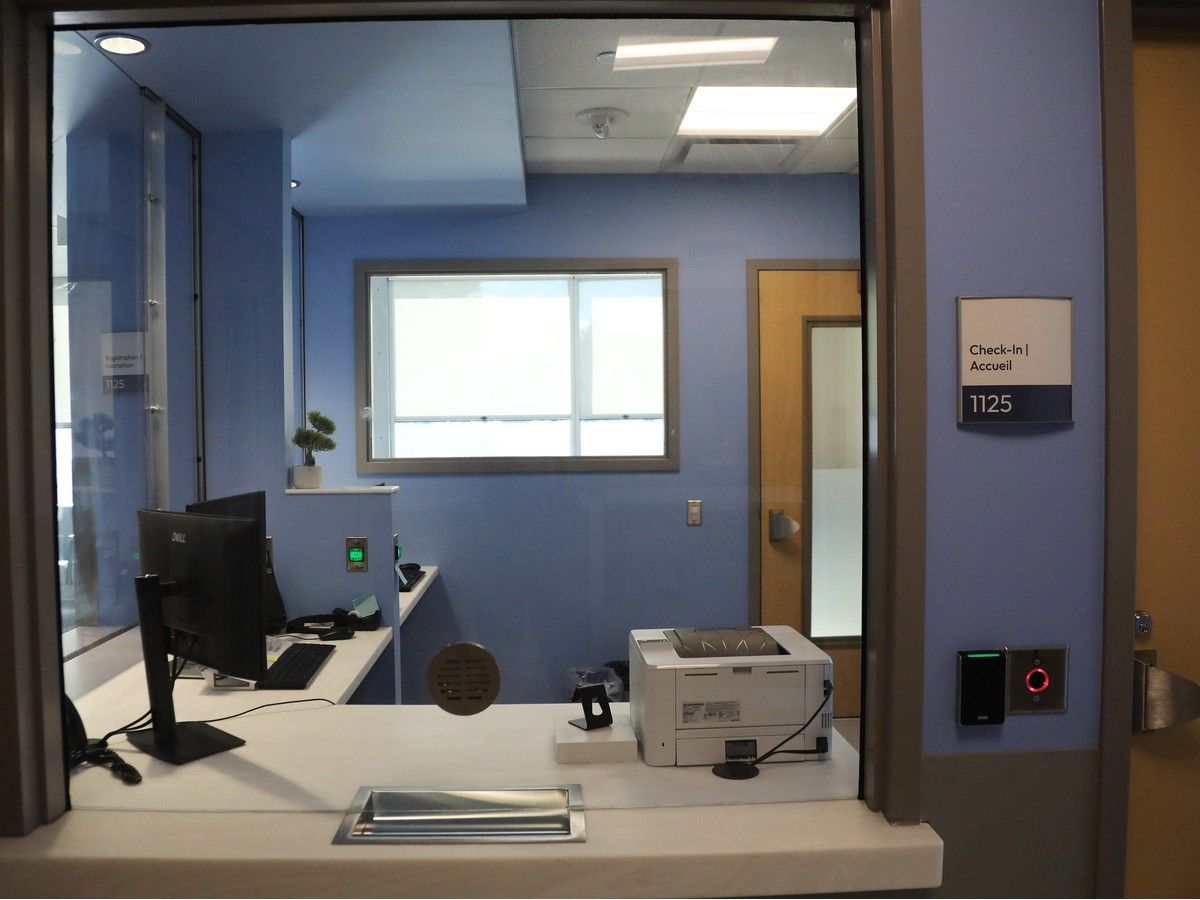
The hospital’s new urgent care clinic will operate as a walk-in and will take referrals from other hospitals and physicians in eastern Ontario. It is located in a repurposed former office space at The Royal on Carling Avenue, and includes a direct entrance from the front of the building.
Construction took about seven months and the hospital paid for it through community donations. Chris Ide, president and CEO of the Foundation at The Royal, said they raised $4 million for the project in record time, citing an enthusiastic public that was sympathetic to the cause.

To fund its operation, Vaccarino said they had to get creative since they couldn’t ask the province for more money.
Like many hospitals in Ontario, The Royal is in debt. As of March 2025, it had a deficit of $6.5 million. The province has told hospitals to balance their budgets within three years.
Vaccarino said the public hospital sector was “in a very bad predicament,” but “we knew (the clinic) was something we had to do.”
To make it work, they reorganized all of their internal operations — going from 17 programs to three, and “streamlined” the hospital’s administration. At the same time, they blew open their admission criteria, she said, and the moves have already proven beneficial.
“We’ve already decreased our wait times by 60 per cent,” she said. Specifically, the wait times for their mood and anxiety program used to be two years. It’s down to four months, and they hope to reduce that even further.
The next step for the team will be to begin fundraising to expand the clinic’s hours of operation.
“We’re preparing to do that as soon as possible,” Vaccarino said.
Stephanie Carter, The Royal’s executive director of clinical services, said the clinic will operate like a standard emergency room with a triage, assessment area, and six interview rooms.
At least 10 staff members will be on site from Monday to Friday, 8 a.m. to 4 p.m., and will include a team of emergency room doctors, psychiatrists, nurse practitioners, social workers, psychiatric nurses, and peer support.
The clinic has access doors to the rest of the hospital for emergency cases, but if the situation is less acute, the care team will set up a specialized treatment plan based on the patient’s needs.
“It’s been a very impactful experience,” Carter said.
“People have been presenting with mood disorders, significant suicide risk, and then we’ve evaluated how they’ve done at the end, and people are getting better.”

