

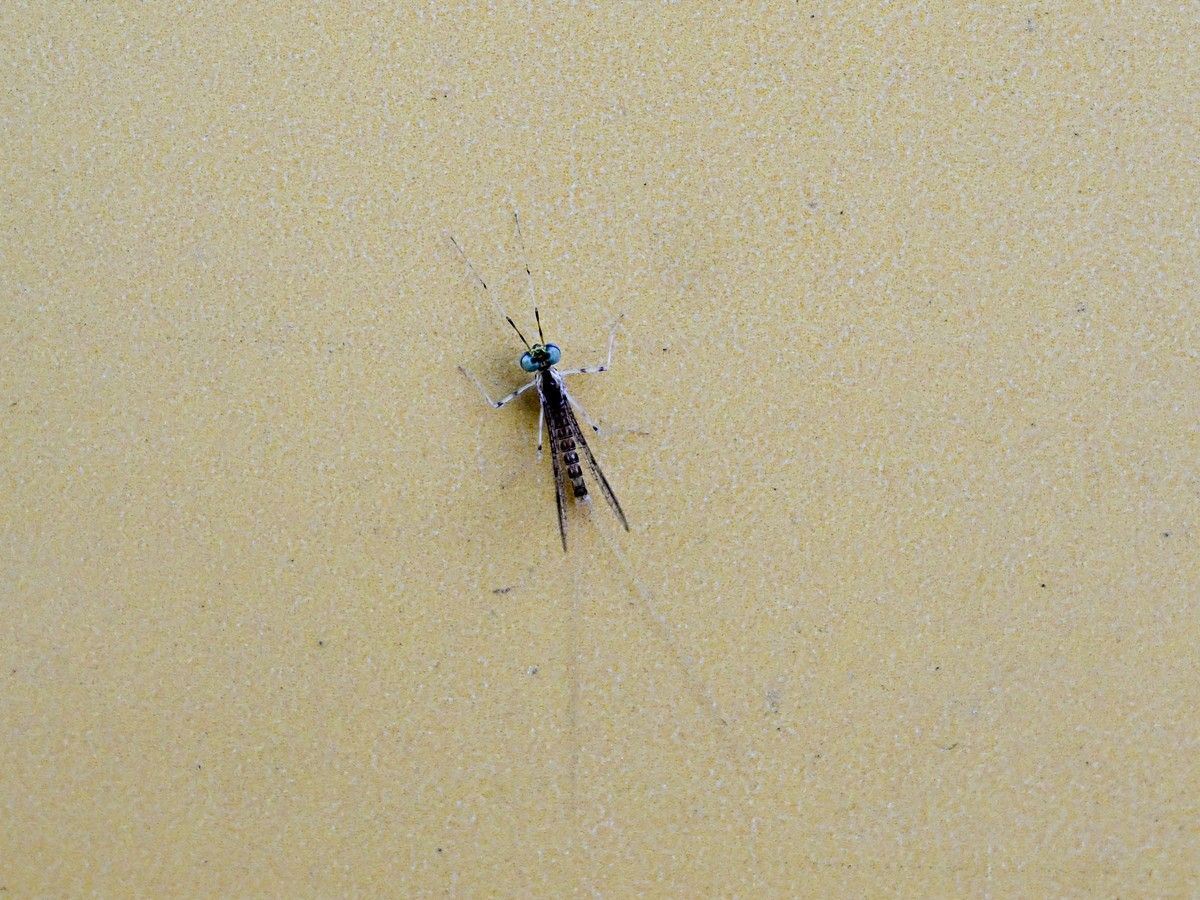
There’s a reason why mayflies belong in the Ephemeroptera order of insects. It’s a mouthful but if you look close enough at the breakdown of the word, ephemeral stands out.
Ephemeral: lasting only a very short time.
That’s the fleeting nature of a mayfly’s life as one of the shortest-lived insects. They sometimes live less than 24 hours as their graceful adult selves. But despite their short life, every year, Bluesfest fans find themselves engulfed by the aquatic insects.
A large portion of a mayfly’s life cycle is spent under water, however, as they spend up to two years as a mayfly larva, also known as nymphs. When they finally emerge from the water, they often latch on to the closest tree branch they can find. At their full adult size, the little creatures reach between 10 and 15 millimetres.
But in less than two days, they bid us farewell. Most female mayflies will lay their eggs in the water, and the cycle begins again.
As beautifully tragic as their life may be, they are a major nuisance to many Bluesfest fans, stage performers and shops, specially those stationed closest to the Ottawa River.
While some Bluesfest fans say they don’t mind mayflies and others simply swat them away, their eyes still fixated on the main stage, some shops by the river have come face-to-face with hundreds of these insects.
“They’re just annoying,” Olivia Dobot admitted, and Chloé Paradis agreed. While the two have been operating a Bluesfest lemonade stand for three years now, they’ve only grown frustrated with how many of the bugs they encounter on a daily basis.

When a little boy and his father approached the stand, the boy turned to his father and said he thought the sugar was what attracted so many of the mayflies.
But that’s not quite it.
The lemonade stand opens upwards and ruffles some leaves when it does.
When Paradis opens the round-shaped lemonade stand each day, she finds dozens of dead mayflies on the countertop.
“It’s just gross,” she said.
And every time they open the lemonade stand, a new batch replaces the old.
“It shakes them down because we’re under the tree,” Dobot said. “Because we’re right by the river, it makes it worse.”
Famously short lifespan
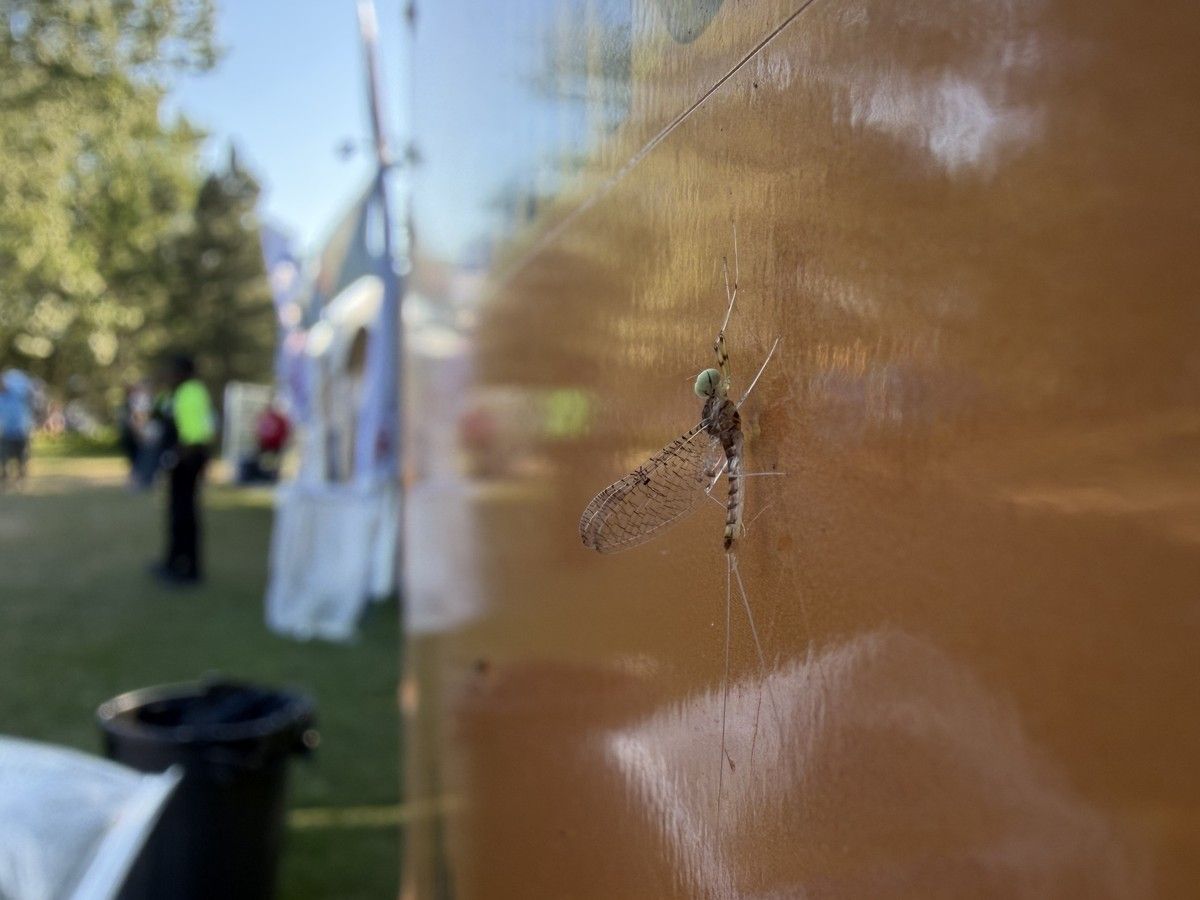
Mayflies are famous for their extremely short adult life, which can be as brief as a few hours and as long as two days when they have reached their full adult state.
But their lives form quite a fascinating tale between two worlds: water and air.
Elizabeth Grater, science programs coordinator at the Ottawa Riverkeeper, says baby mayflies live between rocks at the floor of the Ottawa River.
When it’s time for them to hatch, mayfly nymphs actively swim up to the surface until they wiggle out of their exoskeletons. Like butterflies, mayflies also undergo a metamorphosis.
The adult mayfly is called a subimago (also known as “dun” among fly fishers).
The adult mayflies, however, are on borrowed time. So, only one thing is on their mind — to reproduce.
Sometimes you can catch them in huge swarms, but some may quietly and gracefully sit on you. That was the case for Conan Gray. During his Bluesfest headline show on July 15, a mayfly landed on his finger.
He delicately let it sit. He refused to brush it off — but it stayed so long he chuckled in the middle of his lines.
A mayfly’s role in our ecosystem
Mayflies, despite being simply annoying, are actually fairly useful to scientists studying water quality.
Because they are sensitive to pollution and environmental changes, their presence is a great indicator for measuring the health of our ecosystem.
“So, if we see that there are a lot of mayflies and there’s a good population of mayflies locally, then that can give us a hint that the water quality is good and that there isn’t a lot of pollution going into that system,” Grater said.
The good news is that the Ottawa River’s water quality is actually in good health, according to Grater. Bad news: mayflies can be a nuisance at your favourite Bluesfest show.
Grater says she encounters them in huge swarms during her long biking trips along the river, close to where the Bluesfest stage is located.
Ottawa is a huge attraction for mayflies. That’s because we have large bodies of water — lakes streams and rivers.
“We’re very lucky to be in an area with such good water quality, and what comes with it is a biodiversity of insects and other organisms, which include mayflies,” Grater said.
Mayflies’ role in biodiversity is huge. Grater says they are a very important food source for fish that live in creeks, lakes and streams.
“When they live in the water, they’re a very, very important food source, and once they come out of the water, they’re also a very important food source for birds,” she added.
Grater says that anyone interested in learning more about mayflies and other benthic invertebrates in the watershed is welcome to visit the Learning Lab at the NCC River House.
“The Ottawa Riverkeeper Learning Lab is free, fully accessible and open to the public, with engaging, hands-on activities designed for curious minds of all ages.”
Visitors can also explore real mayfly specimens collected during their nymph stage.

