

CANNES, France — Hollywood blockbusters are scarce at the 2026 Cannes Film Festival, for reasons ranging from marketing strategies to global Trumpian tensions. The Croisette, though, didn’t get the gloomy memo: it’s as loud, starry and deliriously overstuffed as ever.
In an art-imitating-life scenario, the 79th edition of the world’s most prestigious film fest, which begins Tuesday, is happening alongside the Cannes-themed filming of the fourth season of “The White Lotus,” Mike White’s hit TV satire of pampered hedonists and plotting murderers.
The chi-chi Hotel Martinez on the Riviera-adjacent Boulevard de la Croisette is being renamed “The White Lotus Cannes” for the new series. The assembled talent includes Laura Dern, Steve Coogan, Heather Graham, Rosie Perez and Vincent Cassel, the latter being the French actor who is also part of the starry ensemble cast of Iranian filmmaker Asghar Farhadi’s “Parallel Tales,” which is premiering in the fest’s Palme d’Or competition.
“White Lotus” revellers will make some noise on the Croisette, but they’re not likely to outroar “The Fast and the Furious” mob. Cannes has always harboured a secret love for the populist and the loud, which explains why a midnight screening Wednesday at the Palais des Festivals is a 25th-anniversary salute to “The Fast and the Furious,” the exhaust-belching 2001 street-racing flick that launched a multibillion-dollar franchise.
There’s even a famous fast car in this year’s official festival poster, the 1966 Ford Thunderbird convertible carrying Susan Sarandon and Geena Davis on their rendezvous with destiny in “Thelma & Louise.”
Who’s there?
Expected to strut down the red carpet into the Palais des Festivals et des Congrès, the fest’s headquarters, are “Fast and Furious” stars Vin Diesel, Michelle Rodriguez and Jordana Brewster, alongside Meadow Walker, the daughter of the film’s late star, Paul Walker. The Cannes press office promises an event that “tears up the Croisette in spectacular fashion,” which likely means at least one or two muscle cars on the palm-lined road Cannes director Thierry Frémaux has called “the most glorious kilometre in world cinematography.”
That same populist appetite will get another feeding later in the fest: “Top Gun,” the 1986 fighter-pilot actioner that made Tom Cruise a star, receives a 40th-anniversary screening at Cinéma de la Plage, the beachfront outdoor cinema that does nightly screenings of new and classic films. Sometimes everybody just wants to watch a great old popcorn movie — and Cannes, for all its tuxedos and auteur theory, is happy to oblige.
If it seems strange that a glitzy event like the Cannes Film Festival would also celebrate the kind of films found in drive-ins, it shouldn’t be. Frémaux is quick to disavow any snobbery in the festival’s celebration of the seventh art: “Cinema is a religion, and Cannes is the gathering of all the churches,” he recently told trade journal Variety.
Films destined for Oscar nominations (and wins) and others made for midnight screenings will compete for eyeballs throughout the fest’s 12-day run, which concludes May 23. Almost anything goes here on the screens, even if the dress code on the red carpet remains as strict as ever: formal attire at night, no selfies and no nudity.
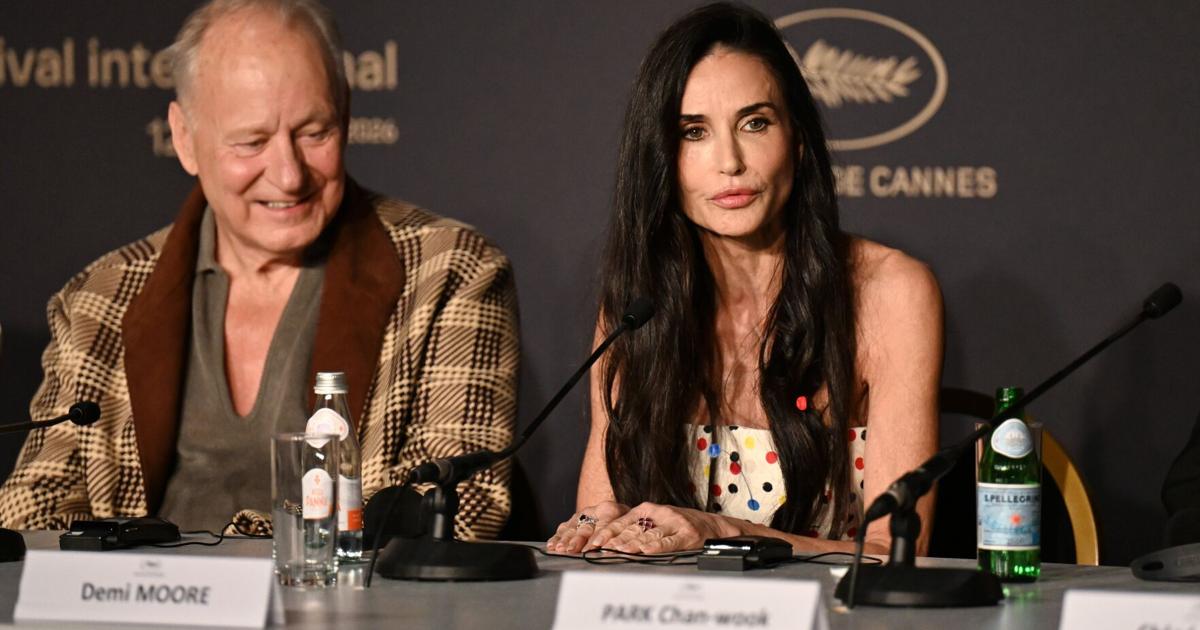
Being at the Cannes festival feels like being part of a cinema invasion, and that fits the mood of the 22 films in competition for the Palme d’Or, the most coveted prize in world cinema after the Best Picture statue at the Oscars. The Palme will be handed out by a nine-member international panel led by South Korean filmmaker Park Chan-wook (“Oldboy,” “Decision to Leave”).
Many of the fest’s most-buzzed movies involve invasions of some sort.
Three Palme contenders — László Nemes’ “Moulin,” Paweł Pawlikowski’s “Fatherland” and Emmanuel Marre’s “Notre Salut” — are set in or around the Nazi occupation of France during the Second World War.
South Korean filmmaker Na Hong-jin (“The Wailing”) has a film called “Hope,” which is titled for a location and not an emotion. It stars Michael Fassbender and Alicia Vikander in a story addressing the shocking arrival of space aliens on Earth. (This could make up for one of the Hollywood blockbusters that skipped Cannes, Steven Spielberg’s sci-fi thriller “Disclosure Day.”)
In Léa Mysius’s suspenseful “The Birthday Party,” which adapts an acclaimed novel by bestselling French author Laurent Mauvignier and stars Monica Bellucci and Benoît Magimel, three intruders arrive without notice but with foul intentions at a woman’s 40th birthday party in a tiny French village.
“Fjord,” the new film by 2007 Palme winner Cristian Mungiu (“4 Months, 3 Weeks and 2 Days”), stars Sebastian Stan and Renate Reinsve as a married couple who move their family to a small town in Norway. Their unorthodox parenting style alarms suspicious locals, who begin to treat the couple as unwelcome intruders.
Parenting is also under siege in the sci-fi drama “Sheep in the Box,” by another former Palme winner, Hirokazu Koreeda (“Shoplifters”). It’s about a grieving couple who problematically acquire a robot son to replace a child they tragically lost.
Perhaps the most extreme example of the invasion theme of the Palme films will be expressed in Arthur Harari’s body swap thriller “The Unknown,” in which a photographer (Niels Schneider) spots a captivating woman (Léa Seydoux) at a party and sleeps with her. He wakes up the next morning to find he’s looking out through her eyes, since he’s somehow inhabiting her body.
Sundance breakout Jane Schoenbrun (“I Saw the TV Glow”) makes her Cannes debut opening the Un Certain Regard sidebar with “Teenage Sex and Death at Camp Miasma,” a horror comedy that sounds precisely as deranged as its title suggests. Hannah Einbinder (“Hacks”) and Gillian Anderson star in the story of an obsessed director remaking a classic “final girl” slasher flick.
Canadian contingent
Canada arrives at Cannes 2026 with its own quiet invasion: three films staking their claim on the world stage. The most provocative is “Death Has No Master,” a thriller written and directed by Canadian Venezuelan Jorge Thielen Armand. Premiering in the Directors’ Fortnight sidebar, it’s set in Venezuela, and stars Asia Argento as the heiress of a colonial cacao plantation who encounters violent squatters when she arrives to claim her land.
Then there’s “Tangles,” the first feature by Vancouver’s Leah Nelson. It’s an animated adaptation of Sarah Leavitt’s graphic novel of a woman coping with her mother’s Alzheimer’s disease in a conservative small town. The voice cast includes Julia Louis-Dreyfus, Seth Rogen and Bryan Cranston.
“I am thrilled and honoured to be premiering ‘Tangles’ at Cannes,” Nelson told the Star via email. “Making ‘Tangles’ has been a labour of love spanning 10 years, and we just finished the film a few weeks ago, so it is completely surreal to be sharing it with the Cannes audience in just a few days! I’m very proud of what we created. ‘Tangles’ is a hand-drawn film with our artists’ fingerprints all over it.”
Rounding out the Canadian contingent is “Skinny Boots,” a short about two young pickpockets on the streets of Montreal by Quebec filmmaker Romain F. Dubois. It’s premiering in the Critics’ Week sidebar.
“It’s one of the greatest honours I could have ever hoped for,” Dubois said about his film’s Cannes launch. “To have a film premiere there feels deeply surreal, humbling and profoundly meaningful to me.”
These are common sentiments at Cannes, where film really is treated as a religion, even when the congregation is revving a muscle car down the Croisette.

