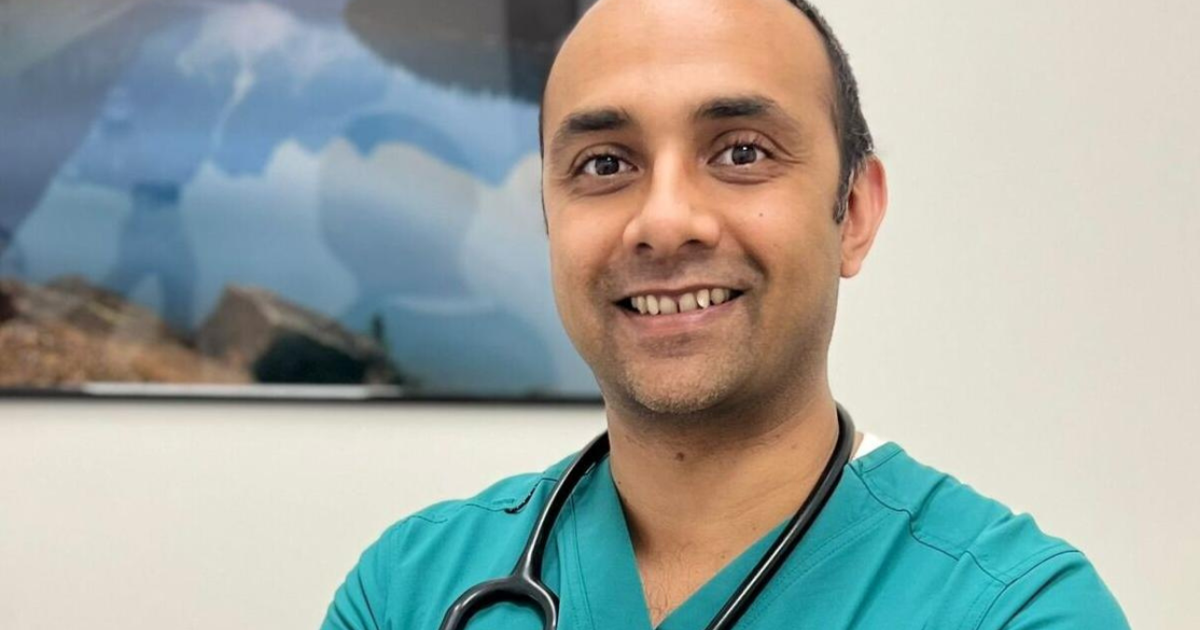
Over the course of his 17 years as a family physician practising in Markham, Dr. Shiva Sharma has seen his patients diagnosed with cancer skew younger and younger.
With early-onset cancer rates on the rise, the physician said it’s become more important than ever to find a family doctor you can trust. But given the ongoing shortage in Canada, access to primary care has “unfortunately become a bit of a luxury.”
Sharma’s experiences with his patients pushed the physician to get himself tested — “I started saying to myself: ‘What would I recommend to patients my age?’” He decided to get his long-standing bowel issues checked out and was shocked to learn that he had stage two colorectal cancer in 2024. He was 41.
As a patient’s primary point of contact and support within the medical system, a family doctor can be instrumental in connecting people with specialists, Sharma said. A family doctor can also spot early signs and symptoms you may have otherwise missed.
Research suggests Ontarians without a family doctor face a higher risk of death than those attached to a single physician. While the shortage is slowly improving, an estimated 5.9 million Canadians remain without a regular primary care provider, according to a recent report. About two million Ontarians lack a family doctor, a crisis that the provincial government has pledged to fix by 2029.
“Time and time again, people who have family doctors tend to have better outcomes,” Sharma said. “Unfortunately, with the family medicine landscape right now, it’s really difficult for people in this province to have a family doctor.”
A 2025 Canadian Cancer Society survey found that 60 per cent of respondents without a family doctor said it was difficult or very difficult to get a diagnostic test, compared to 35 per cent who had a physician. Some 78 per cent of respondents without a doctor said they struggled to get a specialist appointment, while 55 per cent with a doctor reported difficulties.
When it comes to younger adults, figures from the Canadian Institute for Health Information show that this age group is the least likely of any to have access to regular primary care; only about 74 per cent of adults 18-34 have a family doctor, while 92 per cent of adults 65 and older have a physician.
Dr. Alannah Smrke, a medical oncologist at BC Cancer, Vancouver Centre, said young people starting out their careers may move for school or work, breaking their connections with their family doctor, while others may feel they are healthy enough to not need one. Though walk-in clinics fill gaps, she said fragmented care can lead to a patient’s cancer being missed.
“They might see three different doctors and tell them a similar story, but no one catches there is cancer growing,” Smrke said. “But if they were seeing a doctor who knew them, who knew they weren’t a complainer, that this symptom is definitely real … that kind of long-term relationship with a family doctor matters.”
Unfortunately, reports suggest fewer family doctors are entering comprehensive practice in Ontario, with some research citing financial pressures as a major contributor.
Sharma is now cancer-free after weeks of chemo-radiation treatment. “But mentally, you’re never going to be cancer-free,” he said
“No other generation had to deal with this at our age,” Sharma continued. “I think that’s why we need to keep investing in family medicine.”