

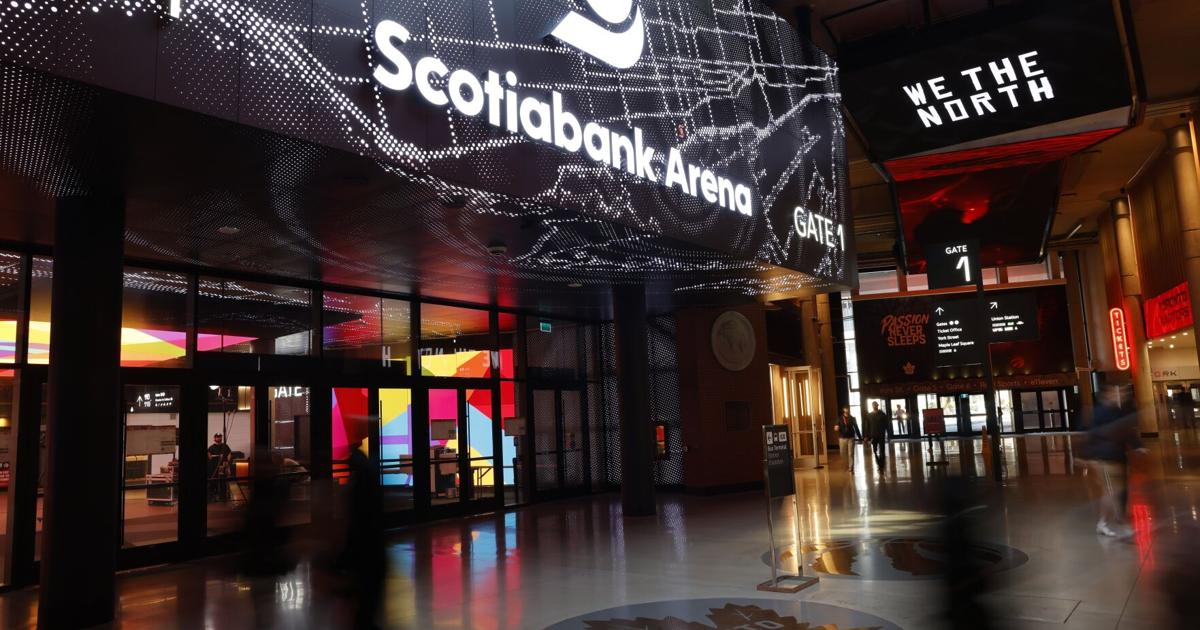
If you think Maple Leaf Sports & Entertainment has discovered a new way to separate concert fans from their money, I have some news for you.
We were doing this 30 years ago.
In the mid-1990s, I worked for Palace Sports & Entertainment, operators of the Palace of Auburn Hills, home of the Detroit Pistons, and Pine Knob Music Theatre, one of America’s most successful outdoor concert venues.
Among the products we sold were premium packages that gave customers the right to purchase tickets to concerts and other events. Not the tickets themselves. The right to buy them.
Sound familiar?
Last week, a post on Scotiabank Arena’s X account brought considerable attention to Priority+, a $2,500 annual membership (plus applicable fees and taxes), offering advance access to concert tickets.
Members receive the opportunity to purchase up to two tickets for eligible concerts ahead of other presales, with more than 50 eligible show announcements anticipated in 2027.
The tickets cost extra. Cue the outrage.
On X, @jordanwatsn called it a “Biblical level of greed.” Another user, @privarkm, mocked the proposal: “yessss let’s make live experiences more expensive and inaccessible.”
MLSE had been offering Priority+ to prospective customers before the social media post. Someone I know was given the opportunity more than a month ago.
An MLSE source, speaking on condition of anonymity, described Priority+ as a beta program. The organization has yet to disclose how many memberships will ultimately be available.
I understand the frustration. Concert tickets are expensive, service charges can be maddening, and securing seats for a popular show can feel more like winning a lottery than making a purchase.
But there’s a difference between disliking a business model and suggesting it’s something new, outrageous or inherently unfair.
MLSE deserves the same scrutiny as any other business. There are plenty of legitimate questions to ask about ticket prices, access and the cost of being a sports or concert fan.
But this particular business model isn’t remotely new. Consider Austin’s Moody Center.
When the Texas arena opened in 2022, it offered 2,000 concert memberships priced between $2,000 (U.S.) and $7,000 (U.S.) annually for the right to buy tickets for a premium seat, with commitments ranging from three to 10 years.
All 2,000 sold out. Thousands more paid deposits to join a waiting list.
Jeff Nickler, the arena’s general manager, told Pollstar: “We sold most of the memberships before we had a show on sale or announced.”
Think about that. People committed thousands of dollars annually for the opportunity to purchase concert tickets without even knowing who would be performing. Four years later, Moody Center continues to advertise a waiting list for its concert memberships.
In Baltimore, CFG Bank Arena offers premium memberships with guaranteed seats for concerts and shows, private club access and other benefits.
At UBS Arena on Long Island, home of the New York Islanders, a Marquee Membership costs $2,000 (U.S.) annually for each premium seat a member has the guaranteed right to purchase for every show.
None of these programs is identical to Priority+, but the underlying principle is the same. People are willing to pay for preferential access to something they value. And arenas are willing to sell it.
That’s not some revolutionary new idea. It’s an established premium business model.
MLSE isn’t limiting its premium entertainment offerings to a $2,500 membership. Several customers have told me they purchased a separate $35,000 annual entertainment package that includes two seats to the first performance of every eligible non-Leafs and non-Raptors event at Scotiabank Arena.
The package also provides the right of first refusal to buy tickets for additional dates.
That’s a different proposition from Priority+. One offers early access to purchase tickets. The other includes tickets and provides additional purchasing rights.
An arena has a finite number of seats. For particularly popular concerts, demand can exceed supply many times over. Some customers are prepared to pay more for better access and fewer headaches.
From a venue operator’s perspective, the economics are compelling. Sell 1,000 Priority+ memberships at $2,500 and you’ve generated $2.5 million in gross annual revenue before selling a single ticket.
Of course, there’s an important distinction between what MLSE is offering through Priority+ and some of the established arena programs.
At UBS Arena, members receive the guaranteed right to purchase a premium ticket. At Moody Center, memberships are connected to designated premium seating areas.
Scotiabank Arena’s Priority+ offers an advance purchasing opportunity, but neither tickets nor specific seats are guaranteed. Not every concert qualifies. Access applies to the first announced show for each eligible event, not to dates added later.
For $2,500, those are meaningful limitations.
Which brings us to the questions MLSE should be answering. How many memberships will ultimately be available? How many tickets for each show will be allocated to members? And, perhaps most important, will this arrangement make it harder for ordinary fans to purchase tickets?
MLSE has maintained that the membership program does not reduce the number of tickets available to the general public and says measures are in place to exclude resellers.
There’s also the question of value.
For someone attending two concerts annually, the $2,500 membership works out to $1,250 per concert before purchasing a ticket.
That’s a tough proposition.
But someone attending 20 shows would effectively pay $125 per concert for the privilege. For a business entertaining clients or a dedicated concertgoer regularly chasing difficult tickets, the calculation changes considerably.
That doesn’t necessarily make it a bargain. It makes it a choice.
Considering the experience at other arenas, my bet is that whatever initial allocation of memberships MLSE makes available will sell out quickly.
And if it does, that shouldn’t surprise anyone.
Rising concert costs deserve scrutiny, but charging for premium access doesn’t automatically mean ordinary fans are losing out.
I saw this firsthand at the Palace and Pine Knob, long before online ticket queues, dynamic pricing and social media transformed every controversial pricing decision into a public debate.
The difference today is that these privileges, once marketed largely through corporate hospitality and premium seating relationships, are increasingly being offered directly to individual concertgoers.
That makes the price more visible and the criticism louder.
If people see value in Priority+, they’ll buy it. If they don’t, MLSE will have to improve the offering, adjust the price or reconsider the program.
Thirty years ago, we understood that some people would pay for the right to buy concert tickets.
Apparently, that still comes as a surprise to some.

